Hitches, Receivers & Ball Mounts
The Best Trailer Hitch Setup for a Jeep Wrangler
Short wheelbase, tall body, modest ratings. The hardware list is ordinary; the loading discipline is not.
Disclosure: we earn a commission if you buy through the Amazon links on this page, at no extra cost to you. Commission never decides a verdict or a ranking position - read our editorial policy and affiliate disclosure.
How we assessed these: Receivers are vehicle-specific and this site publishes no fitment data - use the manufacturer's own fit guide for your exact year, model and trim. What is assessed below is the hardware that goes into the receiver once it is fitted, from each maker's published specifications.
Short answer
For most Wranglers a fixed loaded ball mount in the drop you measure is the right starting point, with a friction sway control bar if the trailer is tall. Buy the ball by the stamp on your coupler and the drop with a tape measure - and keep the trailer light and nose-heavy, because the wheelbase is doing more work here than the hitch is.
The hardware answer for a Wrangler is unremarkable. What is different is the vehicle: a short wheelbase, a tall body, solid axles and modest published ratings. Those four things mean a trailer that a pickup would barely notice can make a Wrangler feel busy, and the fix is rarely a better hitch. It is usually a lighter trailer, more weight on the tongue, or less speed.
Why wheelbase matters more than rating here
Sway is a conversation between the trailer's yaw and the tow vehicle's willingness to be steered by it. A long wheelbase resists that; the ball sits a long way behind the rear axle on a leverage arm the vehicle's own length opposes. Shorten the wheelbase and the same side force at the ball has more authority over the vehicle's heading. That is geometry, not a quality judgment, and it is why short-wheelbase towing advice sounds more cautious than truck advice.
- Tongue weight percentage matters more, not less. Keep 10 to 15 percent of the loaded trailer weight on the ball. At the low end of that band a short-wheelbase vehicle feels it quickly.
- Height is the enemy. A tall, flat-fronted trailer behind a tall vehicle gives wind two sails to push and a short lever to push against.
- Speed is the free fix. Sway energy climbs with speed faster than anything you can bolt on. The prevention guide covers the order to work through.
- Published ratings are low for a reason. They reflect brakes, cooling and axle ratings as well as the frame. Treat them as hard limits.
The spare tire and the bumper
This is the practical problem that catches Wrangler owners and almost never appears in generic hitch advice. The rear-mounted spare and the rear bumper both sit directly in the path you need for a coupler, a jack handle and your own hands. A long mount can foul the spare on a tight turn; a short one can leave the coupler so close to the body that you cannot swing the trailer's jack handle.
- Measure the receiver opening first. It decides which half of the aftermarket is available to you, and it takes ten seconds.
- Check clearance on a jackknife, slowly, in an empty lot. Turn the trailer hard both ways before you trust it on a ramp. The spare tire is what you are checking for.
- Check jack handle swing with the trailer hitched. If the handle hits the bumper, a slightly longer mount is worth the extra leverage loss.
- Re-check after any bumper or carrier change. An aftermarket rear bumper or tire carrier changes all three clearances at once.
What to look for in the hardware
- A ball mount in the drop you measured. Not the drop that looked right. Coupler height minus receiver height, measured with the trailer level on its jack.
- A ball already fitted and torqued. Trailer ball mounting torque runs into the hundreds of ft-lb, which is beyond a wrench and a tug. A loaded mount removes the step.
- An anti-rattle pin. A hardtop Wrangler transmits receiver slop into the cabin as a knock. This is the cheapest upgrade on the page and the one most owners notice immediately.
- A plug-in wiring harness rather than splices. Cutting into a factory loom on a vehicle with as much rear-end hardware as this one is a job you only want to do once.
- Friction sway control if the trailer is tall. It damps yaw without transferring any load, so it does not interact with the receiver's carrying rating.
Quick picks
Tap any row to jump to the full write-up. How these are chosen - and what we do and do not claim to know - is published in full on our research methodology page.
| # | Product | Best for | Our read | Price |
|---|---|---|---|---|
| 1 |  CURT Loaded Ball Mount with 2 in Ball (2 in drop, 7,500 lb) Best overall | One trailer at a known height | 7,500 lb, ball fitted and torqued, 2 in drop | Check price on Amazon #ad Affiliate link - we publish no price; Amazon shows the current one |
| 2 |  Andersen Rapid Hitch Aluminum Adjustable Ball Mount Best adjustable mount | Anyone tired of lifting steel mounts | Aluminum body, far lighter to lift and store | Check price on Amazon #ad Affiliate link - we publish no price; Amazon shows the current one |
| 3 |  CURT Sway Control Kit Best for a short wheelbase | Light trailers that wander | Friction damping where the lever arm is short | Check price on Amazon #ad Affiliate link - we publish no price; Amazon shows the current one |
| 4 |  CURT Anti-Rattle Hitch Pin and Shim (2 in receiver) Cheapest worthwhile upgrade | Killing receiver rattle | Removes receiver slop you can hear on a hardtop | Check price on Amazon #ad Affiliate link - we publish no price; Amazon shows the current one |
| 5 |  CURT Custom Vehicle-to-Trailer Wiring Harness (T-connector) Best wiring route | Adding trailer wiring without splicing | Plugs into factory connectors, nothing spliced | Check price on Amazon #ad Affiliate link - we publish no price; Amazon shows the current one |
| 6 |  Trimax Keyed Receiver Hitch Lock Best security | Leaving a mount in the receiver | Keyed lock for a mount left in the tube | Check price on Amazon #ad Affiliate link - we publish no price; Amazon shows the current one |
The picks in detail
1. Best overall
CURT Loaded Ball Mount with 2 in Ball (2 in drop, 7,500 lb)
CURT · Best for one trailer at a known height
A one-piece mount with the ball already fitted and torqued, rated to 7,500 lb gross and 750 lb tongue with a 2 in drop. Nothing adjusts, which is exactly why nothing rattles or works loose.
Published specifications
What works
- Arrives with the ball fitted, so there is no torque step to get wrong
- One piece means nothing to loosen or rattle
- Light enough to leave in the receiver or throw in a toolbox
What does not
- The 2 in drop is the only drop - measure before you buy
- 7,500 lb ceiling rules out heavier trailers
Skip it if
Useless on a lifted truck, where a 2 in drop will still leave the trailer nose-high and the weight on the rear axle of the trailer.
#ad Affiliate link - we publish no price; Amazon shows the current one
Raw specifications: CURT’s own page. We earn nothing on that link.
2. Best adjustable mount
Andersen Rapid Hitch Aluminum Adjustable Ball Mount
Andersen Hitches · Best for anyone tired of lifting steel mounts
An aluminum adjustable mount, which is the point: a steel channel mount is genuinely heavy to carry, and this one is not. Balls thread into the stainless pin rather than bolting through a hole, so swapping sizes takes seconds.
We have not sourced a full specification table for this model from the manufacturer’s own site at a stable address. Rather than repeat figures we cannot cite, the assessment above is limited to what the design and the maker’s published description genuinely establish.
What works
- Dramatically lighter than a steel adjustable mount of similar capacity
- Ball changes are a thread-on operation, not a torque-and-nut job
- Aluminum does not rust streak down a painted bumper
What does not
- Aluminum marks more easily than powder-coated steel
- Capacity depends on which ball and pin combination you fit, so read the chart
Skip it if
Not the one if you leave the mount permanently in the receiver through salted winters - the convenience you are paying for is weight, and you would never be lifting it.
#ad Affiliate link - we publish no price; Amazon shows the current one
Raw specifications: Andersen Hitches’s own page. We earn nothing on that link.
3. Best for a short wheelbase
CURT Sway Control Kit
CURT · Best for light trailers that wander
A single friction bar between the trailer tongue and the ball mount, with adjustable tension. It damps yaw; it does not transfer load. On a light trailer that wanders a little it is the cheapest honest fix, and on a heavy one it is not enough on its own.
What works
- Simple, serviceable and easy to fit to an existing ball mount
- Tension is adjustable, so you can match it to the trailer
- Takes minutes to add to a setup you already own
What does not
- Must be disconnected before backing up tightly or in icy conditions
- Damps sway but does nothing about a tow vehicle that is squatting
Skip it if
The wrong answer if your truck sags at the back when the trailer is on - that is a load-distribution problem and a friction bar will not touch it.
#ad Affiliate link - we publish no price; Amazon shows the current one
Raw specifications: CURT’s own page. We earn nothing on that link.
4. Cheapest worthwhile upgrade
CURT Anti-Rattle Hitch Pin and Shim (2 in receiver)
CURT · Best for killing receiver rattle
A pin plus a wedge shim that takes the slop out of the gap between a 2 in mount and a 2 in receiver. That gap is a manufacturing tolerance, not a fault, and this is the cheapest thing on the whole site that fixes a real, daily annoyance.
Published specifications
What works
- Removes the clunk over expansion joints for very little money
- Fits in a glovebox and transfers between vehicles
- No modification to the receiver or the mount
What does not
- Does nothing about rattle originating at the coupler or the sway bar
- Listed as superseded, so check the current item number
Skip it if
Not the fix if the noise is coming from a loose ball nut or a worn coupler - find the source first, because a shim will just mask it.
#ad Affiliate link - we publish no price; Amazon shows the current one
Raw specifications: CURT’s own page. We earn nothing on that link.
5. Best wiring route
CURT Custom Vehicle-to-Trailer Wiring Harness (T-connector)
CURT · Best for adding trailer wiring without splicing
A vehicle-specific harness that plugs into existing factory connectors instead of splicing into tail light wiring. Buying the right one for your exact year and model is the whole job; getting that wrong is why people end up cutting wires they did not need to cut.
We have not sourced a full specification table for this model from the manufacturer’s own site at a stable address. Rather than repeat figures we cannot cite, the assessment above is limited to what the design and the maker’s published description genuinely establish.
What works
- Plugs into factory connectors, so nothing is cut and nothing is taped
- Reversible - the vehicle goes back to standard in minutes
- Avoids the voltage problems that come with scotch-lock splices
What does not
- Vehicle-specific, so the part number must match year, model and trim
- Some vehicles need a separate power feed the harness does not supply
Skip it if
Not the part for a trailer needing electric brakes - that is a 7-way install with a brake controller feed, which a lighting harness does not cover.
#ad Affiliate link - we publish no price; Amazon shows the current one
Raw specifications: CURT’s own page. We earn nothing on that link.
6. Best security
Trimax Keyed Receiver Hitch Lock
Trimax · Best for leaving a mount in the receiver
A locking pin that replaces the clip pin so the mount cannot be pulled out of the receiver in a parking lot. The weak point of every hitch lock is the same - weather in the lock barrel - so the only maintenance that matters is a cover and the occasional shot of lubricant.
We have not sourced a full specification table for this model from the manufacturer’s own site at a stable address. Rather than repeat figures we cannot cite, the assessment above is limited to what the design and the maker’s published description genuinely establish.
What works
- Stops the most casual theft there is - walking off with a ball mount
- Direct replacement for a standard clip pin
- Keyed, so the same key can cover more than one lock
What does not
- Lock barrels seize when they live in road salt without a cover
- Determined thieves defeat any hitch pin lock given time
Skip it if
Pointless if you take the mount out each time anyway - that is already a better anti-theft measure than any lock.
#ad Affiliate link - we publish no price; Amazon shows the current one
Where the real limit sits
It is almost never the hitch. Payload runs out before tow rating on most vehicles, and on a short vehicle with a lot of its weight already accounted for, the tongue weight of a trailer at the published limit can leave very little behind. Read the door-jamb sticker, subtract passengers and gear, and see what is left before you shop for anything.
If you are towing a trailer with brakes, you need a controller, and that is a separate project - whether yours needs one is a legal question as much as a mechanical one, and the thresholds are lower than most owners assume.
Hardware is only half of a Wrangler towing setup. If the trailer has electric brakes, the other half is the controller and the wiring behind it - the Wrangler brake controller picks start with the seven-way question, which is where most Jeep installs actually begin.
Key takeaways
- A short wheelbase makes the same trailer feel busier - that is geometry.
- Keep tongue weight in the upper half of the 10 to 15 percent band.
- Check spare tire and jack handle clearance before the first trip.
- A receiver built into a bumper carries the bumper's rating, not the vehicle's.
- Payload, not the hitch, is almost always the binding limit.
How we sourced this
Every figure on this page came from one of the following, each fetched while the page was written. Where a manufacturer or regulator does not publish a number, we say so rather than estimate it.
- CURT loaded ball mount, 2 in ball, 2 in drop - published specifications (part 45036)
- Andersen Hitches - manufacturer site
- CURT sway control kit - published specifications (part 17200)
- CURT anti-rattle hitch pin and shim - published specifications (part 22321)
- 49 CFR 571.110 (FMVSS 110) - vehicle placard, including the required "combined weight of occupants and cargo" statement
Common questions
- What hitch do I need for a Jeep Wrangler?
- A receiver matched to your exact year and trim by the manufacturer's fit guide, then a ball mount in the drop you measure and a ball matching your coupler stamp. The receiver class sets the opening size, which decides every part you buy afterward.
- Can a Wrangler tow a travel trailer?
- A small one, within its published tow rating and payload, and with the tongue weight kept in the upper half of the 10 to 15 percent band. The limiting factors are usually payload and the trailer's height rather than the tow rating itself.
- Do I need sway control on a Wrangler?
- More often than on a long-wheelbase truck, because a short wheelbase gives the trailer more authority over the vehicle's heading. A friction sway control bar is cheap and damps yaw without transferring load, which suits a vehicle with modest receiver ratings.
- Will the spare tire get in the way of a trailer?
- It can, on a tight turn with a long ball mount, and the rear bumper can block the trailer's jack handle. Check both clearances at walking pace in an empty lot before the first trip, and re-check after any bumper or tire carrier change.
More in Hitches, Receivers & Ball Mounts
Class, receiver size, ball diameter, drop. Four numbers decide whether your setup is right, and three of them are stamped on parts you already own.
Read next

Best SUV hitch hardware
Best Hitch Setup for an SUV
What to buy for an SUV receiver - mounts, balls, wiring and security - plus the three ratings that decide what the vehicle can actually pull.
Best ball mount
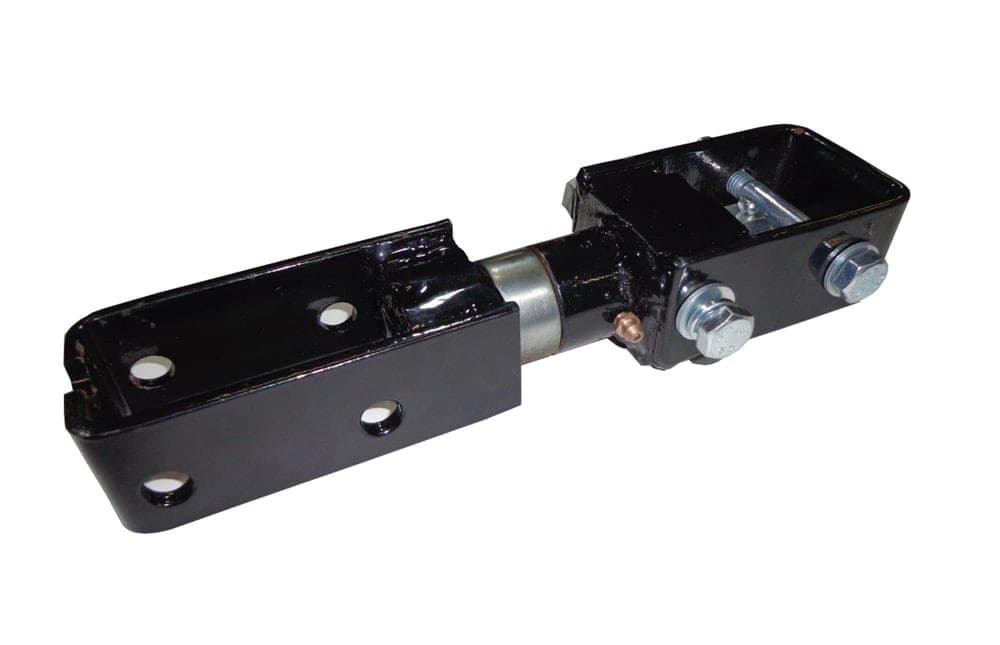
Best Ball Mounts
Fixed, adjustable, stowing and scale-equipped mounts compared on drop range, capacity and how much they rattle.

Reference
Hitch Classes Explained
The class system from 1 to 5, the two ratings on every label, and the mistake of inferring capacity from tube size.
Guide
Preventing Trailer Sway
The pre-trip loading and setup routine that stops sway starting, plus the habits that quietly cause it.
Head to head
Payload vs Towing Capacity
Why the tow rating rarely binds first, how to calculate your real limit from the labels on your vehicle, and what counts against payload.
Found something out of date, or a figure you can source better than we did? Corrections get read first. How we research explains how these pages are put together, and contact is one click away.