Weight Distribution Hitches
Why Your Trailer Bounces While Towing
Bouncing is not sway. It is a vertical problem, and the usual suspects are tension, tire pressure and an empty trailer.
Disclosure: we earn a commission if you buy through the Amazon links on this page, at no extra cost to you. Commission never decides a verdict or a ranking position - read our editorial policy and affiliate disclosure.
Short answer
Bouncing is usually one of three things: spring bars that are too stiff for your tongue weight, trailer tires inflated too hard, or an empty trailer whose suspension never compresses. All three are adjustable without new hardware.
Three different motions, often confused
| What you feel | Name | Usual cause |
|---|---|---|
| Slow rocking of the whole rig, nose up and down | Porpoising | Bar tension too high or tongue weight mismatched |
| Sharp fore-aft jerking, worst on concrete joints | Chucking | Short tow vehicle wheelbase and rigid coupling behavior |
| Rapid vertical hop at the trailer wheels | Axle hop | Over-inflated tires or an empty, under-loaded trailer |
Fixing each one
Porpoising
Usually too much spring bar tension, or bars rated well above your actual tongue weight. An over-rated bar is nearly rigid, so every bump at the trailer is transmitted straight into the tow vehicle instead of being absorbed. Reduce head tilt a step, or check whether your bars are correctly sized - the middle of the rating range is where they are supposed to run.
Chucking
Common on short-wheelbase tow vehicles with heavy trailers, and worst on concrete highways with regular expansion joints. It comes from the trailer alternately pushing and pulling at the coupling. There is no neat fix: reducing speed helps, correct tongue weight helps, and a longer-wheelbase tow vehicle helps most. Air springs sometimes reduce it by changing the rear suspension's response.
Axle hop
Check the trailer's tire pressure against the trailer's own placard rather than the maximum on the sidewall. Many trailer tires are run at the sidewall maximum by default, which on a lightly loaded trailer is far too hard. On an empty trailer, the suspension is barely compressed and the trailer skips - that is a loading situation, not a fault.
Quick picks
Tap any row to jump to the full write-up. How these are chosen - and what we do and do not claim to know - is published in full on our research methodology page.
| # | Product | Best for | Our read | Price |
|---|---|---|---|---|
| 1 |  CURT Round Bar Weight Distribution Hitch with Sway Control (14K) When tension is wrong | Mid-size travel trailers | Properly sized bars ride better than over-rated ones | Check price on Amazon #ad Affiliate link - we publish no price; Amazon shows the current one |
| 2 |  Andersen No-Sway Weight Distribution Hitch Softer transfer | Anyone who struggles with bar weight | Chain tension instead of stiff steel bars | Check price on Amazon #ad Affiliate link - we publish no price; Amazon shows the current one |
| 3 |  Sherline Trailer Tongue Weight Scale Check the load | Measuring tongue weight at home | Bounce often traces back to tongue weight | Check price on Amazon #ad Affiliate link - we publish no price; Amazon shows the current one |
1. When tension is wrong
CURT Round Bar Weight Distribution Hitch with Sway Control (14K)
CURT · Best for mid-size travel trailers
A conventional round-bar system with integrated lubrication and sway control, rated to 14,000 lb gross and 1,400 lb tongue. The built-in lubrication matters more than it sounds: a dry weight distribution head is the usual source of the groaning people mistake for a failing hitch.
Published specifications
What works
- Integrated lubrication at the head, which is where the noise usually comes from
- Round bars sit lower and clear more trailer tongues than trunnion bars
- Limited lifetime warranty
What does not
- Round bars hang lower than trunnion bars and are the first thing to catch on a steep driveway
- Sway control here is a function of the head, not an adjustable four-point system
Skip it if
Skip it if you regularly cross steep transitions - a round bar is the lowest part of the whole rig and will find the pavement before anything else does.
#ad Affiliate link - we publish no price; Amazon shows the current one
Raw specifications: CURT’s own page. We earn nothing on that link.
2. Softer transfer
Andersen No-Sway Weight Distribution Hitch
Andersen Hitches · Best for anyone who struggles with bar weight
A chain-and-bracket system instead of spring bars, which cuts the assembled weight dramatically and takes the greasy steel bars out of the equation. Sway resistance comes from a friction cone at the ball rather than from bar friction, so it keeps working in reverse.
We have not sourced a full specification table for this model from the manufacturer’s own site at a stable address. Rather than repeat figures we cannot cite, the assessment above is limited to what the design and the maker’s published description genuinely establish.
What works
- Far lighter to lift and store than a conventional spring-bar system
- No greased bars to handle, and no bars to drag on a steep transition
- Tension is set with a wrench rather than a snap-up bracket
What does not
- Chains and the friction cone need periodic re-tensioning and inspection
- Behaves differently from a spring-bar hitch, so advice written for those does not transfer cleanly
Skip it if
Not for you if you want a system a trailer shop down the road will recognize instantly - most of the setup advice you will find assumes spring bars.
#ad Affiliate link - we publish no price; Amazon shows the current one
Raw specifications: Andersen Hitches’s own page. We earn nothing on that link.
3. Check the load
Sherline Trailer Tongue Weight Scale
Sherline · Best for measuring tongue weight at home
A dedicated scale you sit under the coupler to read tongue weight directly, with no arithmetic and no trip to a weighbridge. It is the one tool on this site that turns the single most important towing number from a guess into a measurement.
We have not sourced a full specification table for this model from the manufacturer’s own site at a stable address. Rather than repeat figures we cannot cite, the assessment above is limited to what the design and the maker’s published description genuinely establish.
What works
- Direct reading, with no bathroom-scale-and-lever arithmetic
- Repeatable, so you can see what moving the load actually does
- Mechanical gauge with no batteries to be flat when you need it
What does not
- Must be used on level ground with the coupler at towing height
- Single-purpose tool that spends most of its life in a cupboard
Skip it if
Unnecessary if your hitch already has a built-in gauge, or if you have a public scale nearby and are happy to use it.
#ad Affiliate link - we publish no price; Amazon shows the current one
Raw specifications: Sherline’s own page. We earn nothing on that link.
Key takeaways
- Porpoising is a tension problem; chucking is a geometry problem; hop is a pressure or loading problem.
- Over-rated spring bars are the most-missed cause of a harsh, bouncy ride.
- Set trailer tire pressure from the trailer's placard, not the sidewall maximum.
- An empty trailer skipping is physics, not a defect - ballast forward settles it.
How we sourced this
Every figure on this page came from one of the following, each fetched while the page was written. Where a manufacturer or regulator does not publish a number, we say so rather than estimate it.
Common questions
- Will a weight distribution hitch cause bouncing?
- A badly sized or over-tensioned one can. Bars rated far above your tongue weight behave like solid steel, and that is exactly the setup that produces a harsh, porpoising ride.
- Should I lower trailer tire pressure to stop bouncing?
- Set it to the trailer's placard pressure for the load you carry. Do not go below the manufacturer's figure - under-inflation causes sidewall flex and heat, which is a far worse problem than bounce.
- Does chucking damage anything?
- It is hard on the coupling and tiring to drive. It is more of a comfort and fatigue issue than a failure risk, but persistent chucking is worth addressing through speed and load.
More in Weight Distribution Hitches
A weight distribution hitch moves load off the back of your truck. Whether you need one is a number, not an opinion - and the number is on your door jamb.
Read next
Guide
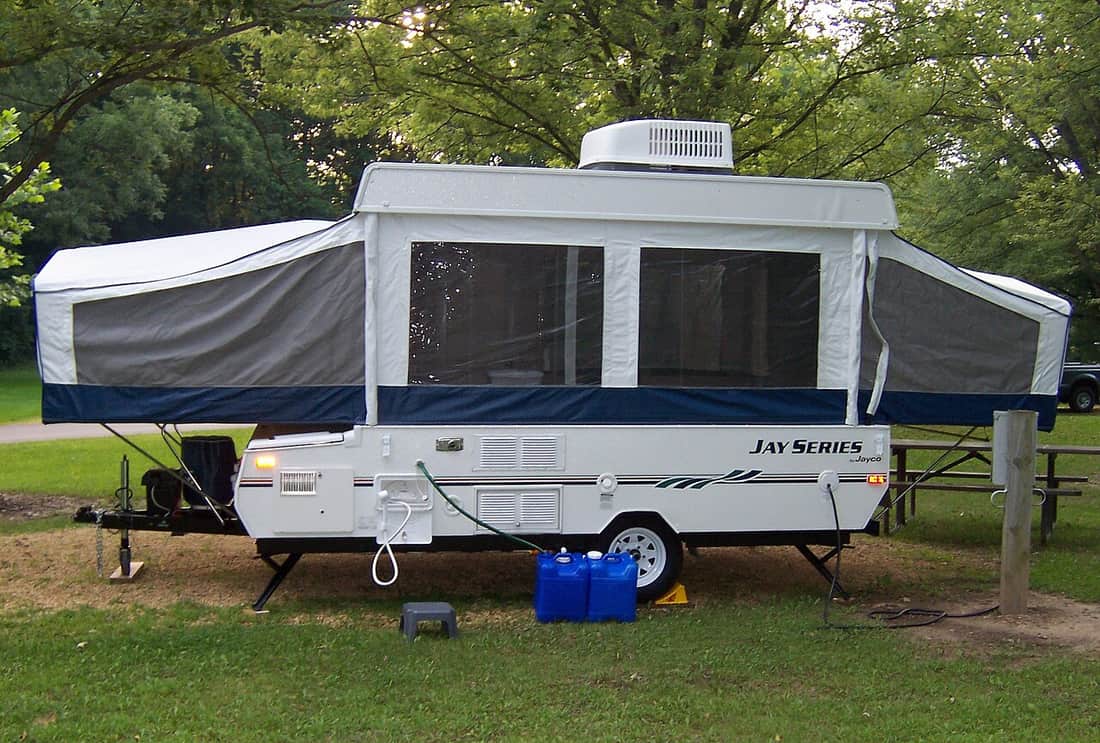
Empty Trailer Sway
Why cargo and utility trailers so often behave worst on the empty run home, and the cheap ways to settle them down.

How to
WD Hitch Setup Guide
The full setup sequence with the measurements that make it verifiable, plus how to read the symptoms of each wrong setting.
Guide
How a WD Hitch Works
The mechanism in plain terms: where the load goes, why head angle matters, and why bar rating is the specification that counts.

How to
Measuring Tongue Weight
Three methods for measuring tongue weight, what each one requires, and how to interpret the result against the 10-15 percent band.
Found something out of date, or a figure you can source better than we did? Corrections get read first. How we research explains how these pages are put together, and contact is one click away.