Trailer Sway & Sway Control
How to Stop Trailer Sway
Ease off the accelerator. Do not brake hard, do not steer against it. Then fix the load before you drive any further.

Disclosure: we earn a commission if you buy through the Amazon links on this page, at no extra cost to you. Commission never decides a verdict or a ranking position - read our editorial policy and affiliate disclosure.
Short answer
While it is happening: lift off the accelerator, keep the wheel straight, and do not brake hard. If you have a brake controller with a manual lever, apply the trailer brakes alone - that pulls the trailer straight. Afterwards, move cargo forward until at least 10 percent of the trailer's loaded weight sits on the tongue.
Step one: the response while it is happening
In the moment
Lift off the accelerator
Do not stamp on anything. Simply releasing the throttle starts the rig slowing and reduces the energy available to the oscillation.
Hold the wheel straight
Grip firmly, keep the wheel where it is, and resist the urge to counter-steer. Your corrections will lag the trailer's motion and amplify it.
Use the trailer brakes alone if you have them
A manual lever or slider on a brake controller applies only the trailer's brakes. That tension pulls the trailer back in line behind the tow vehicle. It is the one active input that reliably helps.
Slow well below the speed it started at
Sway has a threshold speed. Once below it, the oscillation damps on its own.
Stop somewhere safe and look at the load
Do not continue at a reduced speed and hope. The cause is almost always in the trailer, and it is still there.
Step two: the free fixes, in order
- Move heavy items forward of the trailer's axles. This is the single highest-value change. Weight ahead of the axles increases tongue weight and gives the trailer a reason to follow rather than argue.
- Take weight off the rear of the trailer. A generator, a spare tire carrier, bikes on a rear rack, a full rear water tank - all of it acts on a long lever. Removing 100 lb from the back does more than adding 100 lb over the axles.
- Check tire pressures, trailer and tow vehicle. An underinflated trailer tire lets the sidewall flex, which adds its own lag to every steering input. Use the pressure on the trailer's own placard, not the number on the tire sidewall.
- Reduce speed and leave more gap. Lower speed moves you below the threshold. More gap means less need for sudden steering.
Step three: measure, do not guess
After the load changes, measure the tongue weight. You are looking for 10 to 15 percent of the trailer's loaded weight. Guessing produces errors of a hundred pounds or more, which is the entire margin between a trailer that behaves and one that does not. Here is how to measure it, including the public-scale method that needs no special tools.
Step four: hardware, if it is still happening
If tongue weight is in range, the load is forward, pressures are right, and the trailer still moves around, then you have a genuine hardware case. Our sway control picks break down by trailer weight and by how you tow.
Quick picks
Tap any row to jump to the full write-up. How these are chosen - and what we do and do not claim to know - is published in full on our research methodology page.
| # | Product | Best for | Our read | Price |
|---|---|---|---|---|
| 1 |  Equal-i-zer 4-point Sway Control Hitch When load correction is not enough | Travel trailers that already sway | Four-point resistance that is always engaged | Check price on Amazon #ad Affiliate link - we publish no price; Amazon shows the current one |
| 2 |  Sherline Trailer Tongue Weight Scale To find the actual cause | Measuring tongue weight at home | Turns tongue weight into a measurement | Check price on Amazon #ad Affiliate link - we publish no price; Amazon shows the current one |
| 3 |  CURT Sway Control Kit Lightest-weight fix | Light trailers that wander | Adjustable damping for a light trailer | Check price on Amazon #ad Affiliate link - we publish no price; Amazon shows the current one |
1. When load correction is not enough
Equal-i-zer 4-point Sway Control Hitch
Equal-i-zer · Best for travel trailers that already sway
The reference point for integrated sway control. Friction happens at four places at once - both L-brackets and both sockets - so resistance is always on rather than something you remember to engage. Setup is bracket-height and bar-angle work, and it rattles; both are the price of a system with no separate parts to forget.
We have not sourced a full specification table for this model from the manufacturer’s own site at a stable address. Rather than repeat figures we cannot cite, the assessment above is limited to what the design and the maker’s published description genuinely establish.
What works
- Sway resistance is built into the geometry, so there is nothing to connect or disconnect at the ramp
- Works in reverse and in the wet, unlike a friction bar you have to release
- One assembly rather than a hitch plus a bolt-on sway bar
What does not
- Audible rattle and creak at low speed is normal and surprises first-time owners
- Bracket height and bar angle have to be set properly or the sway control does little
Skip it if
Skip it if your loaded tongue weight sits well inside your receiver's weight-carrying rating and the truck stays level - you would be buying hardware to solve a problem you do not have.
#ad Affiliate link - we publish no price; Amazon shows the current one
Raw specifications: Equal-i-zer’s own page. We earn nothing on that link.
2. To find the actual cause
Sherline Trailer Tongue Weight Scale
Sherline · Best for measuring tongue weight at home
A dedicated scale you sit under the coupler to read tongue weight directly, with no arithmetic and no trip to a weighbridge. It is the one tool on this site that turns the single most important towing number from a guess into a measurement.
We have not sourced a full specification table for this model from the manufacturer’s own site at a stable address. Rather than repeat figures we cannot cite, the assessment above is limited to what the design and the maker’s published description genuinely establish.
What works
- Direct reading, with no bathroom-scale-and-lever arithmetic
- Repeatable, so you can see what moving the load actually does
- Mechanical gauge with no batteries to be flat when you need it
What does not
- Must be used on level ground with the coupler at towing height
- Single-purpose tool that spends most of its life in a cupboard
Skip it if
Unnecessary if your hitch already has a built-in gauge, or if you have a public scale nearby and are happy to use it.
#ad Affiliate link - we publish no price; Amazon shows the current one
Raw specifications: Sherline’s own page. We earn nothing on that link.
3. Lightest-weight fix
CURT Sway Control Kit
CURT · Best for light trailers that wander
A single friction bar between the trailer tongue and the ball mount, with adjustable tension. It damps yaw; it does not transfer load. On a light trailer that wanders a little it is the cheapest honest fix, and on a heavy one it is not enough on its own.
What works
- Simple, serviceable and easy to fit to an existing ball mount
- Tension is adjustable, so you can match it to the trailer
- Takes minutes to add to a setup you already own
What does not
- Must be disconnected before backing up tightly or in icy conditions
- Damps sway but does nothing about a tow vehicle that is squatting
Skip it if
The wrong answer if your truck sags at the back when the trailer is on - that is a load-distribution problem and a friction bar will not touch it.
#ad Affiliate link - we publish no price; Amazon shows the current one
Raw specifications: CURT’s own page. We earn nothing on that link.
Key takeaways
- In the moment: throttle off, wheel straight, trailer brakes only if you have a manual lever.
- Never brake hard with the vehicle pedal and never counter-steer.
- Afterwards, move weight forward and measure tongue weight before driving on.
- Hardware is the fourth step, not the first.
How we sourced this
Every figure on this page came from one of the following, each fetched while the page was written. Where a manufacturer or regulator does not publish a number, we say so rather than estimate it.
Common questions
- Should I speed up to stop sway?
- No. The advice circulates because accelerating briefly can pull a trailer straight in some situations, but you cannot assess which situation you are in during the event, and getting it wrong makes things considerably worse. Lift off and slow down.
- Why did it only start on the way home?
- Because the load changed. Emptying a water tank, using supplies stored at the front, or repacking in a hurry all reduce tongue weight. A trailer that towed beautifully on the way out and badly on the way back is a load story, not a hardware story.
- Does a heavier tow vehicle stop sway?
- It raises the threshold, because a heavier vehicle is harder for the trailer to push around. It does not fix a tail-heavy trailer, and plenty of three-quarter-ton trucks have been pushed around by badly loaded campers.
- Can tire pressure really cause sway?
- It can contribute. A soft trailer tire flexes and introduces lag between steering input and trailer response. It is rarely the sole cause, but it is free to check and takes two minutes.
More in Trailer Sway & Sway Control
Sway is almost never a mystery. It comes down to tongue weight, load position or speed - and only one of those three costs money to fix.
Read next

Guide
Why Trailers Sway
The physics in plain terms, the three causes ranked by how often they are to blame, and how to tell which one you have.
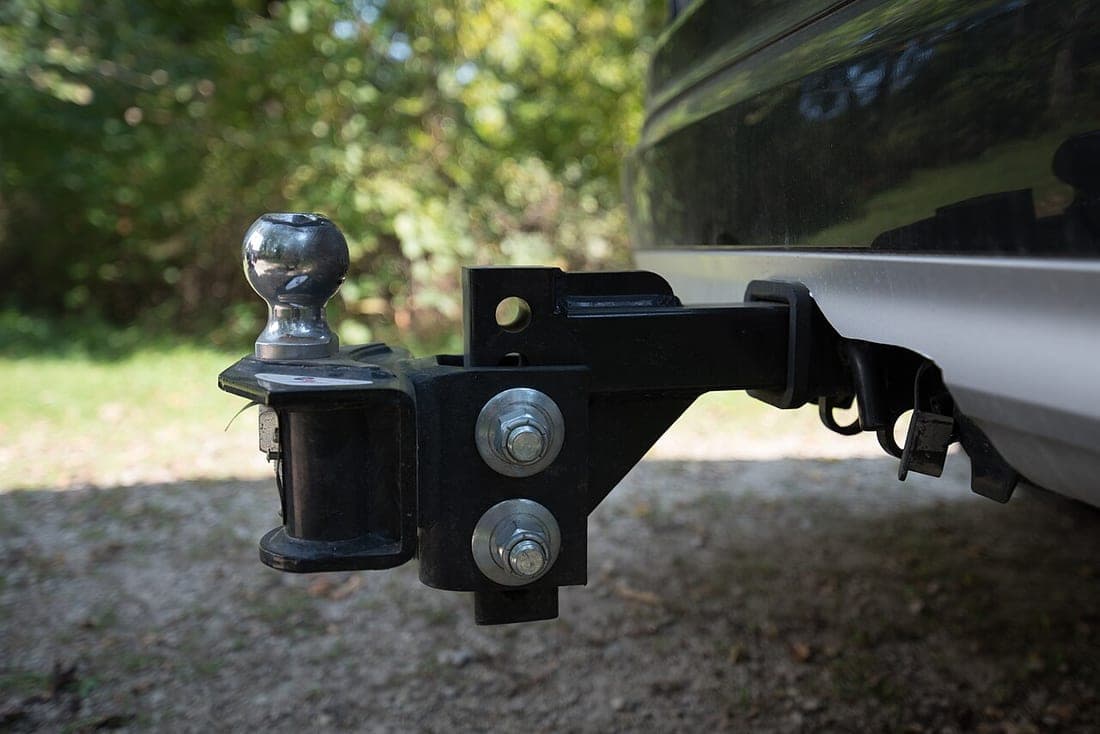
Best for stopping sway
Best Sway Control Hitches
Integrated four-point, cam-based and friction systems compared by how they behave in reverse, in rain, and when you forget a step.

How to
Measuring Tongue Weight
Three methods for measuring tongue weight, what each one requires, and how to interpret the result against the 10-15 percent band.

Troubleshooting
Trailer Fishtailing
What makes a mild wobble escalate into a full fishtail, how to end an episode without making it worse, and what to change afterwards.
Found something out of date, or a figure you can source better than we did? Corrections get read first. How we research explains how these pages are put together, and contact is one click away.