The number in the brochure is not the number that limits you. The one that does is on a sticker inside your driver's door.
Every towing decision starts with four numbers, and three of them are printed on labels your vehicle already carries. This is the hub that explains what they mean, which one actually limits you, and how to hitch up so the rig behaves the way the numbers promise.
The numbers, and where they live
The ratings that constrain a tow
Rating
Where it lives
What it limits
GVWR
Certification label inside the driver's door - federally required content
Total weight of the vehicle including everything and everyone in it
GAWR, front and rear
Same label, listed per axle front to rear
How much weight each individual axle may carry
Payload
Tire and loading placard - the yellow-and-white sticker
Combined weight of occupants and cargo, which includes tongue weight
Tow rating / GCWR
Owner's manual or the manufacturer's towing guide, by configuration
What the vehicle may pull, and the combined weight of vehicle plus trailer
The certification label's content is set by federal regulation: 49 CFR 567.4 requires the label to carry Gross Vehicle Weight Rating and a Gross Axle Weight Rating for each axle, in pounds. The loading placard required by FMVSS 110 is the one that carries the sentence most people have read without registering: "The combined weight of occupants and cargo should never exceed XXX kilograms or XXX pounds."
Why payload runs out first
Tow ratings are headline numbers. They are established under a defined test procedure - SAE J2807 is the standard most manufacturers now publish against - and they describe what the powertrain, cooling and brakes can handle. Payload is a structural limit on the vehicle itself, and it is almost always the one you hit first on a half-ton truck or a mid-size SUV.
Work it out in the order the vehicle experiences it: start with the placard payload, subtract everyone who rides in the vehicle, subtract everything in the bed or the trunk, subtract the weight of the hitch hardware itself, and whatever is left is the maximum tongue weight you can carry. Then check that number is at least 10 percent of the trailer you are considering - because if it is not, you cannot load that trailer correctly no matter how good your hitch is.
Tongue weight: the number nobody measures
Tongue weight should be 10 to 15 percent of the loaded trailer weight. Below 10 percent you get sway; above 15 percent you overload the back of the tow vehicle and lighten its steering. It is the most important single number in towing and the one almost nobody actually measures, because measuring it sounds harder than it is.
Three ways to get it: a dedicated tongue weight scale under the coupler, a hitch with a gauge built into the shank, or a public weighbridge where you weigh the rig hitched and then unhitched and take the difference. All three beat guessing, and the difference between a guessed number and a measured one is routinely a hundred pounds or more.
Setup is a sequence, not a knack
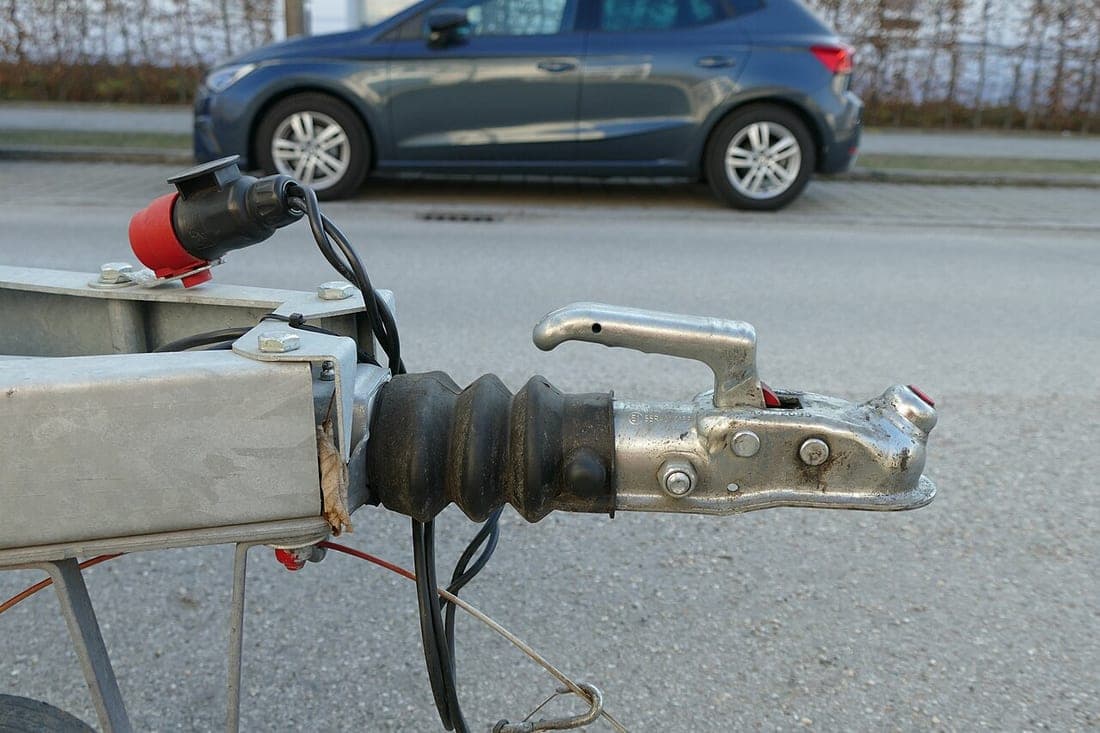
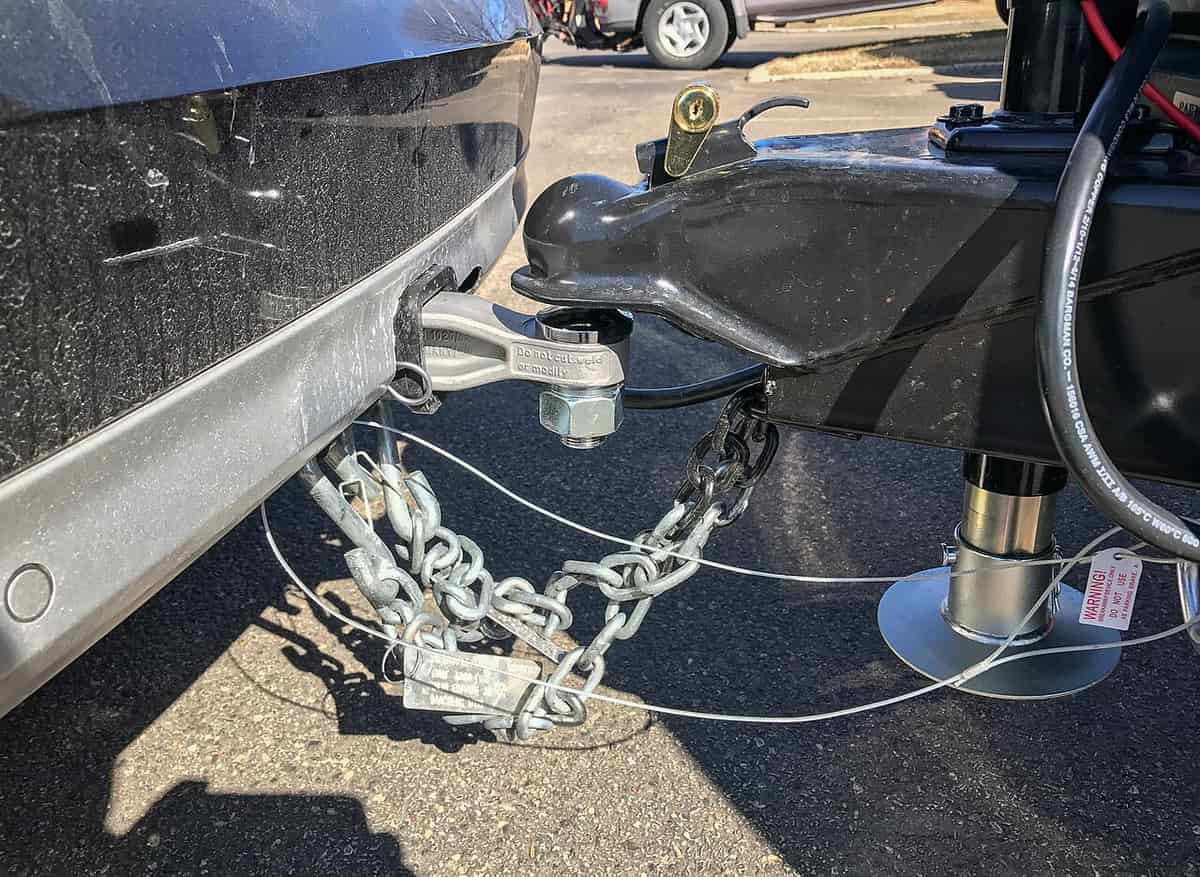
Hooking up well is a repeatable order of operations: coupler fully seated and latched, latch pinned, chains crossed under the coupler so they cradle it if the ball lets go, breakaway cable to the vehicle rather than to the chains, connector plugged and lights checked, jack fully raised, chocks removed last. Federal rules for commercial towing spell out the chain arrangement in detail - two chains or cables, attached at two points as far apart as the frame allows, arranged so a failed coupling cannot drop to the ground.
The mistake owners make
Trusting the brochure weight of the trailer. The dry weight on a travel trailer's spec sheet excludes propane, batteries, water, and everything you are about to put inside it. Real loaded weight routinely runs a thousand pounds or more above dry weight, and all of that extra has to fit inside ratings that were already tighter than they looked.
How we sourced this
Every figure on this page came from one of the following, each fetched while the page was written. Where a manufacturer or regulator does not publish a number, we say so rather than estimate it.
DIY versus shop installation, what is involved on different vehicles, and the questions to ask before booking.
Read it →
Common questions
Where do I find my truck's towing capacity?
In the owner's manual or the manufacturer's towing guide for your exact configuration - engine, axle ratio, cab and bed. It is not on the door jamb; the door jamb carries GVWR, GAWR and payload, which are different limits and usually the binding ones.
Does tongue weight count against payload?
Yes. The vehicle treats it as cargo. This is why many trucks run out of payload long before they run out of tow rating.
How do I measure tongue weight without a special tool?
Weigh the rig at a public scale with the trailer hitched and the tow vehicle on the scale, then weigh the tow vehicle alone with the trailer unhitched. The difference across the rear axle is your tongue weight. A dedicated tongue scale or a hitch with a built-in gauge is quicker but a weighbridge is the most accurate.
Do safety chains really need to be crossed?
Yes. Crossed under the coupler they form a cradle, so if the coupler comes off the ball it lands in the chains rather than digging into the pavement. Federal rules for commercial towing require an arrangement that prevents the coupling from dropping to the ground, and the same physics applies to a private trailer.