Wiring, Lights & Towing Mirrors
Trailer Lights Not Working
Check the ground first. It is the cause more often than everything else combined, and it costs nothing to rule out.
Disclosure: we earn a commission if you buy through the Amazon links on this page, at no extra cost to you. Commission never decides a verdict or a ranking position - read our editorial policy and affiliate disclosure.
Short answer
Check the ground at the trailer frame first, then the connector contacts, then the lamps, then the wiring run. Grounds and connectors account for the large majority of trailer lighting faults.
What the symptom tells you
| Symptom | Almost always |
|---|---|
| Brake lights make the turn signals flash | Bad ground |
| Lights dim or flicker when you brake | Bad ground |
| Nothing works at all | Ground, or the connector entirely |
| One side dead, other side fine | That side's lamp, or its branch of the loom |
| Running lights work, brakes do not | The brake/turn circuit at the connector |
| Works until you hit a bump | Chafed wire or a loose terminal |
| Works dry, fails in rain | Water in the connector |
The order to work in
From cheapest to most involved
Clean the trailer's frame ground
Find where the white conductor bolts to the frame. Undo it, wire-brush both surfaces to bare metal, re-fit tight, and add a smear of dielectric grease. Test again before doing anything else.
Inspect both halves of the connector
Green deposits, bent pins, water sitting in the socket. Clean with a small brush. A replacement trailer-side plug is cheap and fits with a screwdriver.
Check the vehicle side independently
A test light at the vehicle socket, with a helper operating the lights and pedal, tells you whether the vehicle is doing its part.
Check the lamps
Bulbs, sockets and ground tabs. On a sealed LED unit the lamp is replaced whole.
Inspect the run
Where the loom crosses frame members, passes the axle, or has been zip-tied against something sharp. Last because it is rarest.
Quick picks
Tap any row to jump to the full write-up. How these are chosen - and what we do and do not claim to know - is published in full on our research methodology page.
| # | Product | Best for | Our read | Price |
|---|---|---|---|---|
| 1 |  CURT 7-Way RV Blade Connector Plug (trailer side) Most likely fix | Replacing a corroded trailer plug | A corroded plug is the usual culprit | Check price on Amazon #ad Affiliate link - we publish no price; Amazon shows the current one |
| 2 |  Blazer LED Submersible Trailer Light Kit If the lamps are done | Old trailers with tired wiring | Sealed units, low current draw | Check price on Amazon #ad Affiliate link - we publish no price; Amazon shows the current one |
| 3 |  Optronics Submersible Trailer Light Kit Full replacement | Rewiring an older utility trailer | Everything in one box | Check price on Amazon #ad Affiliate link - we publish no price; Amazon shows the current one |
1. Most likely fix
CURT 7-Way RV Blade Connector Plug (trailer side)
CURT · Best for replacing a corroded trailer plug
The trailer-side plug for a standard 7-way RV blade connection. Replacing a corroded plug is a twenty-minute job and fixes a surprising share of intermittent light and brake faults - far more often than the fault is actually in the truck.
Published specifications
What works
- Cheap, standard part that cures a lot of intermittent faults
- Screw terminals, so no special crimping tool is needed
- Fits the standard 7-way RV pattern used across the US
What does not
- Only the trailer half - a corroded vehicle socket needs the other part
- Short one-year warranty compared with CURT's structural parts
Skip it if
Not the part you need if your trailer uses a 4-way flat - check which connector you actually have before ordering anything.
#ad Affiliate link - we publish no price; Amazon shows the current one
Raw specifications: CURT’s own page. We earn nothing on that link.
2. If the lamps are done
Blazer LED Submersible Trailer Light Kit
Blazer International · Best for old trailers with tired wiring
LED lamps draw less current than incandescent, which matters on an old trailer with marginal wiring and a tired ground. They also come on instantly, and the cheap failure mode of a sealed LED unit is the whole lamp rather than a bulb.
We have not sourced a full specification table for this model from the manufacturer’s own site at a stable address. Rather than repeat figures we cannot cite, the assessment above is limited to what the design and the maker’s published description genuinely establish.
What works
- Low current draw is kinder to old wiring and weak grounds
- Sealed units with no bulbs to corrode in their sockets
- Instant-on, which gives following traffic slightly more warning
What does not
- A failed LED lamp is replaced whole, not repaired
- Low current can confuse some vehicles' bulb-out monitoring
Skip it if
Not a cure for a bad ground - if your lights dim when you brake, fix the ground strap first or you will blame the new lamps.
#ad Affiliate link - we publish no price; Amazon shows the current one
3. Full replacement
Optronics Submersible Trailer Light Kit
Optronics · Best for rewiring an older utility trailer
A complete lighting kit - lamps, wiring, brackets and license plate light - for a trailer under 80 inches wide. Submersible rating is the thing to check: a sealed lamp survives a boat ramp, and a non-sealed one fills with water on the first launch.
We have not sourced a full specification table for this model from the manufacturer’s own site at a stable address. Rather than repeat figures we cannot cite, the assessment above is limited to what the design and the maker’s published description genuinely establish.
What works
- Everything needed in one box, so there is no second trip for a missing bracket
- Submersible lamps suit ramps and wet weather
- Sized for the common under-80-inch trailer class
What does not
- Trailers 80 inches and wider need a different lamp configuration by law
- Supplied wire lengths may be short for a long trailer
Skip it if
Wrong kit for a trailer 80 inches or wider - that class needs additional clearance and identification lamps.
#ad Affiliate link - we publish no price; Amazon shows the current one
Raw specifications: Optronics’s own page. We earn nothing on that link.
Key takeaways
- Ground first - it is the single most likely cause and free to check.
- Cross-talk between circuits is a ground symptom, not a wiring mix-up.
- Replace the trailer-side plug before suspecting the vehicle.
- The wiring run is the last place to look, not the first.
How we sourced this
Every figure on this page came from one of the following, each fetched while the page was written. Where a manufacturer or regulator does not publish a number, we say so rather than estimate it.
Common questions
- Can the hitch ball act as a ground?
- Not reliably, and relying on it is a classic cause of dim and cross-connected lights. The ball is a greased steel-on-steel joint. Run a proper ground conductor.
- Why do my lights work on one truck but not another?
- Different vehicles put different loads and monitoring on the circuits, and a marginal connection that works on one may not on another. The marginal connection is still the fault.
- Should I just rewire the whole trailer?
- On an older trailer with multiple faults, often yes. A complete light kit with new loom costs little and removes an entire category of recurring problem.
More in Wiring, Lights & Towing Mirrors
Nearly every trailer electrical fault is corrosion or a bad ground. Knowing which wire does what turns a roadside mystery into a five-minute check.
Read next

Reference
7-Pin Wiring Diagram
The seven circuits and what each one does, the common color convention, and how to confirm it on your own vehicle.
Reference
Wiring Color Codes
4-way and 7-way color conventions side by side, with the honest caveat about aftermarket wiring and how to verify.
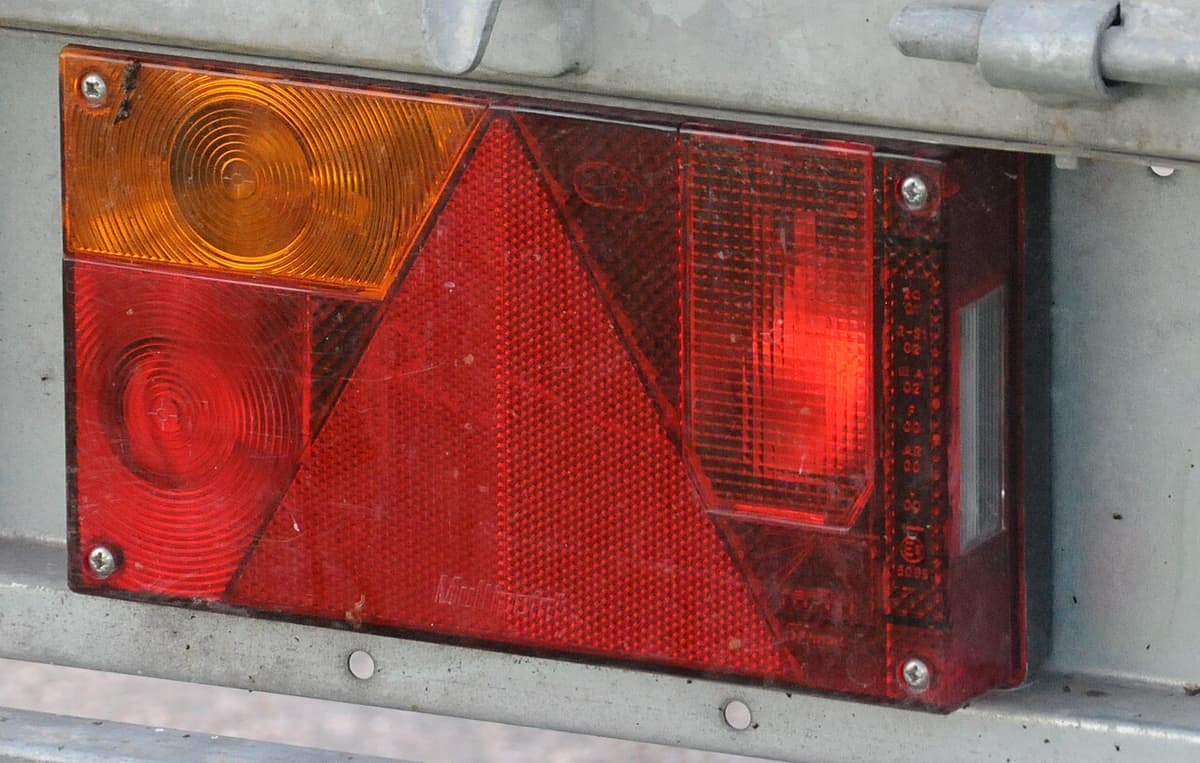
Best trailer light kit
Best Trailer Light Kits
Complete lighting kits for utility and boat trailers, with the submersible and width considerations that pick the kit for you.
Troubleshooting
Trailer Brakes Not Working
An ordered diagnostic sequence for electric trailer brakes, from the connector outward, with the checks that need no tools.
Found something out of date, or a figure you can source better than we did? Corrections get read first. How we research explains how these pages are put together, and contact is one click away.