Hitches, Receivers & Ball Mounts
The Best Trailer Hitches and Hitch Hardware
The receiver itself has to be matched to your vehicle. The parts that slot into it are where the real choices are.
Disclosure: we earn a commission if you buy through the Amazon links on this page, at no extra cost to you. Commission never decides a verdict or a ranking position - read our editorial policy and affiliate disclosure.
How we assessed these: Receivers are vehicle-specific and we do not publish fitment data - use the manufacturer's own fit guide for your exact year and model. The picks here are the hardware that goes into a standard 2 in receiver, chosen from published specifications.
Short answer
Buy the receiver from the manufacturer's fit guide for your exact vehicle, then choose the ball mount by the drop you measure, and the ball by what is stamped on your coupler. An anti-rattle pin is the cheapest worthwhile addition.
The receiver bolted to your vehicle is a fitment problem, not a shopping problem: there is normally one correct part for your year, model and trim, and the manufacturer's fit guide tells you which. Everything downstream of it - mounts, balls, pins, locks - is genuinely interchangeable across any vehicle with the same tube size, and that is where a buying decision exists.
Decide the drop before anything else
Park the trailer level on its jack. Measure ground to the bottom of the coupler. Then measure ground to the top of your receiver tube. The difference, allowing roughly an inch for the vehicle settling under tongue weight, is the drop you need. A trailer towed nose-high loses tongue weight, and lost tongue weight is the leading cause of sway - so this measurement is a safety item, not a cosmetic one.
Quick picks
Tap any row to jump to the full write-up. How these are chosen - and what we do and do not claim to know - is published in full on our research methodology page.
| # | Product | Best for | Our read | Price |
|---|---|---|---|---|
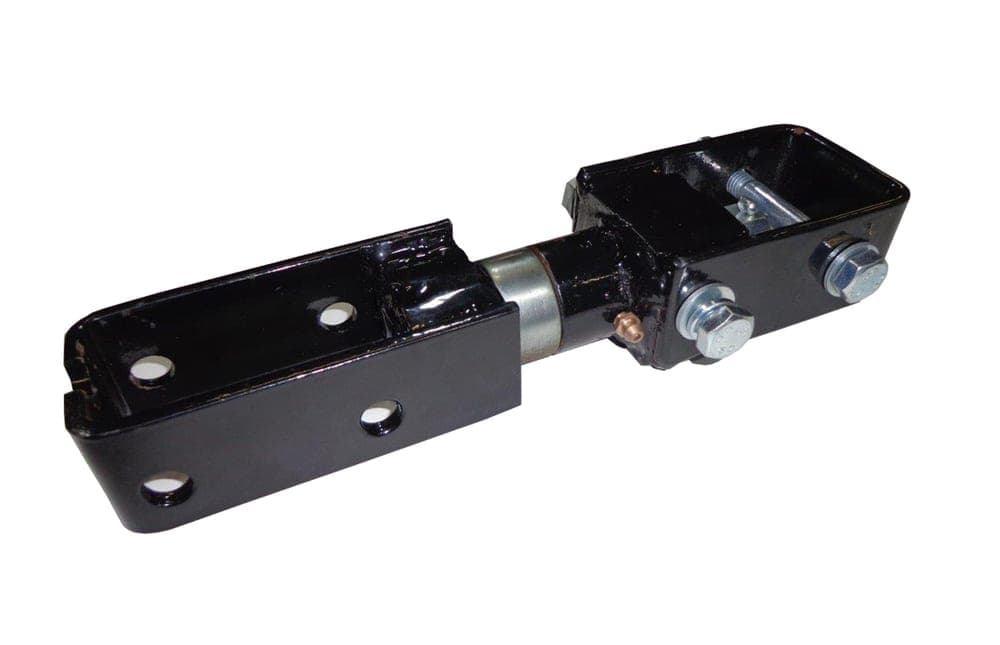
| 1 |  CURT Adjustable Channel Mount with Dual Ball (2 in shank, 6 in drop) Best overall | Garages with several trailers | Two ball sizes, 6 in drop, 14,000 lb gross | Check price on Amazon #ad Affiliate link - we publish no price; Amazon shows the current one |
| 2 |  B&W Tow & Stow Adjustable Ball Mount Best for a daily driver | Daily drivers that tow occasionally | Stows up out of the way when unused | Check price on Amazon #ad Affiliate link - we publish no price; Amazon shows the current one |
| 3 |  CURT Loaded Ball Mount with 2 in Ball (2 in drop, 7,500 lb) Best fixed mount | One trailer at a known height | 7,500 lb, ball already fitted and torqued | Check price on Amazon #ad Affiliate link - we publish no price; Amazon shows the current one |
| 4 |  Weigh Safe Adjustable Drop Hitch with Built-in Tongue Weight Scale Best for load discipline | Owners who will never visit a scale | Reads tongue weight as you hitch | Check price on Amazon #ad Affiliate link - we publish no price; Amazon shows the current one |
| 5 |  CURT 2 in Stainless Trailer Ball (1 in shank, 6,000 lb) Best replacement ball | Replacing a worn or wrong-size ball | 6,000 lb, published 250 ft-lb torque | Check price on Amazon #ad Affiliate link - we publish no price; Amazon shows the current one |
| 6 |  CURT Anti-Rattle Hitch Pin and Shim (2 in receiver) Cheapest worthwhile upgrade | Killing receiver rattle | Removes receiver slop for pocket money | Check price on Amazon #ad Affiliate link - we publish no price; Amazon shows the current one |
The picks in detail
1. Best overall
CURT Adjustable Channel Mount with Dual Ball (2 in shank, 6 in drop)
CURT · Best for garages with several trailers
One mount that covers two ball sizes and a range of heights, which is the answer when the garage contains a boat trailer, a utility trailer and a camper that all sit at different heights. Capacity drops to the lower-rated ball you are actually using.
Published specifications
What works
- Two ball sizes and a height range in a single mount
- Flipping it gives rise as well as drop
- Rated to 14,000 lb on the larger ball
What does not
- Heavy, and more joints means more places for rattle to start
- The pins and bolts need checking for torque, unlike a one-piece mount
Skip it if
Pointless if you own one trailer and tow it with one truck - a fixed mount at the right height is lighter, quieter and cheaper.
#ad Affiliate link - we publish no price; Amazon shows the current one
Raw specifications: CURT’s own page. We earn nothing on that link.
2. Best for a daily driver
B&W Tow & Stow Adjustable Ball Mount
B&W Trailer Hitches · Best for daily drivers that tow occasionally
Two balls on a pivoting head that tucks up under the bumper when nothing is attached, which is the part owners actually rave about - no more shin-height steel bar in a parking lot. Height adjusts in pin increments rather than continuously.
We have not sourced a full specification table for this model from the manufacturer’s own site at a stable address. Rather than repeat figures we cannot cite, the assessment above is limited to what the design and the maker’s published description genuinely establish.
What works
- Stows up out of the way instead of projecting behind the bumper
- Two ball sizes on one head, flipped rather than swapped
- Solid, heavily built, and quiet when pinned correctly
What does not
- Heavy to handle and to store
- Height steps are fixed by the pin holes, so an exact level may not be available
Skip it if
Not the right buy if you need a precise level height - a continuously adjustable channel mount will get closer than pin increments will.
#ad Affiliate link - we publish no price; Amazon shows the current one
Raw specifications: B&W Trailer Hitches’s own page. We earn nothing on that link.
3. Best fixed mount
CURT Loaded Ball Mount with 2 in Ball (2 in drop, 7,500 lb)
CURT · Best for one trailer at a known height
A one-piece mount with the ball already fitted and torqued, rated to 7,500 lb gross and 750 lb tongue with a 2 in drop. Nothing adjusts, which is exactly why nothing rattles or works loose.
Published specifications
What works
- Arrives with the ball fitted, so there is no torque step to get wrong
- One piece means nothing to loosen or rattle
- Light enough to leave in the receiver or throw in a toolbox
What does not
- The 2 in drop is the only drop - measure before you buy
- 7,500 lb ceiling rules out heavier trailers
Skip it if
Useless on a lifted truck, where a 2 in drop will still leave the trailer nose-high and the weight on the rear axle of the trailer.
#ad Affiliate link - we publish no price; Amazon shows the current one
Raw specifications: CURT’s own page. We earn nothing on that link.
4. Best for load discipline
Weigh Safe Adjustable Drop Hitch with Built-in Tongue Weight Scale
Weigh Safe · Best for owners who will never visit a scale
An adjustable drop hitch with a hydraulic gauge in the shank, so the tongue weight reads out as you lower the trailer onto the ball. It turns the single most-skipped step in towing into something that happens automatically, which is worth more than the hardware itself.
We have not sourced a full specification table for this model from the manufacturer’s own site at a stable address. Rather than repeat figures we cannot cite, the assessment above is limited to what the design and the maker’s published description genuinely establish.
What works
- Reads tongue weight every time you hitch, with no extra step
- Adjustable height and reversible for rise as well as drop
- Makes the 10-15 percent rule checkable instead of theoretical
What does not
- The gauge reads at the ball, so it is sensitive to being parked on a slope
- Heavier and considerably more expensive than a plain mount
Skip it if
Not needed if you already weigh at a public scale - the gauge is convenience, and a certified scale is still the more accurate number.
#ad Affiliate link - we publish no price; Amazon shows the current one
Raw specifications: Weigh Safe’s own page. We earn nothing on that link.
5. Best replacement ball
CURT 2 in Stainless Trailer Ball (1 in shank, 6,000 lb)
CURT · Best for replacing a worn or wrong-size ball
A replacement 2 in ball on a 1 in shank, rated to 6,000 lb, with a published torque figure of 250 ft-lb. That torque number is the reason to buy a ball from a manufacturer that publishes specs: an under-torqued ball nut is a genuine failure mode.
Published specifications
What works
- Published torque specification, which many balls do not come with
- Stainless finish survives a boat ramp better than plain zinc
- Correct shank sizing is spelled out rather than assumed
What does not
- 6,000 lb ceiling is below what many 2 in couplers are rated to carry
- Needs a torque wrench to fit properly, which many people do not own
Skip it if
Not enough ball if your coupler is rated above 6,000 lb - match the ball to the coupler's rating, not to the hole in your mount.
#ad Affiliate link - we publish no price; Amazon shows the current one
Raw specifications: CURT’s own page. We earn nothing on that link.
6. Cheapest worthwhile upgrade
CURT Anti-Rattle Hitch Pin and Shim (2 in receiver)
CURT · Best for killing receiver rattle
A pin plus a wedge shim that takes the slop out of the gap between a 2 in mount and a 2 in receiver. That gap is a manufacturing tolerance, not a fault, and this is the cheapest thing on the whole site that fixes a real, daily annoyance.
Published specifications
What works
- Removes the clunk over expansion joints for very little money
- Fits in a glovebox and transfers between vehicles
- No modification to the receiver or the mount
What does not
- Does nothing about rattle originating at the coupler or the sway bar
- Listed as superseded, so check the current item number
Skip it if
Not the fix if the noise is coming from a loose ball nut or a worn coupler - find the source first, because a shim will just mask it.
#ad Affiliate link - we publish no price; Amazon shows the current one
Raw specifications: CURT’s own page. We earn nothing on that link.
What to check on the receiver you already have
- The rating label. Two numbers: weight-carrying and weight-distributing. Know both before you tow anything substantial.
- Tube size. Measure the square opening. 1-1/4 in, 2 in, 2-1/2 in and 3 in all exist, and accessories are not interchangeable between them.
- Pin hole diameter. Usually 5/8 in on 2 in receivers and 1/2 in on 1-1/4 in receivers. Buy the pin to match.
- Corrosion at the mounting bolts. On an older vehicle this matters more than any specification on the label.
Key takeaways
- Receiver fitment is a lookup; everything that goes in it is a choice.
- Measure the drop you need before buying a mount.
- Ball diameter matches the coupler stamp - never close enough.
- An anti-rattle pin and shim is the cheapest real improvement available.
How we sourced this
Every figure on this page came from one of the following, each fetched while the page was written. Where a manufacturer or regulator does not publish a number, we say so rather than estimate it.
- CURT adjustable channel mount with dual ball - published specifications (part 45900)
- CURT loaded ball mount, 2 in ball, 2 in drop - published specifications (part 45036)
- CURT 2 in stainless trailer ball - published specifications including 250 ft-lb mounting torque (part 40083)
- CURT anti-rattle hitch pin and shim - published specifications (part 22321)
Common questions
- Can I fit a hitch myself?
- On many vehicles a bolt-on receiver is a straightforward job with hand tools, and on some it requires dropping exhaust components or trimming a fascia. Read the installation instructions for your specific part before deciding.
- Do I need a different mount for each trailer?
- Only if they sit at different heights or use different ball sizes. An adjustable mount with two balls covers that case without owning three mounts.
- What if my trailer tows nose-high?
- Change the ball mount drop. Do not try to fix trailer attitude with spring bar tension - that is the wrong adjustment for the problem.
More in Hitches, Receivers & Ball Mounts
Class, receiver size, ball diameter, drop. Four numbers decide whether your setup is right, and three of them are stamped on parts you already own.
Read next
Reference
Hitch Classes Explained
The class system from 1 to 5, the two ratings on every label, and the mistake of inferring capacity from tube size.
Best ball mount
Best Ball Mounts
Fixed, adjustable, stowing and scale-equipped mounts compared on drop range, capacity and how much they rattle.
Reference
Trailer Ball Sizes
The three standard ball diameters, how shank dimensions work, and why mounting torque is a specification rather than a suggestion.

Reference
Receiver Sizes Chart
Tube sizes, pin hole diameters, what fits what, and the derating that comes with a reducer sleeve.
Found something out of date, or a figure you can source better than we did? Corrections get read first. How we research explains how these pages are put together, and contact is one click away.