Towing Capacity, Tongue Weight & Setup
How to Hook Up a Trailer
An order of operations, not a knack. Done the same way every time, nothing gets missed.
Disclosure: we earn a commission if you buy through the Amazon links on this page, at no extra cost to you. Commission never decides a verdict or a ranking position - read our editorial policy and affiliate disclosure.
Short answer
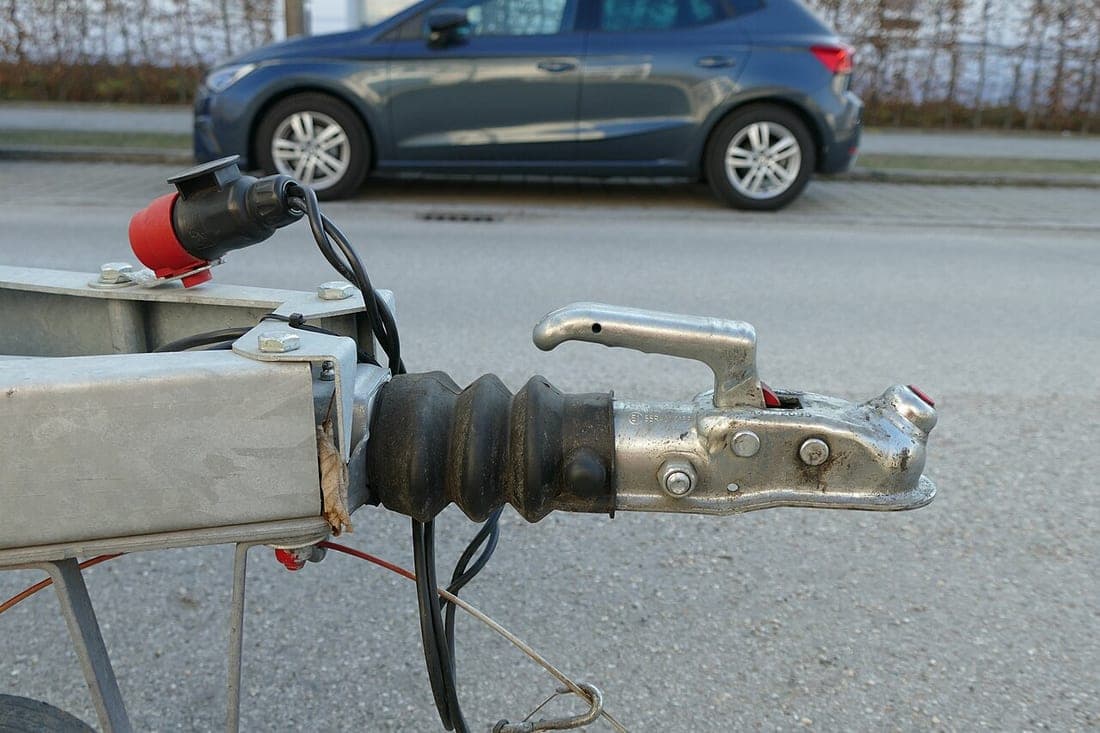
Chock the wheels, line up and lower the coupler onto the ball, latch and pin it, cross the chains under the coupler, attach the breakaway cable to the vehicle, connect the electrics, test the lights, raise the jack, remove the chocks.
The sequence
Hitching up
Chock the trailer's wheels
Both sides, both directions if you are on any slope at all.
Set the coupler height
Raise the coupler with the jack so it clears the ball by a couple of inches. Open the latch now, while you can reach it comfortably.
Back the vehicle into position
Slowly, with a spotter if you have one. Align the ball directly under the coupler.
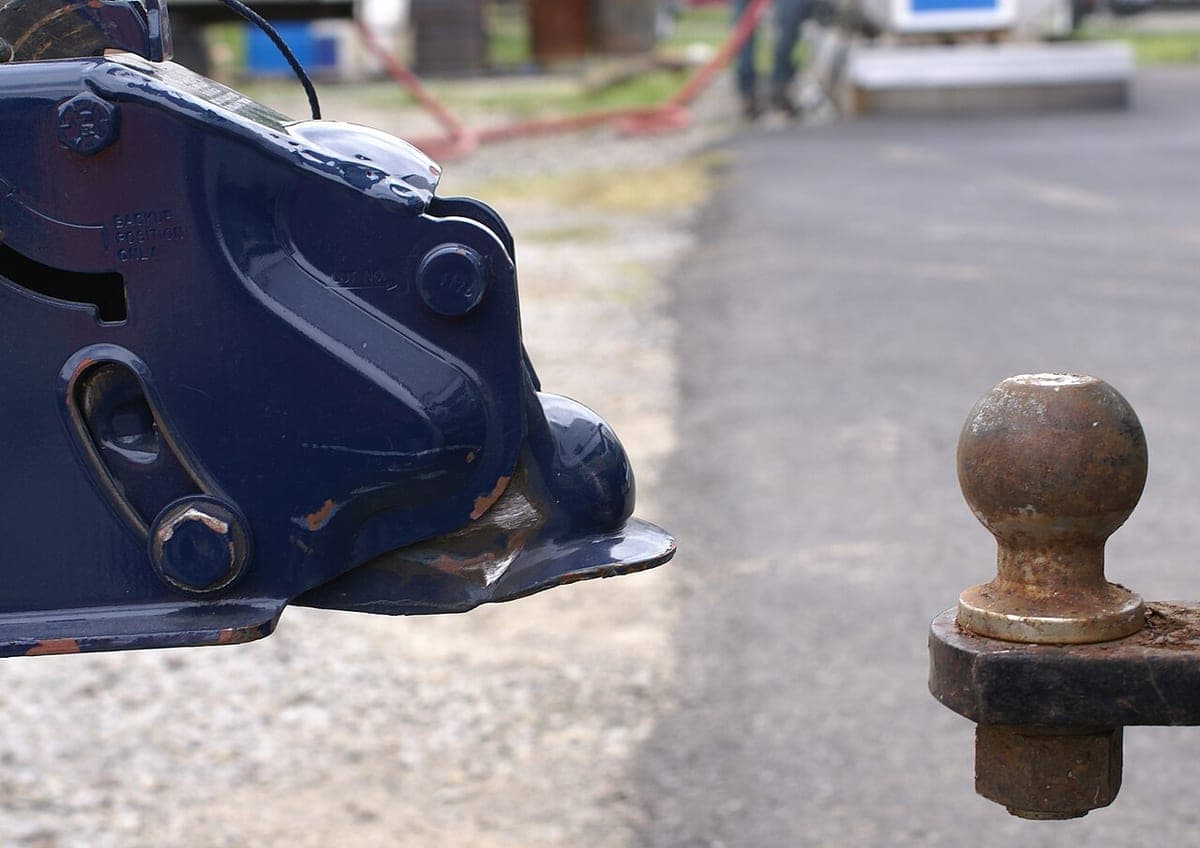
Lower the coupler onto the ball
All the way down until the ball is fully seated in the socket. Look - a coupler resting on top of a ball looks very similar to one that is seated.
Latch and pin
Close the latch and fit the pin or clip. The pin is what stops the latch opening on a bump.
Test the connection
Raise the jack a little further so it lifts the back of the tow vehicle slightly. If the coupler is not seated, this is where you find out - safely, at a standstill.
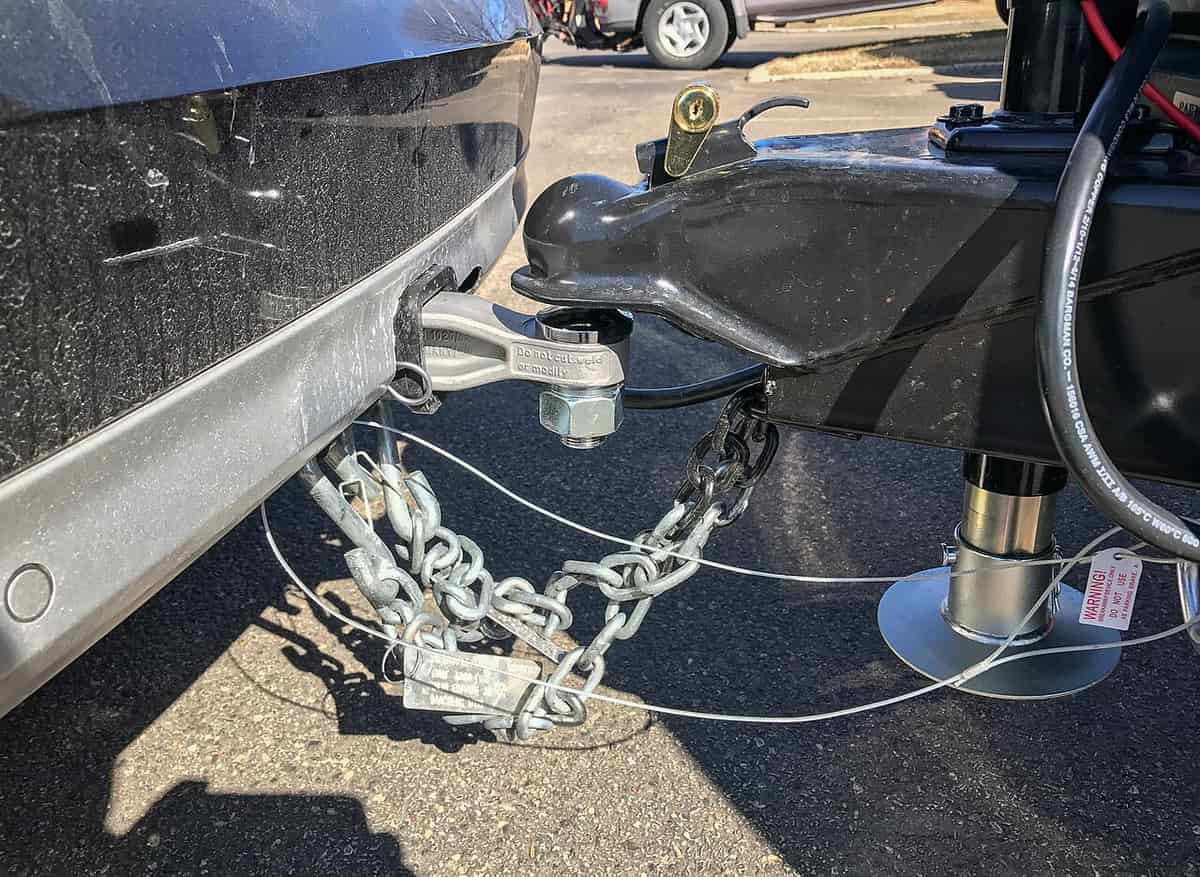
Cross the safety chains underneath
Left chain to the right attachment point and vice versa, so they form a cradle under the coupler. Enough slack to turn, not enough to drag.
Attach the breakaway cable to the vehicle
To a dedicated point on the hitch or the vehicle - never to the safety chains, which may themselves fail in the event the breakaway exists for.
Connect the electrics
Plug in, and route the cable with enough slack for full-lock turns without dragging it on the road.
Test every light
Running, left, right, brake. With a brake controller, confirm it detects the trailer.
Fit the weight distribution bars if used
Tension to your established setting.
Raise the jack fully and stow the handle
Fully up. A jack foot left partly down will find the first driveway lip you cross.
Remove the chocks last
And put them where you will not drive off without them.
Why chains cross
Crossed under the coupler, they form a cradle. If the coupler comes off the ball, it lands in the chains rather than dropping onto the pavement and digging in. Federal rules for commercial towing require an arrangement that prevents the coupling from dropping to the ground, and specify two chains or cables attached at two points as far apart as the frame allows. The physics is identical on a private trailer.
Quick picks
Tap any row to jump to the full write-up. How these are chosen - and what we do and do not claim to know - is published in full on our research methodology page.
| # | Product | Best for | Our read | Price |
|---|---|---|---|---|
| 1 |  Camco Trailer Wheel Chocks Step zero | Every trailer, without exception | Chocked before anything else happens | Check price on Amazon #ad Affiliate link - we publish no price; Amazon shows the current one |
| 2 |  CURT Safety Chain Assembly with Hooks Rated chains | Replacing worn or unrated chains | Rating must meet the trailer's gross weight | Check price on Amazon #ad Affiliate link - we publish no price; Amazon shows the current one |
| 3 |  CURT Trailer Breakaway Kit with Battery For braked trailers | Braked trailers, where required | Switch, battery and charger as a set | Check price on Amazon #ad Affiliate link - we publish no price; Amazon shows the current one |
1. Step zero
Camco Trailer Wheel Chocks
Camco · Best for every trailer, without exception
Chocks go in before you unhitch, every time. They are not an upgrade and they are not interesting; they are the thing standing between a parked trailer and a slow roll down a campground slope.
We have not sourced a full specification table for this model from the manufacturer’s own site at a stable address. Rather than repeat figures we cannot cite, the assessment above is limited to what the design and the maker’s published description genuinely establish.
What works
- Cheap insurance against the most preventable trailer accident there is
- Works on any trailer regardless of brakes or jack type
- Takes seconds and needs no setup
What does not
- Plastic chocks degrade in sun over several seasons
- Easy to leave behind at a site
Skip it if
There is no situation where you should skip chocks - if these do not suit your tire size, buy different ones rather than none.
#ad Affiliate link - we publish no price; Amazon shows the current one
2. Rated chains
CURT Safety Chain Assembly with Hooks
CURT · Best for replacing worn or unrated chains
Replacement safety chains with rated hooks. Two things decide whether chains do their job: the rating has to meet or exceed the trailer's gross weight, and they have to be crossed under the coupler so they cradle it if the ball lets go.
We have not sourced a full specification table for this model from the manufacturer’s own site at a stable address. Rather than repeat figures we cannot cite, the assessment above is limited to what the design and the maker’s published description genuinely establish.
What works
- Rated assemblies, rather than hardware-store chain of unknown grade
- Hooks sized to engage a receiver loop properly
- Cheap relative to what they are insuring against
What does not
- Length must be right - too long drags, too short binds in turns
- Hooks without latches can bounce off on rough surfaces
Skip it if
Do not buy a set rated below your trailer's gross weight to save money - that is the one specification on the whole part that matters.
#ad Affiliate link - we publish no price; Amazon shows the current one
Raw specifications: CURT’s own page. We earn nothing on that link.
3. For braked trailers
CURT Trailer Breakaway Kit with Battery
CURT · Best for braked trailers, where required
The switch and battery that apply the trailer's electric brakes if the trailer separates from the tow vehicle. Most states require it on braked trailers above a weight threshold, and the battery is the part everyone forgets to test.
We have not sourced a full specification table for this model from the manufacturer’s own site at a stable address. Rather than repeat figures we cannot cite, the assessment above is limited to what the design and the maker’s published description genuinely establish.
What works
- Applies the trailer brakes automatically in a separation
- Sold as a complete kit, so the battery and charger match the switch
- Addresses a legal requirement in most states for braked trailers
What does not
- The battery degrades silently and needs periodic load testing
- Cable must be attached to the vehicle, not to the safety chains
Skip it if
Not applicable to a trailer with no electric brakes - check what your trailer actually has before buying.
#ad Affiliate link - we publish no price; Amazon shows the current one
Raw specifications: CURT’s own page. We earn nothing on that link.
The walk-around before you move
- Coupler latched and pinned, with the jack fully up.
- Chains crossed, not dragging, not so tight they bind in a turn.
- Breakaway cable on the vehicle, with slack but not looping to the ground.
- Electrical plug seated, cable routed clear of the chains and the road.
- Chocks in the vehicle, not under the trailer.
- Nothing left on the tongue or the roof - this is where the jack handle and the coffee cup end up.
Key takeaways
- Same order every time means nothing gets skipped.
- The jack-lift test catches an unseated coupler at a standstill.
- Chains cross to cradle; the breakaway goes to the vehicle, never the chains.
- Chocks come out last, and go back in the tow vehicle.
How we sourced this
Every figure on this page came from one of the following, each fetched while the page was written. Where a manufacturer or regulator does not publish a number, we say so rather than estimate it.
Common questions
- How tight should safety chains be?
- Enough slack to allow full-lock turns without binding, short enough that they never touch the road. Crossed under the coupler so they cradle it.
- Where does the breakaway cable attach?
- To a dedicated point on the vehicle or the hitch - never to the safety chains. If the coupling fails and the chains go with it, a breakaway attached to them never gets pulled.
- How do I know the coupler is seated?
- Raise the jack after latching so it lifts the back of the tow vehicle slightly. If the coupler is sitting on top of the ball rather than around it, that test reveals it while you are standing still.
More in Towing Capacity, Tongue Weight & Setup
The number in the brochure is not the number that limits you. The one that does is on a sticker inside your driver's door.
Read next
Guide
Chains and Breakaway Cables
Chain rating and arrangement, breakaway switch wiring, and the maintenance step that decides whether either one works.

Guide
First Time Towing
What genuinely changes behind the wheel with a trailer attached, plus the pre-departure checks that prevent most first-trip problems.
How to
WD Hitch Setup Guide
The full setup sequence with the measurements that make it verifiable, plus how to read the symptoms of each wrong setting.
Reference
Trailer Ball Sizes
The three standard ball diameters, how shank dimensions work, and why mounting torque is a specification rather than a suggestion.
Found something out of date, or a figure you can source better than we did? Corrections get read first. How we research explains how these pages are put together, and contact is one click away.