Trailer Sway & Sway Control
The Best Sway Control Hitches for Travel Trailers
Measure your loaded tongue weight first. It decides which of these is right far more than brand loyalty does.
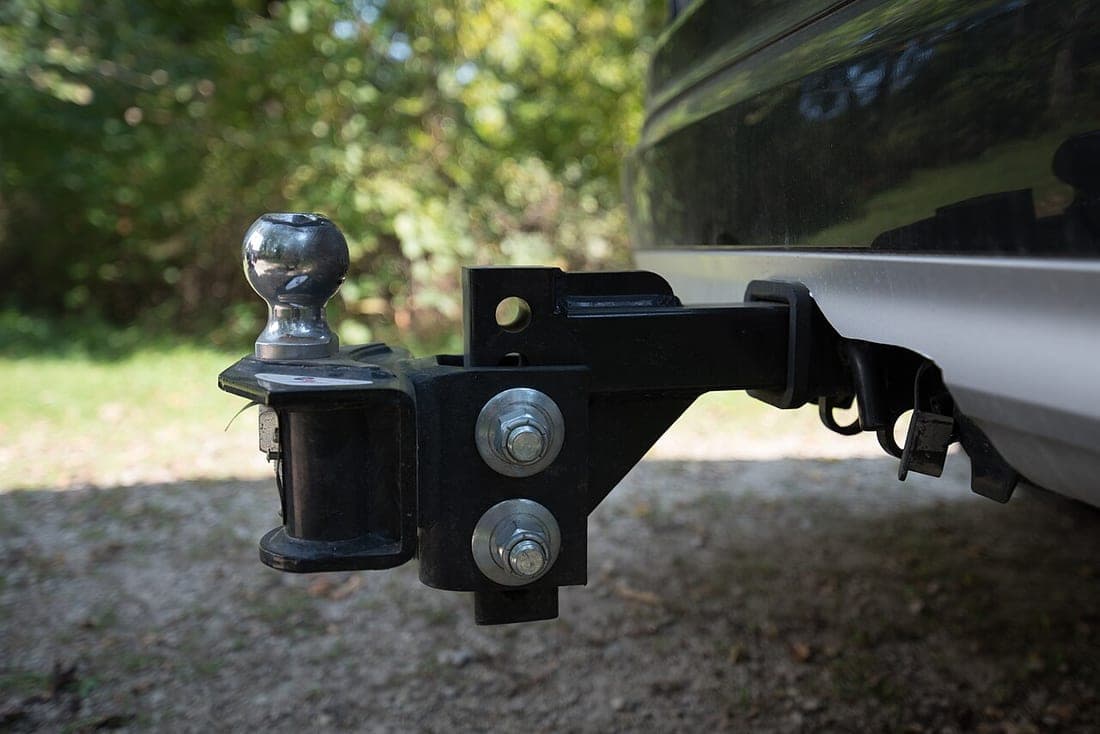
Disclosure: we earn a commission if you buy through the Amazon links on this page, at no extra cost to you. Commission never decides a verdict or a ranking position - read our editorial policy and affiliate disclosure.
How we assessed these: We do not run a test lab and we have not towed these units back to back. This is a selection built from each manufacturer's published specifications, the mechanism each design uses, and which failure modes each one is exposed to. Where a maker does not publish a figure, we say so rather than estimate it.
Short answer
If sway is your complaint, buy a weight distribution hitch with sway control designed into its geometry rather than bolted alongside it. Four-point friction and dual-cam systems both stay engaged in reverse and in the wet, which a friction bar does not.
Before any of this: weigh your tongue. A trailer carrying less than 10 percent of its loaded weight on the ball will sway behind the best hitch made. Hardware raises the speed and the gust strength at which sway begins; it does not change the physics of a tail-heavy trailer. How to measure tongue weight takes twenty minutes and is free.
How we chose these
Three questions decided the ordering, and none of them is a score out of ten.
- Can the sway control be left off by accident? A friction bar you must disconnect to reverse is a bar you will eventually drive away without reconnecting. Systems where resistance is a property of the geometry cannot be forgotten.
- Does it still work when conditions get worse? Friction surfaces lose some effect when wet or contaminated. Cam systems and friction-cone designs are less affected.
- Is the setup achievable alone? A hitch that needs a second person to tension chains gets set up badly on the trips where there is no second person.
Quick picks
Tap any row to jump to the full write-up. How these are chosen - and what we do and do not claim to know - is published in full on our research methodology page.
| # | Product | Best for | Our read | Price |
|---|---|---|---|---|
| 1 |  Equal-i-zer 4-point Sway Control Hitch Best overall | Travel trailers that already sway | Resistance that is never switched off | Check price on Amazon #ad Affiliate link - we publish no price; Amazon shows the current one |
| 2 |  CURT TruTrack 4P Weight Distribution Hitch (10-15K) Best for heavy trailers | Heavy travel trailers near 15,000 lb | Adjustable friction, rated to 15,000 lb | Check price on Amazon #ad Affiliate link - we publish no price; Amazon shows the current one |
| 3 | 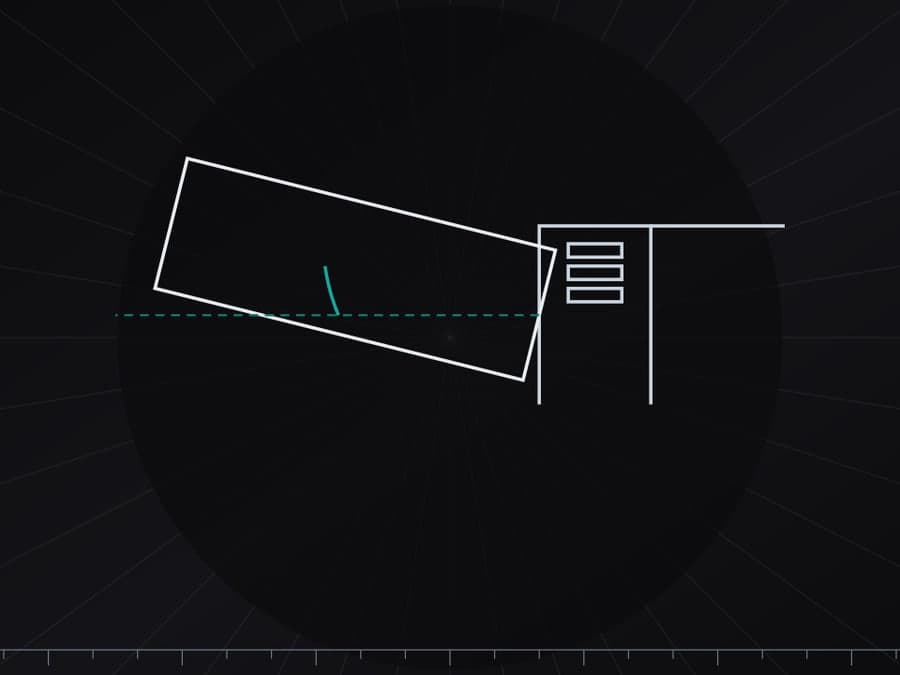 Reese Strait-Line Weight Distribution Hitch with Dual Cam Sway Control Best in crosswinds | Long trailers in crosswinds | Cams pull the trailer back to center | Check price on Amazon #ad Affiliate link - we publish no price; Amazon shows the current one |
| 4 |  Blue Ox SwayPro Weight Distribution Hitch Best for frequent hitching | Owners who hitch and unhitch often | Clamp-on latches, no chains to snap up | Check price on Amazon #ad Affiliate link - we publish no price; Amazon shows the current one |
| 5 |  Andersen No-Sway Weight Distribution Hitch Lightest to handle | Anyone who struggles with bar weight | Chains instead of steel spring bars | Check price on Amazon #ad Affiliate link - we publish no price; Amazon shows the current one |
| 6 |  CURT Sway Control Kit Cheapest honest fix | Light trailers that wander | Damps yaw, transfers no load | Check price on Amazon #ad Affiliate link - we publish no price; Amazon shows the current one |
The picks in detail
Each of these addresses a different version of the same problem. Read the "skip it if" line on each one - it is usually more useful than the list of strengths.
1. Best overall
Equal-i-zer 4-point Sway Control Hitch
Equal-i-zer · Best for travel trailers that already sway
The reference point for integrated sway control. Friction happens at four places at once - both L-brackets and both sockets - so resistance is always on rather than something you remember to engage. Setup is bracket-height and bar-angle work, and it rattles; both are the price of a system with no separate parts to forget.
We have not sourced a full specification table for this model from the manufacturer’s own site at a stable address. Rather than repeat figures we cannot cite, the assessment above is limited to what the design and the maker’s published description genuinely establish.
What works
- Sway resistance is built into the geometry, so there is nothing to connect or disconnect at the ramp
- Works in reverse and in the wet, unlike a friction bar you have to release
- One assembly rather than a hitch plus a bolt-on sway bar
What does not
- Audible rattle and creak at low speed is normal and surprises first-time owners
- Bracket height and bar angle have to be set properly or the sway control does little
Skip it if
Skip it if your loaded tongue weight sits well inside your receiver's weight-carrying rating and the truck stays level - you would be buying hardware to solve a problem you do not have.
#ad Affiliate link - we publish no price; Amazon shows the current one
Raw specifications: Equal-i-zer’s own page. We earn nothing on that link.
2. Best for heavy trailers
CURT TruTrack 4P Weight Distribution Hitch (10-15K)
CURT · Best for heavy travel trailers near 15,000 lb
Four-point sway control with adjustable friction, rated to a 15,000 lb trailer and 1,500 lb tongue. The adjustability is the point: you can dial resistance up for a long, tall trailer and back it off for a short one, instead of living with whatever the geometry gives you.
Published specifications
What works
- Friction is adjustable rather than fixed by the geometry
- Rated range covers the tongue weights that half-ton trucks genuinely struggle with
- Limited lifetime warranty on the structure
What does not
- At 123.6 lb assembled it is a heavy thing to lift on and off a shank
- The 10,000 lb floor means it is over-specified for a small trailer
Skip it if
Wrong tool below about 10,000 lb gross trailer weight - under the rated floor the bars barely flex, so you get the weight penalty without the load transfer.
#ad Affiliate link - we publish no price; Amazon shows the current one
Raw specifications: CURT’s own page. We earn nothing on that link.
3. Best in crosswinds
Reese Strait-Line Weight Distribution Hitch with Dual Cam Sway Control
Reese · Best for long trailers in crosswinds
Dual-cam sway control works differently from friction: the cams hold the trailer in the straight-ahead position and have to be pushed out of it, then they pull it back. That is a restoring force rather than a damping one, and it is the reason people who tow long trailers in crosswinds keep choosing it.
We have not sourced a full specification table for this model from the manufacturer’s own site at a stable address. Rather than repeat figures we cannot cite, the assessment above is limited to what the design and the maker’s published description genuinely establish.
What works
- Cams actively return the trailer to center instead of only resisting movement
- Performance does not fall off when the friction surfaces get wet
- Well-understood system with decades of setup documentation behind it
What does not
- More parts to position correctly at setup than a single-friction system
- Cams can clunk as they seat when you pull away
Skip it if
Skip it on a short, light trailer - the cam system is aimed at trailers long enough to generate real yaw, and on a small utility trailer it is complexity for nothing.
#ad Affiliate link - we publish no price; Amazon shows the current one
Raw specifications: Reese’s own page. We earn nothing on that link.
4. Best for frequent hitching
Blue Ox SwayPro Weight Distribution Hitch
Blue Ox · Best for owners who hitch and unhitch often
Underslung spring bars on clamp-on latches, which makes hitching faster than chain-and-snap-up systems and keeps the bars out of the way of a low A-frame. Blue Ox publishes the range in tongue-weight bands rather than one do-everything model, so the sizing decision is made before you buy.
Published specifications
What works
- Latches clamp on rather than needing chains snapped up under tension
- Sold in defined tongue-weight bands, which makes correct sizing the default
- Underslung bars clear low A-frames and front storage boxes
What does not
- Bar bands are narrow, so a big change in how you load the trailer can put you in the wrong band
- Clamp-on brackets are another part to keep clean and lubricated
Skip it if
Not the one if your loaded tongue weight sits near the top of a band - buy up a band, because a bar run at its limit transfers less than a bar running in the middle of its range.
#ad Affiliate link - we publish no price; Amazon shows the current one
Raw specifications: Blue Ox’s own page. We earn nothing on that link.
5. Lightest to handle
Andersen No-Sway Weight Distribution Hitch
Andersen Hitches · Best for anyone who struggles with bar weight
A chain-and-bracket system instead of spring bars, which cuts the assembled weight dramatically and takes the greasy steel bars out of the equation. Sway resistance comes from a friction cone at the ball rather than from bar friction, so it keeps working in reverse.
We have not sourced a full specification table for this model from the manufacturer’s own site at a stable address. Rather than repeat figures we cannot cite, the assessment above is limited to what the design and the maker’s published description genuinely establish.
What works
- Far lighter to lift and store than a conventional spring-bar system
- No greased bars to handle, and no bars to drag on a steep transition
- Tension is set with a wrench rather than a snap-up bracket
What does not
- Chains and the friction cone need periodic re-tensioning and inspection
- Behaves differently from a spring-bar hitch, so advice written for those does not transfer cleanly
Skip it if
Not for you if you want a system a trailer shop down the road will recognize instantly - most of the setup advice you will find assumes spring bars.
#ad Affiliate link - we publish no price; Amazon shows the current one
Raw specifications: Andersen Hitches’s own page. We earn nothing on that link.
6. Cheapest honest fix
CURT Sway Control Kit
CURT · Best for light trailers that wander
A single friction bar between the trailer tongue and the ball mount, with adjustable tension. It damps yaw; it does not transfer load. On a light trailer that wanders a little it is the cheapest honest fix, and on a heavy one it is not enough on its own.
What works
- Simple, serviceable and easy to fit to an existing ball mount
- Tension is adjustable, so you can match it to the trailer
- Takes minutes to add to a setup you already own
What does not
- Must be disconnected before backing up tightly or in icy conditions
- Damps sway but does nothing about a tow vehicle that is squatting
Skip it if
The wrong answer if your truck sags at the back when the trailer is on - that is a load-distribution problem and a friction bar will not touch it.
#ad Affiliate link - we publish no price; Amazon shows the current one
Raw specifications: CURT’s own page. We earn nothing on that link.
Matching the hardware to your actual problem
| What you are experiencing | What it usually means | What to buy |
|---|---|---|
| Trailer wanders slightly, truck sits level | Marginal tongue weight or a long, light trailer | Load correction first; a friction bar if it persists |
| Truck sags at the back, steering feels light | Too much tongue weight for the receiver's carrying rating | Weight distribution hitch - sway control optional |
| Both: truck sags and the trailer moves around | The usual travel trailer situation | Weight distribution with integrated sway control |
| Sway only when passed by trucks | Bow-wave disturbance on a tall trailer with adequate tongue weight | Cam-based system, plus speed discipline |
What we would not buy
A second friction bar to supplement the first. Doubling friction bars is a common forum suggestion and it treats the symptom twice rather than addressing load transfer at all. If one bar is not enough, the problem is nearly always weight - either too little on the tongue, or too much on the back of the truck.
We also would not buy on bar rating alone. A 1,500 lb bar on a trailer with a 600 lb tongue weight is nearly rigid, transfers very little, and rides harshly. Bars work best in the middle of their range, which is the argument for systems sold in defined tongue weight bands.
Key takeaways
- Measure loaded tongue weight before you buy anything - 10 to 15 percent of loaded trailer weight is the target.
- Integrated sway control cannot be left disconnected; a friction bar can, and eventually will be.
- Size spring bars so your real tongue weight sits in the middle of their range, not at the top.
- If the truck squats, that is a load transfer problem and no amount of friction will fix it.
How we sourced this
Every figure on this page came from one of the following, each fetched while the page was written. Where a manufacturer or regulator does not publish a number, we say so rather than estimate it.
Common questions
- Do I need sway control if I already have a weight distribution hitch?
- If your hitch has no sway function and you are experiencing sway, yes - either a friction bar added alongside it, or a hitch that integrates both. Weight distribution alone transfers load; it does not add yaw resistance.
- Can I add sway control to any trailer?
- Nearly any, but check the trailer manufacturer's guidance first. Some pop-ups and some boat trailers specify no weight distribution because the A-frame is not built for spring bar brackets. The trailer maker's restriction wins.
- Does sway control work in reverse?
- Four-point friction, cam and friction-cone systems do. A single friction bar generally must be disconnected before tight reversing, and in icy conditions.
- Will a sway control hitch stop sway completely?
- No, and anyone promising that is overselling. It raises the threshold at which sway starts and damps it faster when it does. A badly loaded trailer will still sway.
More in Trailer Sway & Sway Control
Sway is almost never a mystery. It comes down to tongue weight, load position or speed - and only one of those three costs money to fix.
Read next

How to
How to Stop Trailer Sway
The in-the-moment response, then the load corrections that keep it from happening again - and when hardware is genuinely the answer.

Head to head
Sway Control Types Compared
Damping versus a restoring force versus always-on friction - what each mechanism does and when each one lets you down.

Head to head
Weight Distribution vs Sway Control
The clearest distinction in towing, explained by symptom: squatting truck versus wandering trailer, and what to do when it is both.

How to
Measuring Tongue Weight
Three methods for measuring tongue weight, what each one requires, and how to interpret the result against the 10-15 percent band.
Found something out of date, or a figure you can source better than we did? Corrections get read first. How we research explains how these pages are put together, and contact is one click away.