Hitches, Receivers & Ball Mounts
Class 3 vs Class 4 Hitch
They usually share a tube size, so the difference is entirely in the ratings - and in whether your vehicle can use them.

Disclosure: we earn a commission if you buy through the Amazon links on this page, at no extra cost to you. Commission never decides a verdict or a ranking position - read our editorial policy and affiliate disclosure.
Short answer
Both commonly use a 2 in receiver. Class 4 carries higher gross trailer weight and tongue weight ratings. The upgrade only helps if the receiver was your limiting factor - which, on most light trucks and SUVs, it is not.
What actually differs
Steel section, weld area and mounting points. A Class 4 receiver is a heavier structure attached to the frame at points chosen for a higher load. The tube opening is typically identical, which is why the same ball mounts fit both and why people assume the classes are nearly the same.
| Class 3 | Class 4 | |
|---|---|---|
| Receiver tube | 2 in | 2 in |
| Gross trailer weight | Lower band | Higher band |
| Tongue weight | Lower band | Higher band |
| Weight-distributing rating | Often published | Usually published and higher |
| Ball mounts | Interchangeable | Interchangeable |
| Typical vehicles | Half-tons, larger SUVs | Half-tons with heavy tow packages, heavy duty |
Actual figures vary by manufacturer and vehicle application - read the label on your receiver.
When upgrading is pointless
If your vehicle's payload runs out at 1,400 lb, a receiver rated for a 1,000 lb tongue does not help you carry a 1,000 lb tongue - the vehicle still has to carry it along with your passengers and gear. The binding constraint on most light trucks is payload, not the receiver, and no hitch changes payload.
Work out your real limit before spending anything: payload vs towing capacity walks through the arithmetic with the labels your vehicle already carries.
Quick picks
Tap any row to jump to the full write-up. How these are chosen - and what we do and do not claim to know - is published in full on our research methodology page.
| # | Product | Best for | Our read | Price |
|---|---|---|---|---|
| 1 |  CURT Loaded Ball Mount with 2 in Ball (2 in drop, 7,500 lb) Typical Class 3 load | One trailer at a known height | 7,500 lb gross, 750 lb tongue | Check price on Amazon #ad Affiliate link - we publish no price; Amazon shows the current one |
| 2 |  CURT Adjustable Channel Mount with Dual Ball (2 in shank, 6 in drop) Class 4 territory | Garages with several trailers | 14,000 lb with the larger ball | Check price on Amazon #ad Affiliate link - we publish no price; Amazon shows the current one |
| 3 |  CURT Round Bar Weight Distribution Hitch with Sway Control (14K) When tongue weight climbs | Mid-size travel trailers | Distribution to 1,400 lb tongue | Check price on Amazon #ad Affiliate link - we publish no price; Amazon shows the current one |
1. Typical Class 3 load
CURT Loaded Ball Mount with 2 in Ball (2 in drop, 7,500 lb)
CURT · Best for one trailer at a known height
A one-piece mount with the ball already fitted and torqued, rated to 7,500 lb gross and 750 lb tongue with a 2 in drop. Nothing adjusts, which is exactly why nothing rattles or works loose.
Published specifications
What works
- Arrives with the ball fitted, so there is no torque step to get wrong
- One piece means nothing to loosen or rattle
- Light enough to leave in the receiver or throw in a toolbox
What does not
- The 2 in drop is the only drop - measure before you buy
- 7,500 lb ceiling rules out heavier trailers
Skip it if
Useless on a lifted truck, where a 2 in drop will still leave the trailer nose-high and the weight on the rear axle of the trailer.
#ad Affiliate link - we publish no price; Amazon shows the current one
Raw specifications: CURT’s own page. We earn nothing on that link.
2. Class 4 territory
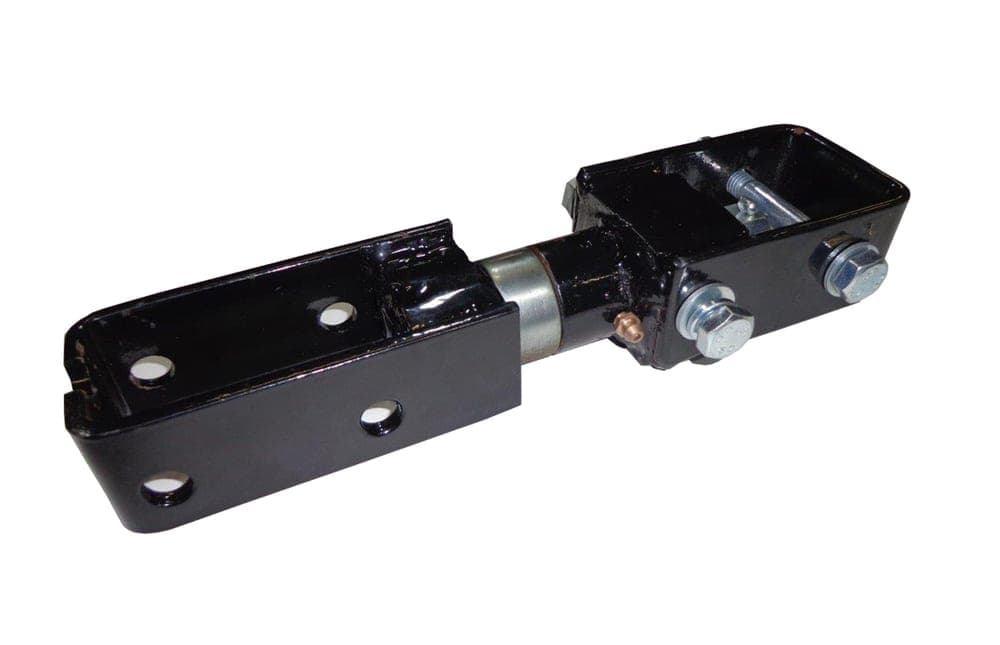
CURT Adjustable Channel Mount with Dual Ball (2 in shank, 6 in drop)
CURT · Best for garages with several trailers
One mount that covers two ball sizes and a range of heights, which is the answer when the garage contains a boat trailer, a utility trailer and a camper that all sit at different heights. Capacity drops to the lower-rated ball you are actually using.
Published specifications
What works
- Two ball sizes and a height range in a single mount
- Flipping it gives rise as well as drop
- Rated to 14,000 lb on the larger ball
What does not
- Heavy, and more joints means more places for rattle to start
- The pins and bolts need checking for torque, unlike a one-piece mount
Skip it if
Pointless if you own one trailer and tow it with one truck - a fixed mount at the right height is lighter, quieter and cheaper.
#ad Affiliate link - we publish no price; Amazon shows the current one
Raw specifications: CURT’s own page. We earn nothing on that link.
3. When tongue weight climbs
CURT Round Bar Weight Distribution Hitch with Sway Control (14K)
CURT · Best for mid-size travel trailers
A conventional round-bar system with integrated lubrication and sway control, rated to 14,000 lb gross and 1,400 lb tongue. The built-in lubrication matters more than it sounds: a dry weight distribution head is the usual source of the groaning people mistake for a failing hitch.
Published specifications
What works
- Integrated lubrication at the head, which is where the noise usually comes from
- Round bars sit lower and clear more trailer tongues than trunnion bars
- Limited lifetime warranty
What does not
- Round bars hang lower than trunnion bars and are the first thing to catch on a steep driveway
- Sway control here is a function of the head, not an adjustable four-point system
Skip it if
Skip it if you regularly cross steep transitions - a round bar is the lowest part of the whole rig and will find the pavement before anything else does.
#ad Affiliate link - we publish no price; Amazon shows the current one
Raw specifications: CURT’s own page. We earn nothing on that link.
Key takeaways
- Both classes commonly use a 2 in tube, so accessories are shared.
- The difference is structural - section, welds and mounting points.
- Upgrading helps only if the receiver was the limiting factor.
- On most light trucks, payload binds before the receiver does.
How we sourced this
Every figure on this page came from one of the following, each fetched while the page was written. Where a manufacturer or regulator does not publish a number, we say so rather than estimate it.
Common questions
- Can I fit a Class 4 hitch to any vehicle?
- Only if the manufacturer makes one for that vehicle, which depends on the frame. Where no Class 4 part exists, that is an engineering judgment rather than an oversight.
- Does a Class 4 hitch need different accessories?
- Usually not. The tube is normally the same 2 in size, so mounts and pins carry over. Check that the mount's own rating suits the heavier load.
- Is Class 4 worth it for future-proofing?
- Only if a heavier trailer is actually in your plans and your vehicle has the payload for it. Otherwise it is weight and cost for a rating you cannot use.
More in Hitches, Receivers & Ball Mounts
Class, receiver size, ball diameter, drop. Four numbers decide whether your setup is right, and three of them are stamped on parts you already own.
Read next

Reference
Hitch Classes Explained
The class system from 1 to 5, the two ratings on every label, and the mistake of inferring capacity from tube size.
Head to head
Class 2 vs Class 3
Why the jump from Class 2 to Class 3 matters more than other class steps, and what you gain beyond the capacity figures.
Head to head
Payload vs Towing Capacity
Why the tow rating rarely binds first, how to calculate your real limit from the labels on your vehicle, and what counts against payload.
Best hitch hardware
Best Trailer Hitches
What to buy for a 2 in receiver - mounts, balls, pins and anti-rattle hardware - and how to get the vehicle-specific receiver right.
Found something out of date, or a figure you can source better than we did? Corrections get read first. How we research explains how these pages are put together, and contact is one click away.