Hitches, Receivers & Ball Mounts
What Receiver Size Does My Truck Have?
You do not need the part number. Two measurements and the label on the receiver answer every question you have.
Disclosure: we earn a commission if you buy through the Amazon links on this page, at no extra cost to you. Commission never decides a verdict or a ranking position - read our editorial policy and affiliate disclosure.
Short answer
Measure the inside of the square opening flat to flat, measure the pin hole, and read the rating label on the receiver. That gives you tube size, pin size and capacity without needing to know which part was fitted at the factory.
Why we do not publish a lookup table
Receiver fitment varies by year, cab, bed, trim and whether a tow package was ordered, and it changes mid-generation. A table claiming to cover that would be wrong somewhere, and being wrong about a capacity figure is not a small error. The vehicle in your driveway is a more reliable source than any chart, and it takes five minutes to read.
The three checks
Five minutes under the bumper
Measure the opening
Inside the square tube, flat to flat. You will get 1-1/4, 2, 2-1/2 or 3 inches. Measure the inside, not the outside of the steel.
Measure the pin hole
Usually 5/8 in on a 2 in receiver and 1/2 in on a 1-1/4 in, but not always. This matters for pins, locks and anti-rattle shims.
Read the rating label
A sticker or stamped plate on the receiver crossmember. It carries gross trailer weight and tongue weight, often in both weight-carrying and weight-distributing form.
Cross-check against the vehicle
The receiver's rating is a ceiling, not a permission. Your vehicle's tow rating, GVWR, GAWR and payload all still apply, and are usually lower.
Quick picks
Tap any row to jump to the full write-up. How these are chosen - and what we do and do not claim to know - is published in full on our research methodology page.
| # | Product | Best for | Our read | Price |
|---|---|---|---|---|
| 1 |  CURT Adjustable Channel Mount with Dual Ball (2 in shank, 6 in drop) If you measure 2 in | Garages with several trailers | The widest-fitting choice | Check price on Amazon #ad Affiliate link - we publish no price; Amazon shows the current one |
| 2 |  CURT Loaded Ball Mount with 2 in Ball (2 in drop, 7,500 lb) If you tow one trailer | One trailer at a known height | Fixed 2 in, nothing to rattle | Check price on Amazon #ad Affiliate link - we publish no price; Amazon shows the current one |
| 3 |  CURT Anti-Rattle Hitch Pin and Shim (2 in receiver) After you measure the pin hole | Killing receiver rattle | Sized to the hole, not the tube | Check price on Amazon #ad Affiliate link - we publish no price; Amazon shows the current one |
1. If you measure 2 in
CURT Adjustable Channel Mount with Dual Ball (2 in shank, 6 in drop)
CURT · Best for garages with several trailers
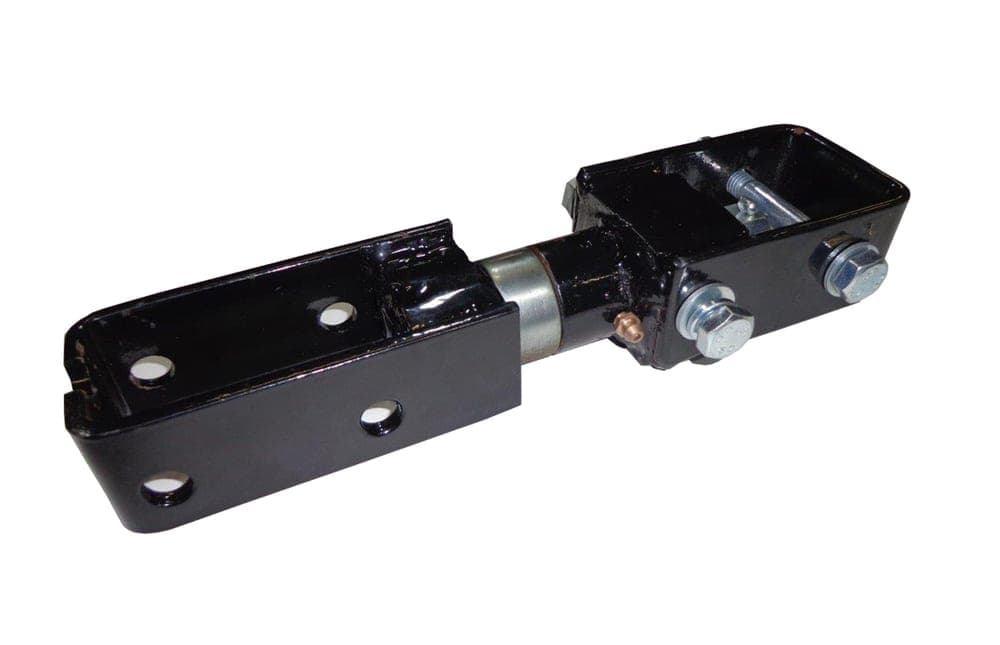
One mount that covers two ball sizes and a range of heights, which is the answer when the garage contains a boat trailer, a utility trailer and a camper that all sit at different heights. Capacity drops to the lower-rated ball you are actually using.
Published specifications
What works
- Two ball sizes and a height range in a single mount
- Flipping it gives rise as well as drop
- Rated to 14,000 lb on the larger ball
What does not
- Heavy, and more joints means more places for rattle to start
- The pins and bolts need checking for torque, unlike a one-piece mount
Skip it if
Pointless if you own one trailer and tow it with one truck - a fixed mount at the right height is lighter, quieter and cheaper.
#ad Affiliate link - we publish no price; Amazon shows the current one
Raw specifications: CURT’s own page. We earn nothing on that link.
2. If you tow one trailer
CURT Loaded Ball Mount with 2 in Ball (2 in drop, 7,500 lb)
CURT · Best for one trailer at a known height
A one-piece mount with the ball already fitted and torqued, rated to 7,500 lb gross and 750 lb tongue with a 2 in drop. Nothing adjusts, which is exactly why nothing rattles or works loose.
Published specifications
What works
- Arrives with the ball fitted, so there is no torque step to get wrong
- One piece means nothing to loosen or rattle
- Light enough to leave in the receiver or throw in a toolbox
What does not
- The 2 in drop is the only drop - measure before you buy
- 7,500 lb ceiling rules out heavier trailers
Skip it if
Useless on a lifted truck, where a 2 in drop will still leave the trailer nose-high and the weight on the rear axle of the trailer.
#ad Affiliate link - we publish no price; Amazon shows the current one
Raw specifications: CURT’s own page. We earn nothing on that link.
3. After you measure the pin hole
CURT Anti-Rattle Hitch Pin and Shim (2 in receiver)
CURT · Best for killing receiver rattle
A pin plus a wedge shim that takes the slop out of the gap between a 2 in mount and a 2 in receiver. That gap is a manufacturing tolerance, not a fault, and this is the cheapest thing on the whole site that fixes a real, daily annoyance.
Published specifications
What works
- Removes the clunk over expansion joints for very little money
- Fits in a glovebox and transfers between vehicles
- No modification to the receiver or the mount
What does not
- Does nothing about rattle originating at the coupler or the sway bar
- Listed as superseded, so check the current item number
Skip it if
Not the fix if the noise is coming from a loose ball nut or a worn coupler - find the source first, because a shim will just mask it.
#ad Affiliate link - we publish no price; Amazon shows the current one
Raw specifications: CURT’s own page. We earn nothing on that link.
Key takeaways
- Measure the tube inside, flat to flat.
- Pin hole diameter is a separate measurement.
- The label gives you the capacity - do not infer it from the class or the tube.
- The receiver's rating is a ceiling; the vehicle's ratings usually bind first.
How we sourced this
Every figure on this page came from one of the following, each fetched while the page was written. Where a manufacturer or regulator does not publish a number, we say so rather than estimate it.
Common questions
- The label on my receiver is unreadable. Now what?
- Use the manufacturer's fit guide for your vehicle to identify the likely part, then use that part's published rating. If the hitch is aftermarket and unidentifiable, treat its capacity as unknown and have it inspected.
- Does a bigger receiver mean I can tow more?
- Only if the receiver was the limiting factor, which it usually is not. Vehicle tow rating, GVWR, GAWR and payload all apply regardless.
- Is a factory hitch better than an aftermarket one?
- Not inherently - quality aftermarket receivers are engineered and rated to the same kind of standard. What differs is that you know a factory hitch was installed correctly.
More in Hitches, Receivers & Ball Mounts
Class, receiver size, ball diameter, drop. Four numbers decide whether your setup is right, and three of them are stamped on parts you already own.
Read next
Reference
Receiver Sizes Chart
Tube sizes, pin hole diameters, what fits what, and the derating that comes with a reducer sleeve.
Reference
Hitch Classes Explained
The class system from 1 to 5, the two ratings on every label, and the mistake of inferring capacity from tube size.
Best hitch hardware
Best Trailer Hitches
What to buy for a 2 in receiver - mounts, balls, pins and anti-rattle hardware - and how to get the vehicle-specific receiver right.
Guide
How Much Can My Truck Tow?
The four ratings that constrain a tow, where each is published, and the order to work through them.
Found something out of date, or a figure you can source better than we did? Corrections get read first. How we research explains how these pages are put together, and contact is one click away.