Towing Capacity, Tongue Weight & Setup
How to Balance a Trailer for Towing
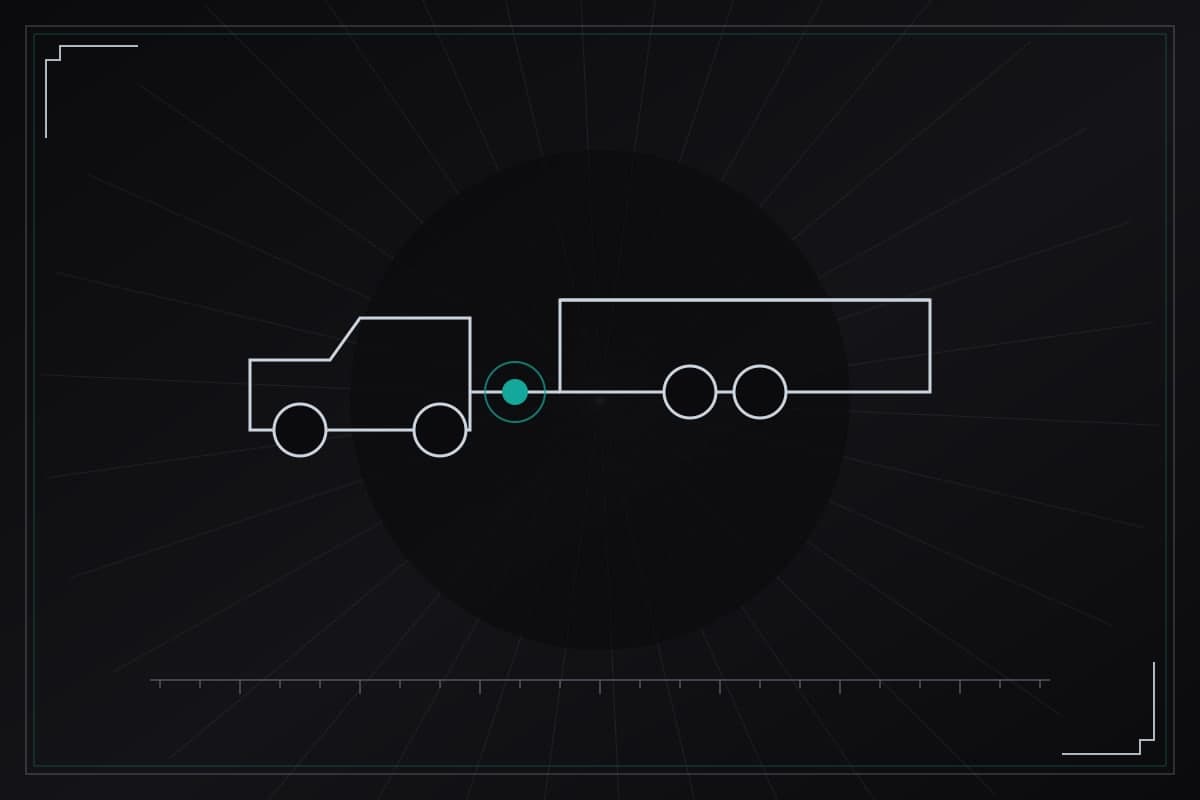
Trailer balance is not about looking level. It is about what percentage of the load is sitting on the hitch ball.
Disclosure: we earn a commission if you buy through the Amazon links on this page, at no extra cost to you. Commission never decides a verdict or a ranking position - read our editorial policy and affiliate disclosure.
Short answer
Load roughly 60 percent of the weight ahead of the trailer's axle and 40 percent behind it, keep heavy items low and over or just forward of the axle, and confirm the result by measuring tongue weight. The target is 10 to 15 percent of the loaded trailer weight on the ball.
Almost every trailer that wanders, fishtails or feels unsettled at highway speed is badly balanced rather than badly hitched. The good news is that balance is free to fix and takes one measurement to verify. The bad news is that it has to be redone every time the load changes, and most people load a trailer by whatever fits where.
Why the weight forward of the axle matters
A trailer pivots around the hitch ball, and its tendency to yaw depends on where its mass sits relative to the axle. Weight concentrated behind the axle acts like a pendulum: once something starts the trailer turning - a crosswind, a passing truck, a steering correction - that rearward mass keeps it turning, and the oscillation builds. Weight forward of the axle presses down on the ball instead, and a loaded ball resists yaw.
That is the whole reason tongue weight is specified as a percentage. It is not a loading convenience; it is a stability measurement expressed in a form you can check with a scale. What tongue weight is and why it works covers the physics in more detail.
| Share of loaded weight on the ball | Typical behavior | What to do |
|---|---|---|
| Under 10 percent | Wanders, then oscillates when disturbed | Move load forward of the axle |
| 10 to 15 percent | Tracks straight, settles after a disturbance | Nothing - this is the target |
| Over 15 percent | Heavy steering, rear squat, light front end | Move load back, and check payload |
The 10 to 15 percent band applies to conventional ball-coupled trailers. Fifth wheel and gooseneck trailers use a different, much higher range.
The loading sequence
Loading a trailer so it tows straight
Chock the wheels and level the trailer
On the jack, unhitched, on flat ground. A trailer that rolls while you load it is the most avoidable injury in towing.
Place the heaviest item first, just ahead of the axle
Not over the coupler, and not behind the axle. Just forward of the axle line is where the heaviest single item belongs.
Build outward and keep it low
Weight high up raises the center of gravity and makes the trailer roll more in a crosswind. Low and centered side to side.
Balance left and right as well
A trailer loaded heavy on one side pulls, loads one tire harder and wears it out. Side-to-side balance is as real as front-to-back.
Strap everything down
A load that shifts rearward at speed converts a balanced trailer into an unbalanced one instantly. This is how a well-loaded trailer starts swaying thirty miles into a trip.
Measure the tongue weight
Then adjust. Guessing at this step is how people end up at 6 percent and conclude they need a sway bar.
What to look for when you measure
There are three practical ways to get the number, and all of them work: a dedicated tongue weight scale under the jack, a lever arrangement with an ordinary bathroom scale, or a public scale weighing the rig hitched and unhitched. The three methods are set out step by step, including the arithmetic for the bathroom-scale version.
- Measure loaded, as you actually tow. Water, propane, batteries, tools and the things that live in the trailer all count. A dry figure from a brochure is not your trailer.
- Measure with the trailer level. A tongue reading taken with the trailer nose-high or nose-down is not the number you will tow at.
- Re-measure after a significant change. A different load, a new generator on the tongue, a water tank filled rather than empty - all of these move the figure.
- Write it down. Once you know how your trailer loads, you can repeat it rather than re-deriving it every trip.
Quick picks
Tap any row to jump to the full write-up. How these are chosen - and what we do and do not claim to know - is published in full on our research methodology page.
| # | Product | Best for | Our read | Price |
|---|---|---|---|---|
| 1 | 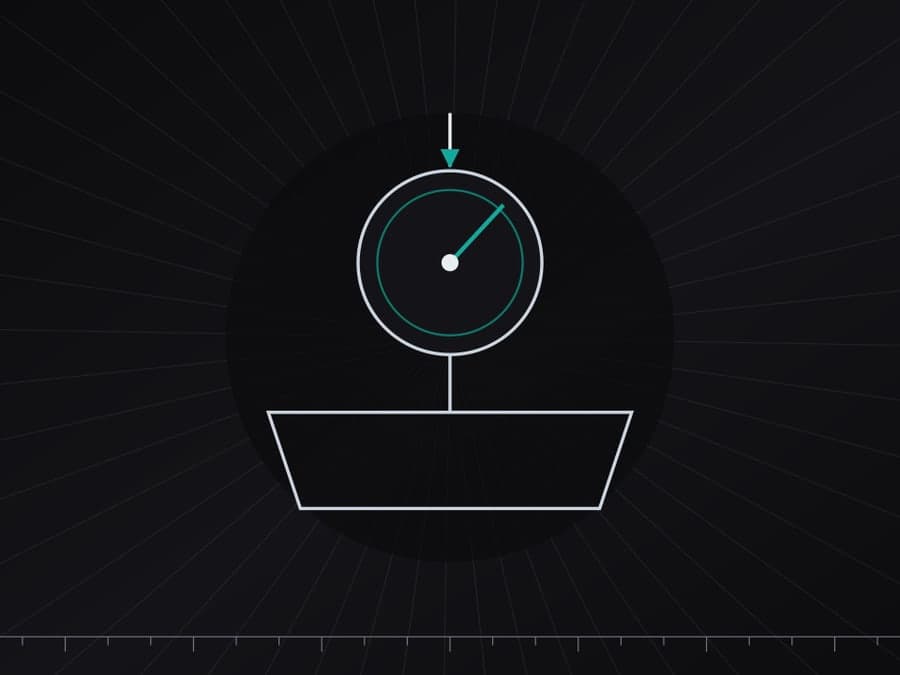 Sherline Trailer Tongue Weight Scale How you confirm it | Measuring tongue weight at home | Reads tongue weight on the driveway | Check price on Amazon #ad Affiliate link - we publish no price; Amazon shows the current one |
| 2 |  Weigh Safe Adjustable Drop Hitch with Built-in Tongue Weight Scale If you will never weigh it | Owners who will never visit a scale | Reads tongue weight as you hitch | Check price on Amazon #ad Affiliate link - we publish no price; Amazon shows the current one |
| 3 |  Camco Trailer Wheel Chocks Before you load anything | Every trailer, without exception | Chock it, every time, without exception | Check price on Amazon #ad Affiliate link - we publish no price; Amazon shows the current one |
1. How you confirm it
Sherline Trailer Tongue Weight Scale
Sherline · Best for measuring tongue weight at home
A dedicated scale you sit under the coupler to read tongue weight directly, with no arithmetic and no trip to a weighbridge. It is the one tool on this site that turns the single most important towing number from a guess into a measurement.
We have not sourced a full specification table for this model from the manufacturer’s own site at a stable address. Rather than repeat figures we cannot cite, the assessment above is limited to what the design and the maker’s published description genuinely establish.
What works
- Direct reading, with no bathroom-scale-and-lever arithmetic
- Repeatable, so you can see what moving the load actually does
- Mechanical gauge with no batteries to be flat when you need it
What does not
- Must be used on level ground with the coupler at towing height
- Single-purpose tool that spends most of its life in a cupboard
Skip it if
Unnecessary if your hitch already has a built-in gauge, or if you have a public scale nearby and are happy to use it.
#ad Affiliate link - we publish no price; Amazon shows the current one
Raw specifications: Sherline’s own page. We earn nothing on that link.
2. If you will never weigh it
Weigh Safe Adjustable Drop Hitch with Built-in Tongue Weight Scale
Weigh Safe · Best for owners who will never visit a scale
An adjustable drop hitch with a hydraulic gauge in the shank, so the tongue weight reads out as you lower the trailer onto the ball. It turns the single most-skipped step in towing into something that happens automatically, which is worth more than the hardware itself.
We have not sourced a full specification table for this model from the manufacturer’s own site at a stable address. Rather than repeat figures we cannot cite, the assessment above is limited to what the design and the maker’s published description genuinely establish.
What works
- Reads tongue weight every time you hitch, with no extra step
- Adjustable height and reversible for rise as well as drop
- Makes the 10-15 percent rule checkable instead of theoretical
What does not
- The gauge reads at the ball, so it is sensitive to being parked on a slope
- Heavier and considerably more expensive than a plain mount
Skip it if
Not needed if you already weigh at a public scale - the gauge is convenience, and a certified scale is still the more accurate number.
#ad Affiliate link - we publish no price; Amazon shows the current one
Raw specifications: Weigh Safe’s own page. We earn nothing on that link.
3. Before you load anything
Camco Trailer Wheel Chocks
Camco · Best for every trailer, without exception
Chocks go in before you unhitch, every time. They are not an upgrade and they are not interesting; they are the thing standing between a parked trailer and a slow roll down a campground slope.
We have not sourced a full specification table for this model from the manufacturer’s own site at a stable address. Rather than repeat figures we cannot cite, the assessment above is limited to what the design and the maker’s published description genuinely establish.
What works
- Cheap insurance against the most preventable trailer accident there is
- Works on any trailer regardless of brakes or jack type
- Takes seconds and needs no setup
What does not
- Plastic chocks degrade in sun over several seasons
- Easy to leave behind at a site
Skip it if
There is no situation where you should skip chocks - if these do not suit your tire size, buy different ones rather than none.
#ad Affiliate link - we publish no price; Amazon shows the current one
When balance is right and it still feels wrong
If the tongue weight is inside the band, the load is strapped and the trailer still feels unsettled, the next places to look are tire pressures, axle alignment and the tow vehicle itself. A long trailer behind a short-wheelbase vehicle is inherently more sensitive, and a truck that squats under the tongue weight is giving you a different problem with the same symptom.
The three real causes of sway works through those in order. Start with loading anyway, because it is free and it is the cause most of the time.
Key takeaways
- Aim for roughly 60 percent of the load ahead of the axle.
- Target 10 to 15 percent of loaded trailer weight on the ball, measured.
- Keep heavy items low and balanced side to side, and strap everything.
- Re-measure whenever the load changes - balance is not a one-time setup.
How we sourced this
Every figure on this page came from one of the following, each fetched while the page was written. Where a manufacturer or regulator does not publish a number, we say so rather than estimate it.
Common questions
- What is the 60/40 rule for trailer loading?
- Roughly 60 percent of the cargo weight ahead of the trailer's axle and 40 percent behind it. It is a loading heuristic that tends to produce a tongue weight in the 10 to 15 percent band, which is the figure that actually matters.
- How do I know if my trailer is balanced without a scale?
- You can get close with a lever and an ordinary bathroom scale, which is accurate enough to tell you whether you are near 6 percent or near 12. Judging by eye is not reliable, because a trailer can look level and still be badly balanced.
- Can too much tongue weight cause problems?
- Yes. Above about 15 percent you unload the tow vehicle's front axle, steering goes light and braking suffers, and the extra weight eats payload. The band has an upper limit for a reason.
- Does balance change the trailer's gross weight?
- No. Moving load forward or back changes how the weight is shared between the ball and the trailer's axles. The total is the same, which is why balance is free and capacity is not.
More in Towing Capacity, Tongue Weight & Setup
The number in the brochure is not the number that limits you. The one that does is on a sticker inside your driver's door.
Read next

How to
Measuring Tongue Weight
Three methods for measuring tongue weight, what each one requires, and how to interpret the result against the 10-15 percent band.

Guide
What Is Tongue Weight?
A plain explanation of tongue weight, the 10-15 percent band, and what goes wrong above and below it.

Guide
Why Trailers Sway
The physics in plain terms, the three causes ranked by how often they are to blame, and how to tell which one you have.
How to
How to Hook Up a Trailer
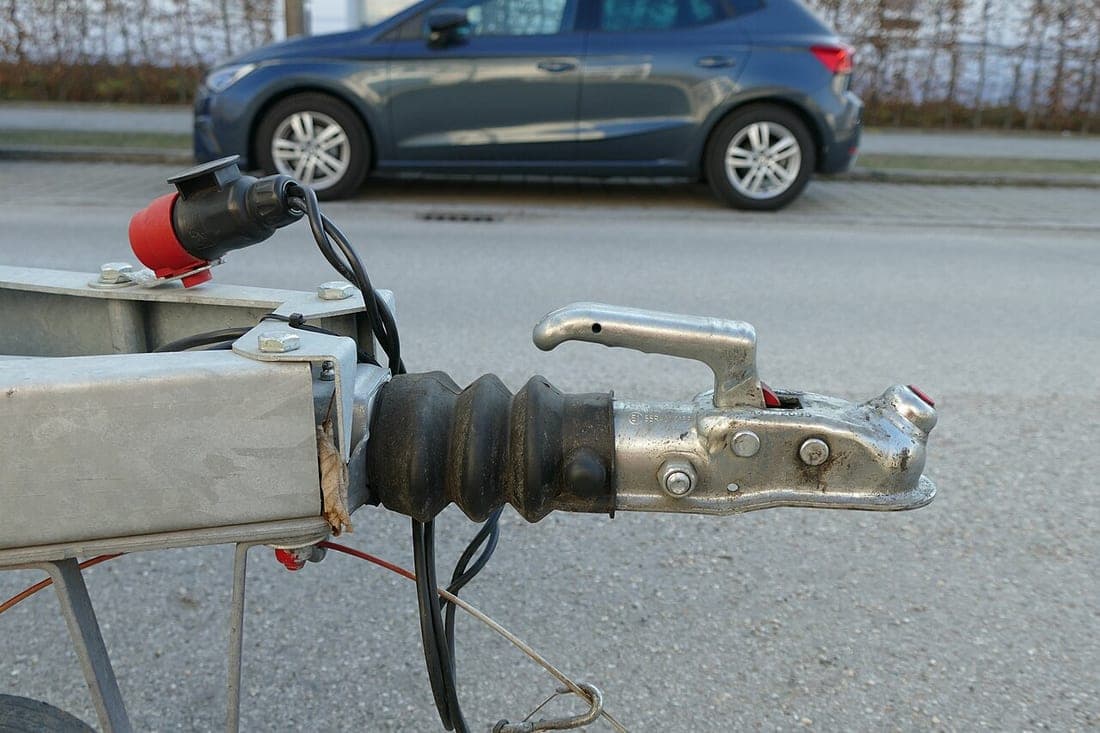
The full hitching sequence, why chains cross, where the breakaway cable goes, and what to check before you move.
Found something out of date, or a figure you can source better than we did? Corrections get read first. How we research explains how these pages are put together, and contact is one click away.