Wiring, Lights & Towing Mirrors
Trailer Wiring Color Codes
A convention, not a law. It holds often enough to be useful and fails often enough that you should test.
Disclosure: we earn a commission if you buy through the Amazon links on this page, at no extra cost to you. Commission never decides a verdict or a ranking position - read our editorial policy and affiliate disclosure.
Short answer
White is ground, brown is running lights, yellow is left turn/brake, green is right turn/brake. On a 7-way, blue is electric brakes, black is 12V and purple is reverse. This is convention - verify before cutting anything.
The 4-way set
| Color | Function |
|---|---|
| White | Ground |
| Brown | Tail and running lights |
| Yellow | Left turn and brake |
| Green | Right turn and brake |
The 7-way additions
| Color | Function |
|---|---|
| Blue | Electric trailer brakes |
| Black | 12V auxiliary / battery charge |
| Purple | Reverse, or surge brake lockout |
Black and blue are the two most commonly swapped in aftermarket installations. Test before connecting a brake controller output to anything.
What to do when the colors do not match
- Start at the lamps, not the plug. Identify which conductor feeds the left rear lamp, the right rear lamp and the running lights by disconnecting one at a time.
- Find the ground first. It is usually the conductor bolted to the frame. Everything else is referenced to it.
- Label as you go. Masking tape and a pen. Future you will be grateful.
- If more than two conductors are ambiguous, rewire. A new loom costs little and removes a category of problem permanently.
Quick picks
Tap any row to jump to the full write-up. How these are chosen - and what we do and do not claim to know - is published in full on our research methodology page.
| # | Product | Best for | Our read | Price |
|---|---|---|---|---|
| 1 |  CURT 7-Way RV Blade Connector Plug (trailer side) Rewire the plug | Replacing a corroded trailer plug | Screw terminals make colors easy to follow | Check price on Amazon #ad Affiliate link - we publish no price; Amazon shows the current one |
| 2 |  Optronics Submersible Trailer Light Kit Start fresh | Rewiring an older utility trailer | New loom removes the guesswork | Check price on Amazon #ad Affiliate link - we publish no price; Amazon shows the current one |
| 3 |  Blazer LED Submersible Trailer Light Kit For old trailers | Old trailers with tired wiring | Low draw suits tired wiring | Check price on Amazon #ad Affiliate link - we publish no price; Amazon shows the current one |
1. Rewire the plug
CURT 7-Way RV Blade Connector Plug (trailer side)
CURT · Best for replacing a corroded trailer plug
The trailer-side plug for a standard 7-way RV blade connection. Replacing a corroded plug is a twenty-minute job and fixes a surprising share of intermittent light and brake faults - far more often than the fault is actually in the truck.
Published specifications
What works
- Cheap, standard part that cures a lot of intermittent faults
- Screw terminals, so no special crimping tool is needed
- Fits the standard 7-way RV pattern used across the US
What does not
- Only the trailer half - a corroded vehicle socket needs the other part
- Short one-year warranty compared with CURT's structural parts
Skip it if
Not the part you need if your trailer uses a 4-way flat - check which connector you actually have before ordering anything.
#ad Affiliate link - we publish no price; Amazon shows the current one
Raw specifications: CURT’s own page. We earn nothing on that link.
2. Start fresh
Optronics Submersible Trailer Light Kit
Optronics · Best for rewiring an older utility trailer
A complete lighting kit - lamps, wiring, brackets and license plate light - for a trailer under 80 inches wide. Submersible rating is the thing to check: a sealed lamp survives a boat ramp, and a non-sealed one fills with water on the first launch.
We have not sourced a full specification table for this model from the manufacturer’s own site at a stable address. Rather than repeat figures we cannot cite, the assessment above is limited to what the design and the maker’s published description genuinely establish.
What works
- Everything needed in one box, so there is no second trip for a missing bracket
- Submersible lamps suit ramps and wet weather
- Sized for the common under-80-inch trailer class
What does not
- Trailers 80 inches and wider need a different lamp configuration by law
- Supplied wire lengths may be short for a long trailer
Skip it if
Wrong kit for a trailer 80 inches or wider - that class needs additional clearance and identification lamps.
#ad Affiliate link - we publish no price; Amazon shows the current one
Raw specifications: Optronics’s own page. We earn nothing on that link.
3. For old trailers
Blazer LED Submersible Trailer Light Kit
Blazer International · Best for old trailers with tired wiring
LED lamps draw less current than incandescent, which matters on an old trailer with marginal wiring and a tired ground. They also come on instantly, and the cheap failure mode of a sealed LED unit is the whole lamp rather than a bulb.
We have not sourced a full specification table for this model from the manufacturer’s own site at a stable address. Rather than repeat figures we cannot cite, the assessment above is limited to what the design and the maker’s published description genuinely establish.
What works
- Low current draw is kinder to old wiring and weak grounds
- Sealed units with no bulbs to corrode in their sockets
- Instant-on, which gives following traffic slightly more warning
What does not
- A failed LED lamp is replaced whole, not repaired
- Low current can confuse some vehicles' bulb-out monitoring
Skip it if
Not a cure for a bad ground - if your lights dim when you brake, fix the ground strap first or you will blame the new lamps.
#ad Affiliate link - we publish no price; Amazon shows the current one
Key takeaways
- White ground, brown running, yellow left, green right - the four-wire core.
- Blue brakes, black 12V, purple reverse on a 7-way.
- Aftermarket and home-built trailers frequently ignore all of it.
- When in doubt, rewire rather than trace - it is cheap and permanent.
How we sourced this
Every figure on this page came from one of the following, each fetched while the page was written. Where a manufacturer or regulator does not publish a number, we say so rather than estimate it.
Common questions
- Is there an official trailer wiring standard?
- The connector formats are consistent across the US market. We could not find a public authoritative document defining the wire colors in a form worth citing, which is exactly why we tell you to verify rather than presenting the convention as a rule.
- My trailer has all-black wires. What now?
- Identify each conductor at the lamp end by disconnecting one at a time, and label as you go. If more than a couple are ambiguous, rewiring is faster than tracing.
- Does the ground really need its own wire?
- Yes. Relying on the hitch ball as a ground path is a classic cause of dim, flickering and cross-connected lights. The ball is a greased steel-on-steel joint, not a connector.
More in Wiring, Lights & Towing Mirrors
Nearly every trailer electrical fault is corrosion or a bad ground. Knowing which wire does what turns a roadside mystery into a five-minute check.
Read next
Reference
7-Pin Wiring Diagram
The seven circuits and what each one does, the common color convention, and how to confirm it on your own vehicle.
Troubleshooting
Trailer Lights Not Working
An ordered diagnostic for trailer lighting faults, including what specific symptoms tell you about where the problem is.
Best trailer light kit
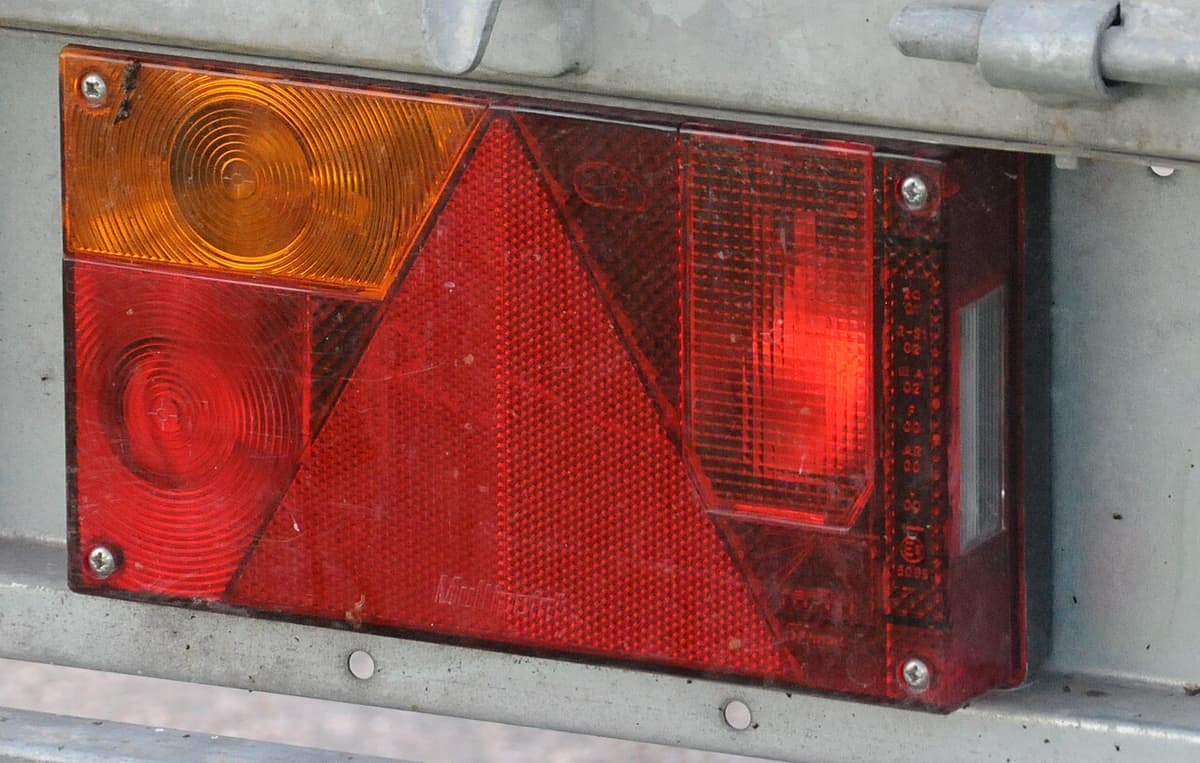
Best Trailer Light Kits
Complete lighting kits for utility and boat trailers, with the submersible and width considerations that pick the kit for you.
Reference
Brake Controller Wiring
The brake circuit from battery to magnet, the role of each conductor, and the connection points that cause most faults.
Found something out of date, or a figure you can source better than we did? Corrections get read first. How we research explains how these pages are put together, and contact is one click away.