Trailer Brake Controllers
Do I Need Trailer Brakes on Both Axles?
A single braked axle on a tandem trailer is a cost decision made by the builder. Whether you live with it depends on weight and terrain.
Disclosure: we earn a commission if you buy through the Amazon links on this page, at no extra cost to you. Commission never decides a verdict or a ranking position - read our editorial policy and affiliate disclosure.
How we assessed these: Brake requirements are set by state law and vary, and this site does not publish state-by-state rules - check your own state's requirement and your trailer's certification label. The hardware below is assessed from each maker's published specifications.
Short answer
If your trailer is light and the terrain is flat, brakes on one axle of a tandem will stop it. Once the loaded trailer is heavy, or you tow long descents, brakes on both axles are the right answer: you halve the work each brake assembly does, which is what prevents fade on the second and third application.
This question usually arrives after someone looks under a tandem trailer and finds brake drums on the front axle and plain hubs on the rear. That is not a fault. Plenty of utility trailers, car haulers and lighter travel trailers are built that way, because the builder only had to meet the braking requirement that applied to the trailer's rating - and brake assemblies, wiring and a second magnet pair cost money.
What a single braked axle actually costs you
Two braked wheels instead of four means each brake does roughly twice the work for the same stop. In a single stop from moderate speed on the flat, that is often unremarkable. The difference appears in the cases that matter:
- Repeated application on a descent. Drum brakes shed heat slowly. Two drums doing four drums' work climb in temperature faster, and a hot drum brakes less. That is fade, and it arrives exactly when you least want it.
- Emergency stops. The deceleration available from the trailer is lower, which means more of the stop lands on the tow vehicle and the stopping distance of the whole rig grows.
- Tire and bearing load. Braking on one axle shifts load between axles on a tandem, loading one set of tires and bearings harder during every stop.
- Wear rate. Two assemblies wearing at double rate means shoes and magnets need replacing sooner, which erodes the cost saving that created the arrangement.
When one braked axle is genuinely fine
A light tandem trailer - a small utility trailer, an open car trailer towed empty, a trailer used around town - stops perfectly adequately on one braked axle behind a vehicle with capacity to spare. If you tow on flat ground, rarely, and well under your vehicle's limits, there is no urgent reason to change it. The honest test is how the rig feels on your actual routes: if you find yourself braking early and the trailer feels like it is pushing, that is the signal, not a specification.
What adding the second axle involves
- Confirm your axles accept brake assemblies - most braked-capable axles have a mounting flange on the spindle; plain idler axles may not.
- Buy brake assemblies matched to the axle's bolt pattern and rating, in the same size as the existing pair.
- Run wiring back to the second axle and bond the ground to the frame properly - a shared poor ground is the most common post-install complaint.
- Confirm the controller is rated for the resulting number of braked axles. Controllers publish a maximum, and exceeding it means the magnets never get full current.
- Re-set gain with the trailer loaded, because four braked wheels need a different setting than two.
That last point catches people. Doubling the braked wheels without revisiting gain usually produces a trailer that now locks up, and the owner concludes the install went wrong. It did not - the setting is simply matched to the old hardware. Setting gain properly takes about two minutes in an empty lot.
Quick picks
Tap any row to jump to the full write-up. How these are chosen - and what we do and do not claim to know - is published in full on our research methodology page.
| # | Product | Best for | Our read | Price |
|---|---|---|---|---|
| 1 |  CURT Spectrum Integrated Proportional Brake Controller Best for multi-axle trailers | Multi-axle trailers | Published for higher braked-axle counts | Check price on Amazon #ad Affiliate link - we publish no price; Amazon shows the current one |
| 2 |  Tekonsha Prodigy P3 Trailer Brake Controller Best control over a heavy load | Towing more than one trailer | Boost profiles bias braking toward the trailer | Check price on Amazon #ad Affiliate link - we publish no price; Amazon shows the current one |
| 3 |  CURT Trailer Breakaway Kit with Battery Required alongside brakes | Braked trailers, where required | The circuit that applies brakes if the trailer parts | Check price on Amazon #ad Affiliate link - we publish no price; Amazon shows the current one |
The hardware in detail
1. Best for multi-axle trailers
CURT Spectrum Integrated Proportional Brake Controller
CURT · Best for multi-axle trailers
A hardwired proportional controller with tri-axis sensing, a tri-color LED readout and a wide axle range - up to four braked axles, or eight with the right wiring. Mounts at essentially any angle, which solves the main problem of fitting a controller to a modern dash.
Published specifications
What works
- Mounting angle is a non-issue, which widens the list of places it will fit
- Covers heavier multi-axle trailers that a basic controller will not
- LED color tells you the state at a glance without reading a number
What does not
- An LED is a far coarser diagnostic than a text display
- Still a hardwiring job with a vehicle-specific harness
Skip it if
Skip it if you want to read exact output voltage while you tow - the color band is deliberately simpler than that.
#ad Affiliate link - we publish no price; Amazon shows the current one
Raw specifications: CURT’s own page. We earn nothing on that link.
2. Best control over a heavy load
Tekonsha Prodigy P3 Trailer Brake Controller
Tekonsha · Best for towing more than one trailer
The proportional controller most other proportional controllers get measured against. It stores settings per trailer, reads out what it is actually doing, and diagnoses wiring faults on the screen instead of leaving you guessing at the connector.
We have not sourced a full specification table for this model from the manufacturer’s own site at a stable address. Rather than repeat figures we cannot cite, the assessment above is limited to what the design and the maker’s published description genuinely establish.
What works
- Stores separate settings for multiple trailers, so you are not re-dialing gain every trip
- On-screen diagnostics name the fault instead of just refusing to work
- Boost settings let you bias braking toward the trailer on a heavy load
What does not
- Needs a proper mounting location within reach and sight of the driver
- More controller than a single light trailer ever needs
Skip it if
Overkill if you tow one small trailer a few times a year and never change the load - a simpler proportional unit does the same job on that trip.
#ad Affiliate link - we publish no price; Amazon shows the current one
3. Required alongside brakes
CURT Trailer Breakaway Kit with Battery
CURT · Best for braked trailers, where required
The switch and battery that apply the trailer's electric brakes if the trailer separates from the tow vehicle. Most states require it on braked trailers above a weight threshold, and the battery is the part everyone forgets to test.
We have not sourced a full specification table for this model from the manufacturer’s own site at a stable address. Rather than repeat figures we cannot cite, the assessment above is limited to what the design and the maker’s published description genuinely establish.
What works
- Applies the trailer brakes automatically in a separation
- Sold as a complete kit, so the battery and charger match the switch
- Addresses a legal requirement in most states for braked trailers
What does not
- The battery degrades silently and needs periodic load testing
- Cable must be attached to the vehicle, not to the safety chains
Skip it if
Not applicable to a trailer with no electric brakes - check what your trailer actually has before buying.
#ad Affiliate link - we publish no price; Amazon shows the current one
Raw specifications: CURT’s own page. We earn nothing on that link.
The controller side of the question
Every controller publishes a maximum number of braked axles, and that figure exists because each magnet draws current. Run more magnets than the controller is rated for and output per magnet falls, so the trailer brakes feel weak no matter where the gain sits. If you are going from two braked wheels to four, check the controller's published axle count before you buy brake assemblies - it may be the cheaper half of the upgrade.
If you are starting from nothing, whether you need a controller at all is the prior question, and the main controller roundup covers the range. If the brakes you have do not work at all, start with the diagnostic sequence instead of buying parts.
Key takeaways
- One braked axle on a tandem is a builder's cost decision, not a defect.
- The cost shows up on long descents and in emergency stops, not around town.
- Heat is the mechanism: two drums doing four drums' work fade sooner.
- Check your state's requirement as well as how the trailer feels.
- Adding brakes means checking the controller's braked-axle rating and resetting gain.
How we sourced this
Every figure on this page came from one of the following, each fetched while the page was written. Where a manufacturer or regulator does not publish a number, we say so rather than estimate it.
Common questions
- Is it legal to have brakes on only one axle of a tandem trailer?
- It depends on the state and on the trailer's weight rating. Some states require brakes on all wheels above a stated weight, others require only that the combination can stop within a distance. Check the rule for the state where the trailer is registered and where you tow.
- Will adding brakes to the second axle improve stopping much?
- In a single stop on the flat, the difference may be modest. On a long descent or in a repeated-stop situation it is substantial, because four assemblies share the heat that two were absorbing alone.
- Does my brake controller care how many axles have brakes?
- Yes. Controllers publish a maximum braked-axle count because each magnet draws current. Exceed it and every magnet gets less, so the brakes feel weak at any gain setting.
- Can I add electric brakes to an idler axle?
- Only if the axle is built to accept brake assemblies - look for a mounting flange at the spindle. Plain idler axles often are not, in which case the fix is an axle swap rather than a brake kit.
More in Trailer Brake Controllers
If the trailer has electric brakes, something has to tell them how hard to work. That something is a controller, and how you set it decides how the rig stops.
Read next
Guide
Do I Need a Brake Controller?
A decision path covering unbraked, surge-brake and electric-brake trailers, plus what to check on your tow vehicle first.
How to
Adjusting Brake Gain
The empirical gain procedure, how to read under- and over-braking, and the loads that make a reset necessary.
Troubleshooting
Trailer Brakes Not Working
An ordered diagnostic sequence for electric trailer brakes, from the connector outward, with the checks that need no tools.
Guide
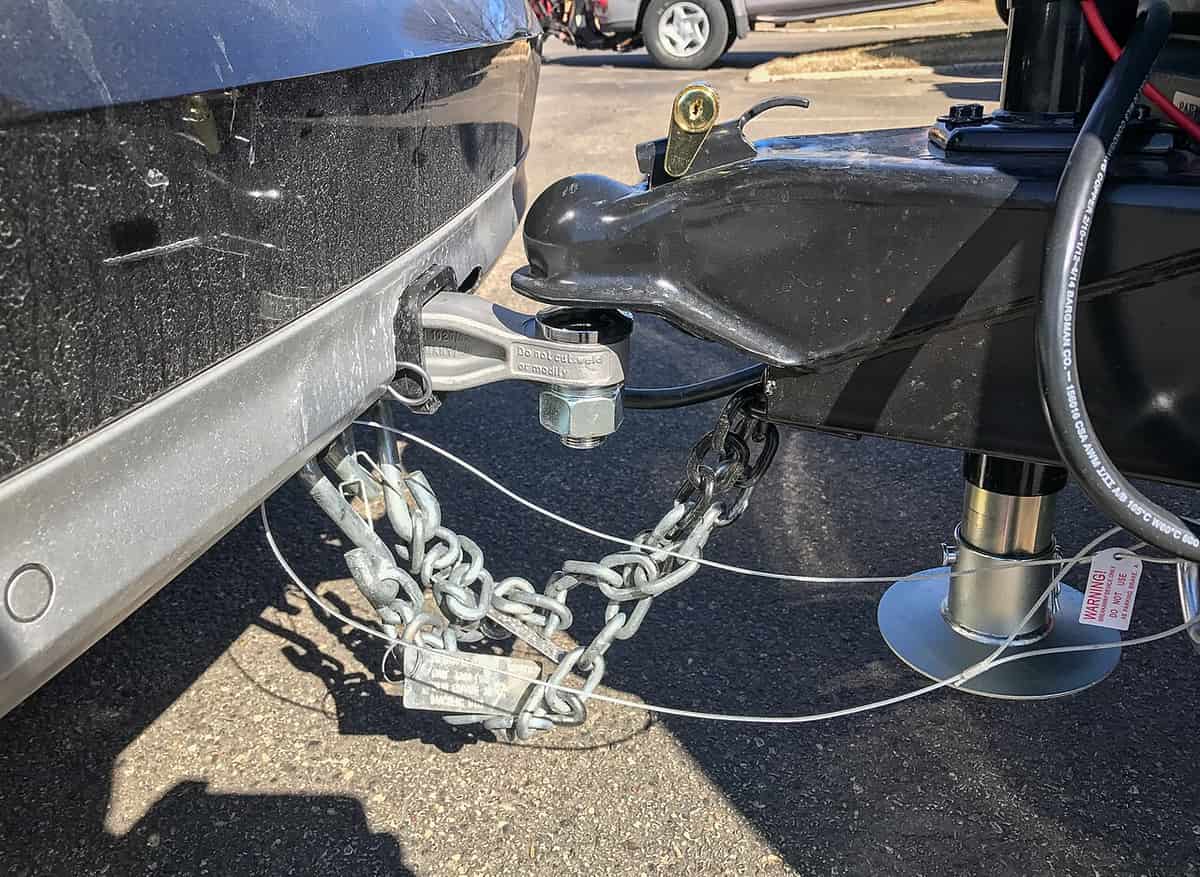
Chains and Breakaway Cables
Chain rating and arrangement, breakaway switch wiring, and the maintenance step that decides whether either one works.
Found something out of date, or a figure you can source better than we did? Corrections get read first. How we research explains how these pages are put together, and contact is one click away.