Hitches, Receivers & Ball Mounts
2 Inch Receiver Adapters, and When to Avoid Them
An adapter solves a fitment problem by adding a joint and a lever arm. Sometimes that is an acceptable trade and sometimes it is the wrong answer entirely.

Disclosure: we earn a commission if you buy through the Amazon links on this page, at no extra cost to you. Commission never decides a verdict or a ranking position - read our editorial policy and affiliate disclosure.
Short answer
Receiver adapters come in three kinds: step-up, step-down and extension. All three move the load further from the receiver and add a joint, and all three carry a rating lower than the receiver they fit. Use one only when no correctly sized part exists for the job.
The search that brings people here is usually practical: a 2 in mount and a 1-1/4 in receiver, or the reverse, or a bike rack that will not clear a spare tire. Adapters do solve those problems. What is worth understanding before buying one is exactly what you are trading away, because it is not nothing and it is rarely stated clearly on the box.
The three types, and what each does
Step-up adapters: small receiver, bigger hardware
A sleeve with a 1-1/4 in shank on one end and a 2 in opening on the other, so 2 in accessories fit a class 1 or class 2 receiver. This is the one to be most careful with. A 1-1/4 in receiver is usually on a vehicle with a modest rating in the first place, and the adapter's own rating is lower again. Fitting 2 in hardware does not give you 2 in capacity.
Step-down adapters: big receiver, smaller hardware
The reverse: a 2 in or 2-1/2 in shank with a smaller opening, so an accessory you already own fits a bigger truck. Mechanically this is the gentler direction, since the receiver is the stronger part. The accessory's own rating is then the limit, and that is often fine for a bike rack or a cargo carrier.
Extensions: same size, further back
A straight extension moves the ball back, typically to clear a spare tire, a bumper or a tailgate. This is the type that changes the physics most. Every inch of extension increases the leverage on the receiver, and manufacturers publish a reduced capacity for exactly that reason - commonly a substantial reduction, not a token one.
| Adapter type | What it enables | What it costs you |
|---|---|---|
| Step-up, 1-1/4 to 2 in | 2 in accessories on a class 1 or 2 receiver | Capacity limited to the adapter, which is below the receiver |
| Step-down, 2 to 1-1/4 in | Older or smaller accessories on a bigger truck | Capacity limited to the accessory, plus an extra joint |
| Extension | Clearance past a spare tire or bumper | Published capacity reduction from the added leverage |
| Adapter plus extension stacked | Both problems at once | Two joints, compounded leverage - avoid for towing |
Always use the adapter manufacturer's own published rating for the assembly, and treat the lowest-rated component as the rating of the whole thing.
What to look for if you do need one
- A published rating for the adapter itself, in writing. Gross trailer weight and tongue weight both. If the seller does not publish them, you have no rating.
- The correct pin diameter at both ends. 1-1/4 in receivers usually take a 1/2 in pin and 2 in receivers a 5/8 in pin. Pin sizes and locks sets out the combinations.
- An anti-rattle provision. Two joints means two places to rattle, and the noise from a stacked adapter is genuinely unpleasant.
- Honest self-assessment about whether you need it at all. If the real problem is drop height rather than tube size, an adjustable mount solves it without an adapter.
Quick picks
Tap any row to jump to the full write-up. How these are chosen - and what we do and do not claim to know - is published in full on our research methodology page.
| # | Product | Best for | Our read | Price |
|---|---|---|---|---|
| 1 |  CURT Adjustable Channel Mount with Dual Ball (2 in shank, 6 in drop) Usually the better answer | Garages with several trailers | One mount covering two ball sizes and 6 in of drop | Check price on Amazon #ad Affiliate link - we publish no price; Amazon shows the current one |
| 2 |  Andersen Rapid Hitch Aluminum Adjustable Ball Mount If weight is the problem | Anyone tired of lifting steel mounts | Aluminum adjustable mount, far lighter to handle | Check price on Amazon #ad Affiliate link - we publish no price; Amazon shows the current one |
| 3 |  CURT Anti-Rattle Hitch Pin and Shim (2 in receiver) If the fit is loose | Killing receiver rattle | Shim and pin that remove tube slop | Check price on Amazon #ad Affiliate link - we publish no price; Amazon shows the current one |
1. Usually the better answer
CURT Adjustable Channel Mount with Dual Ball (2 in shank, 6 in drop)
CURT · Best for garages with several trailers
One mount that covers two ball sizes and a range of heights, which is the answer when the garage contains a boat trailer, a utility trailer and a camper that all sit at different heights. Capacity drops to the lower-rated ball you are actually using.
Published specifications
What works
- Two ball sizes and a height range in a single mount
- Flipping it gives rise as well as drop
- Rated to 14,000 lb on the larger ball
What does not
- Heavy, and more joints means more places for rattle to start
- The pins and bolts need checking for torque, unlike a one-piece mount
Skip it if
Pointless if you own one trailer and tow it with one truck - a fixed mount at the right height is lighter, quieter and cheaper.
#ad Affiliate link - we publish no price; Amazon shows the current one
Raw specifications: CURT’s own page. We earn nothing on that link.
2. If weight is the problem
Andersen Rapid Hitch Aluminum Adjustable Ball Mount
Andersen Hitches · Best for anyone tired of lifting steel mounts
An aluminum adjustable mount, which is the point: a steel channel mount is genuinely heavy to carry, and this one is not. Balls thread into the stainless pin rather than bolting through a hole, so swapping sizes takes seconds.
We have not sourced a full specification table for this model from the manufacturer’s own site at a stable address. Rather than repeat figures we cannot cite, the assessment above is limited to what the design and the maker’s published description genuinely establish.
What works
- Dramatically lighter than a steel adjustable mount of similar capacity
- Ball changes are a thread-on operation, not a torque-and-nut job
- Aluminum does not rust streak down a painted bumper
What does not
- Aluminum marks more easily than powder-coated steel
- Capacity depends on which ball and pin combination you fit, so read the chart
Skip it if
Not the one if you leave the mount permanently in the receiver through salted winters - the convenience you are paying for is weight, and you would never be lifting it.
#ad Affiliate link - we publish no price; Amazon shows the current one
Raw specifications: Andersen Hitches’s own page. We earn nothing on that link.
3. If the fit is loose
CURT Anti-Rattle Hitch Pin and Shim (2 in receiver)
CURT · Best for killing receiver rattle
A pin plus a wedge shim that takes the slop out of the gap between a 2 in mount and a 2 in receiver. That gap is a manufacturing tolerance, not a fault, and this is the cheapest thing on the whole site that fixes a real, daily annoyance.
Published specifications
What works
- Removes the clunk over expansion joints for very little money
- Fits in a glovebox and transfers between vehicles
- No modification to the receiver or the mount
What does not
- Does nothing about rattle originating at the coupler or the sway bar
- Listed as superseded, so check the current item number
Skip it if
Not the fix if the noise is coming from a loose ball nut or a worn coupler - find the source first, because a shim will just mask it.
#ad Affiliate link - we publish no price; Amazon shows the current one
Raw specifications: CURT’s own page. We earn nothing on that link.
The cases where an adapter is the wrong answer
- Towing a trailer through a step-up adapter. You are putting trailer loads through the weakest link in the chain, on a vehicle whose receiver was rated conservatively to begin with.
- Reaching for an extension because the trailer tows nose-high. That is a drop problem. Measure the coupler height and the receiver height and buy the mount drop from the difference - adjustable mounts exist for exactly this.
- Using an adapter to fit a 2 in mount in a 2-1/2 in class 5 receiver for heavy towing. The receiver is rated for heavy work; the adapter is not. Class 4 against class 5 covers what changes at that step.
- Stacking two adapters. Each joint adds play and leverage. Nobody publishes a rating for a stack, which tells you what the manufacturers think of it.
For non-towing loads - bike racks, cargo carriers, hitch steps - adapters are far less contentious, because the loads are smaller and static. Even then, check the receiver's own rating for a hitch-mounted accessory, which is sometimes stated separately from its towing figures.
Key takeaways
- Three types: step-up, step-down, extension - each with a different penalty.
- The adapter's published rating becomes the rating of the whole assembly.
- Extensions cut capacity because they add leverage on the receiver.
- If the real problem is drop height, buy an adjustable mount instead.
How we sourced this
Every figure on this page came from one of the following, each fetched while the page was written. Where a manufacturer or regulator does not publish a number, we say so rather than estimate it.
- 49 CFR 567.4 - certification label content, including Gross Vehicle Weight Rating and Gross Axle Weight Rating
- CURT adjustable channel mount with dual ball - published specifications (part 45900)
- Andersen Hitches - manufacturer site
- CURT anti-rattle hitch pin and shim - published specifications (part 22321)
Common questions
- Can I tow with a 1-1/4 to 2 inch receiver adapter?
- Only within the adapter's own published rating, which is lower than the receiver's. In practice that rules out most real trailers. For towing, match the hardware to the receiver instead of adapting it.
- Do hitch extensions reduce towing capacity?
- Yes, and manufacturers publish the reduction. Moving the ball back increases the leverage on the receiver, so the rated capacity of the assembly falls - often considerably.
- What size pin does a receiver adapter need?
- One for each end, matched to each tube: usually 1/2 in for a 1-1/4 in receiver and 5/8 in for a 2 in receiver. Using an undersize pin leaves play, and play becomes wear.
- Will an adapter make my hitch rattle?
- Almost certainly, because you have added a second sliding joint. An anti-rattle pin and shim at each joint is the usual mitigation, and a correctly sized mount with no adapter is the real fix.
More in Hitches, Receivers & Ball Mounts
Class, receiver size, ball diameter, drop. Four numbers decide whether your setup is right, and three of them are stamped on parts you already own.
Read next

Reference
Receiver Sizes Chart
Tube sizes, pin hole diameters, what fits what, and the derating that comes with a reducer sleeve.
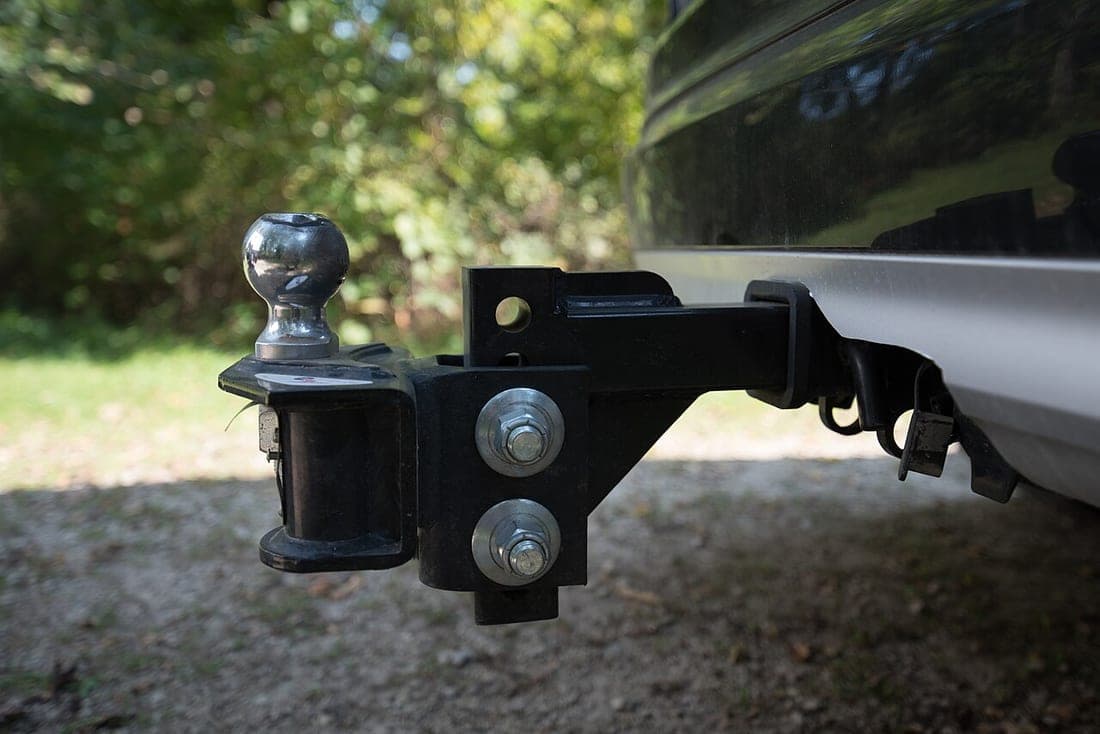
Guide
Adjustable Ball Mounts
How channel-style adjustable mounts work, what to check before each tow, and when a fixed mount is simply better.
Guide
Hitch Pin Sizes
Pin diameters and lengths, the difference between clip and locking pins, and how anti-rattle pins work.

Head to head
Class 4 vs Class 5
The real differences between a class 4 and a class 5 receiver, including the 2-1/2 in tube that makes your existing hardware obsolete.
Found something out of date, or a figure you can source better than we did? Corrections get read first. How we research explains how these pages are put together, and contact is one click away.