Weight Distribution Hitches
Weight Distribution Hitch vs Airbags
Both stop the truck sagging. Only one of them puts weight back on the front axle, which is the part that matters.

Disclosure: we earn a commission if you buy through the Amazon links on this page, at no extra cost to you. Commission never decides a verdict or a ranking position - read our editorial policy and affiliate disclosure.
Short answer
Airbags support the rear suspension so the truck sits level. A weight distribution hitch levers load forward onto the front axle and backward onto the trailer axles. If your steering feels light, only the hitch addresses it - airbags will hide the visual symptom while leaving the front axle unweighted.
What each one actually does
Air springs sit between the frame and the axle. Inflating them resists compression, so the back of the truck stops sagging. The weight is still there, still on the rear axle, still taken off the front axle by the see-saw effect of a load behind the rear wheels. The truck looks level because the suspension is holding it up.
A weight distribution hitch uses spring bars to apply a moment at the coupling that lifts the rear and pushes the front down. That genuinely moves load: some back onto the trailer's own axles, some forward onto the tow vehicle's front axle. The front axle regains weight, so steering and front braking regain authority.
| Airbags | Weight distribution hitch | |
|---|---|---|
| Rear sag | Fixed | Fixed |
| Front axle weight | Unchanged or slightly worse | Restored |
| Steering feel | Unchanged | Improved |
| Headlight aim | Corrected | Corrected |
| Ride quality unladen | Softer, adjustable | Not applicable |
| Raises receiver's rating | No | Yes - the weight-distributing rating applies |
| Helps sway | No | Indirectly, or directly if it has sway control |
Quick picks
Tap any row to jump to the full write-up. How these are chosen - and what we do and do not claim to know - is published in full on our research methodology page.
| # | Product | Best for | Our read | Price |
|---|---|---|---|---|
| 1 |  CURT Round Bar Weight Distribution Hitch with Sway Control (14K) Restores front axle load | Mid-size travel trailers | Transfers weight forward, not just upward | Check price on Amazon #ad Affiliate link - we publish no price; Amazon shows the current one |
| 2 |  Equal-i-zer 4-point Sway Control Hitch Transfer plus sway resistance | Travel trailers that already sway | Both jobs, one assembly | Check price on Amazon #ad Affiliate link - we publish no price; Amazon shows the current one |
| 3 |  Sherline Trailer Tongue Weight Scale Diagnose first | Measuring tongue weight at home | Tells you which problem you actually have | Check price on Amazon #ad Affiliate link - we publish no price; Amazon shows the current one |
1. Restores front axle load
CURT Round Bar Weight Distribution Hitch with Sway Control (14K)
CURT · Best for mid-size travel trailers
A conventional round-bar system with integrated lubrication and sway control, rated to 14,000 lb gross and 1,400 lb tongue. The built-in lubrication matters more than it sounds: a dry weight distribution head is the usual source of the groaning people mistake for a failing hitch.
Published specifications
What works
- Integrated lubrication at the head, which is where the noise usually comes from
- Round bars sit lower and clear more trailer tongues than trunnion bars
- Limited lifetime warranty
What does not
- Round bars hang lower than trunnion bars and are the first thing to catch on a steep driveway
- Sway control here is a function of the head, not an adjustable four-point system
Skip it if
Skip it if you regularly cross steep transitions - a round bar is the lowest part of the whole rig and will find the pavement before anything else does.
#ad Affiliate link - we publish no price; Amazon shows the current one
Raw specifications: CURT’s own page. We earn nothing on that link.
2. Transfer plus sway resistance
Equal-i-zer 4-point Sway Control Hitch
Equal-i-zer · Best for travel trailers that already sway
The reference point for integrated sway control. Friction happens at four places at once - both L-brackets and both sockets - so resistance is always on rather than something you remember to engage. Setup is bracket-height and bar-angle work, and it rattles; both are the price of a system with no separate parts to forget.
We have not sourced a full specification table for this model from the manufacturer’s own site at a stable address. Rather than repeat figures we cannot cite, the assessment above is limited to what the design and the maker’s published description genuinely establish.
What works
- Sway resistance is built into the geometry, so there is nothing to connect or disconnect at the ramp
- Works in reverse and in the wet, unlike a friction bar you have to release
- One assembly rather than a hitch plus a bolt-on sway bar
What does not
- Audible rattle and creak at low speed is normal and surprises first-time owners
- Bracket height and bar angle have to be set properly or the sway control does little
Skip it if
Skip it if your loaded tongue weight sits well inside your receiver's weight-carrying rating and the truck stays level - you would be buying hardware to solve a problem you do not have.
#ad Affiliate link - we publish no price; Amazon shows the current one
Raw specifications: Equal-i-zer’s own page. We earn nothing on that link.
3. Diagnose first
Sherline Trailer Tongue Weight Scale
Sherline · Best for measuring tongue weight at home
A dedicated scale you sit under the coupler to read tongue weight directly, with no arithmetic and no trip to a weighbridge. It is the one tool on this site that turns the single most important towing number from a guess into a measurement.
We have not sourced a full specification table for this model from the manufacturer’s own site at a stable address. Rather than repeat figures we cannot cite, the assessment above is limited to what the design and the maker’s published description genuinely establish.
What works
- Direct reading, with no bathroom-scale-and-lever arithmetic
- Repeatable, so you can see what moving the load actually does
- Mechanical gauge with no batteries to be flat when you need it
What does not
- Must be used on level ground with the coupler at towing height
- Single-purpose tool that spends most of its life in a cupboard
Skip it if
Unnecessary if your hitch already has a built-in gauge, or if you have a public scale nearby and are happy to use it.
#ad Affiliate link - we publish no price; Amazon shows the current one
Raw specifications: Sherline’s own page. We earn nothing on that link.
When airbags are genuinely the right buy
- Carrying weight in the bed rather than towing. A slide-in camper or a heavy payload sits over or ahead of the rear axle, so there is no see-saw to counteract - airbags are exactly right.
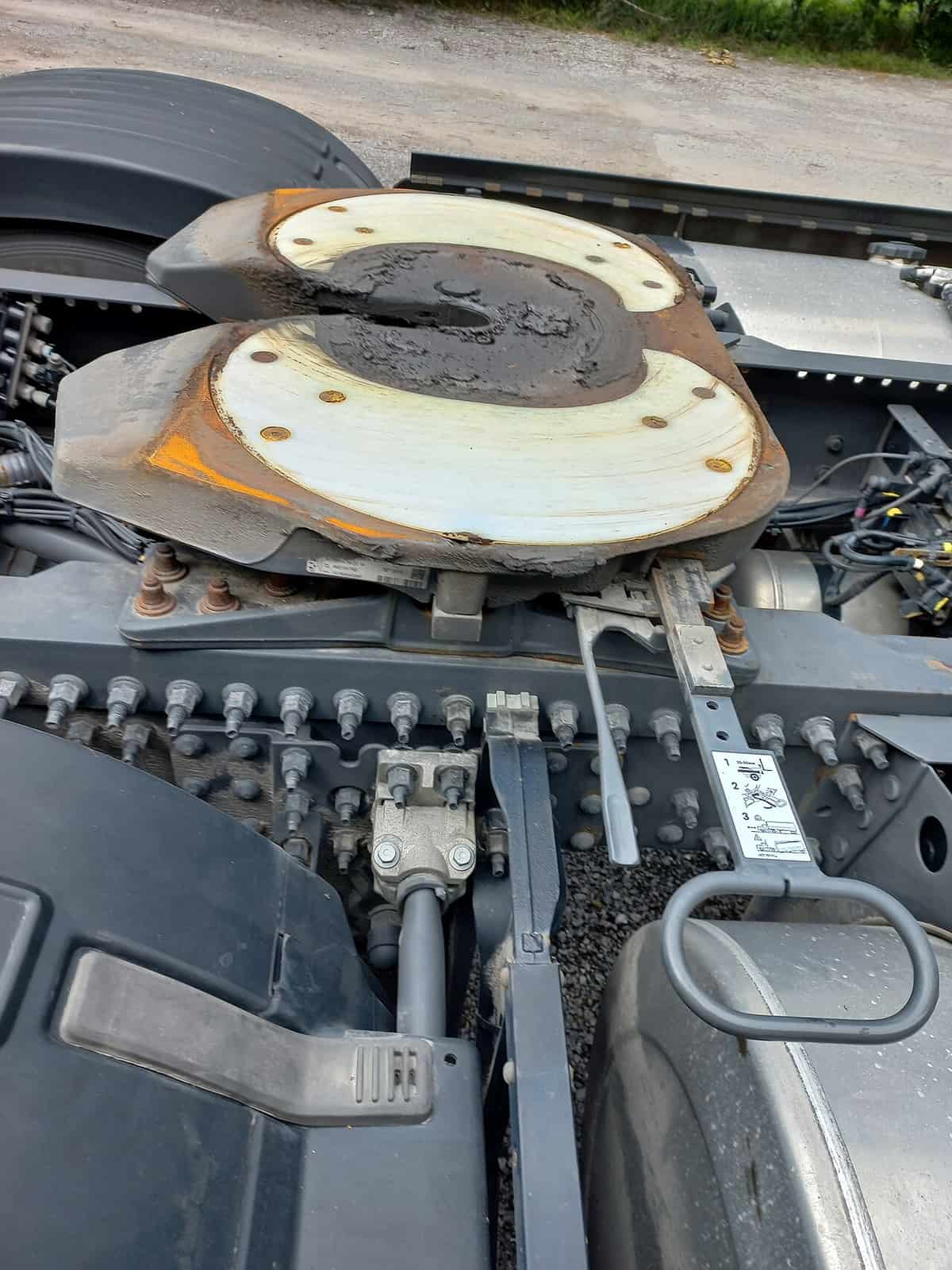
- Fifth wheel and gooseneck towing. The pin weight sits ahead of the rear axle, so weight distribution does not apply. Airbags are the standard leveling answer.
- Side-to-side leveling. Independently adjustable bags correct an uneven load in a way a weight distribution hitch cannot.
- Alongside a weight distribution hitch. They are not mutually exclusive, and plenty of people run both.
Key takeaways
- Airbags level; a weight distribution hitch redistributes.
- Only the hitch restores front axle weight, which is what fixes light steering.
- Airbags are the correct answer for bed payload, fifth wheels and goosenecks.
- Neither raises GVWR, GAWR or payload.
How we sourced this
Every figure on this page came from one of the following, each fetched while the page was written. Where a manufacturer or regulator does not publish a number, we say so rather than estimate it.
Common questions
- Can I use airbags instead of a weight distribution hitch?
- Not if your tongue weight exceeds the receiver's weight-carrying rating, and not if your steering feels light. Airbags address ride height, not load distribution.
- Can I use both?
- Yes, and some owners do - the hitch transfers load and the bags fine-tune ride height. Set the hitch up first, then adjust air pressure.
- Do airbags help with a fifth wheel?
- Yes. Pin weight sits ahead of the rear axle, so there is no lever effect for a weight distribution hitch to counteract, and air springs are the conventional leveling solution.
More in Weight Distribution Hitches
A weight distribution hitch moves load off the back of your truck. Whether you need one is a number, not an opinion - and the number is on your door jamb.
Read next

Troubleshooting
Truck Sags When Towing
What rear squat actually indicates, why it affects steering and braking, and which of the three common fixes addresses the real problem.

Head to head
Weight Distribution vs Sway Control
The clearest distinction in towing, explained by symptom: squatting truck versus wandering trailer, and what to do when it is both.

Head to head
Payload vs Towing Capacity
Why the tow rating rarely binds first, how to calculate your real limit from the labels on your vehicle, and what counts against payload.
Head to head
Gooseneck vs Fifth Wheel
Two bed-mounted hitch types compared on bed usability, ride quality, capacity and what each trailer type requires.
Found something out of date, or a figure you can source better than we did? Corrections get read first. How we research explains how these pages are put together, and contact is one click away.