Hitches, Receivers & Ball Mounts
Gooseneck vs Fifth Wheel Hitch
The trailer usually decides this for you. Where it does not, bed space and ride quality do.
Disclosure: we earn a commission if you buy through the Amazon links on this page, at no extra cost to you. Commission never decides a verdict or a ranking position - read our editorial policy and affiliate disclosure.
Note: Gooseneck and fifth wheel hitches are bed-mounted, vehicle-specific installations that are usually matched by a dealer to the truck and the trailer. We do not stock picks for them because recommending a specific bed-mounted hitch without verified fitment data would be a guess. The picks below are the conventional-towing hardware this page refers to.
Short answer
Both mount in the truck bed and put the load ahead of the rear axle. Fifth wheel uses a kingpin and plate and is standard on RV fifth wheels; gooseneck uses a ball and coupler and is standard on livestock, flatbed and equipment trailers. The trailer decides which you need.
The mechanical difference
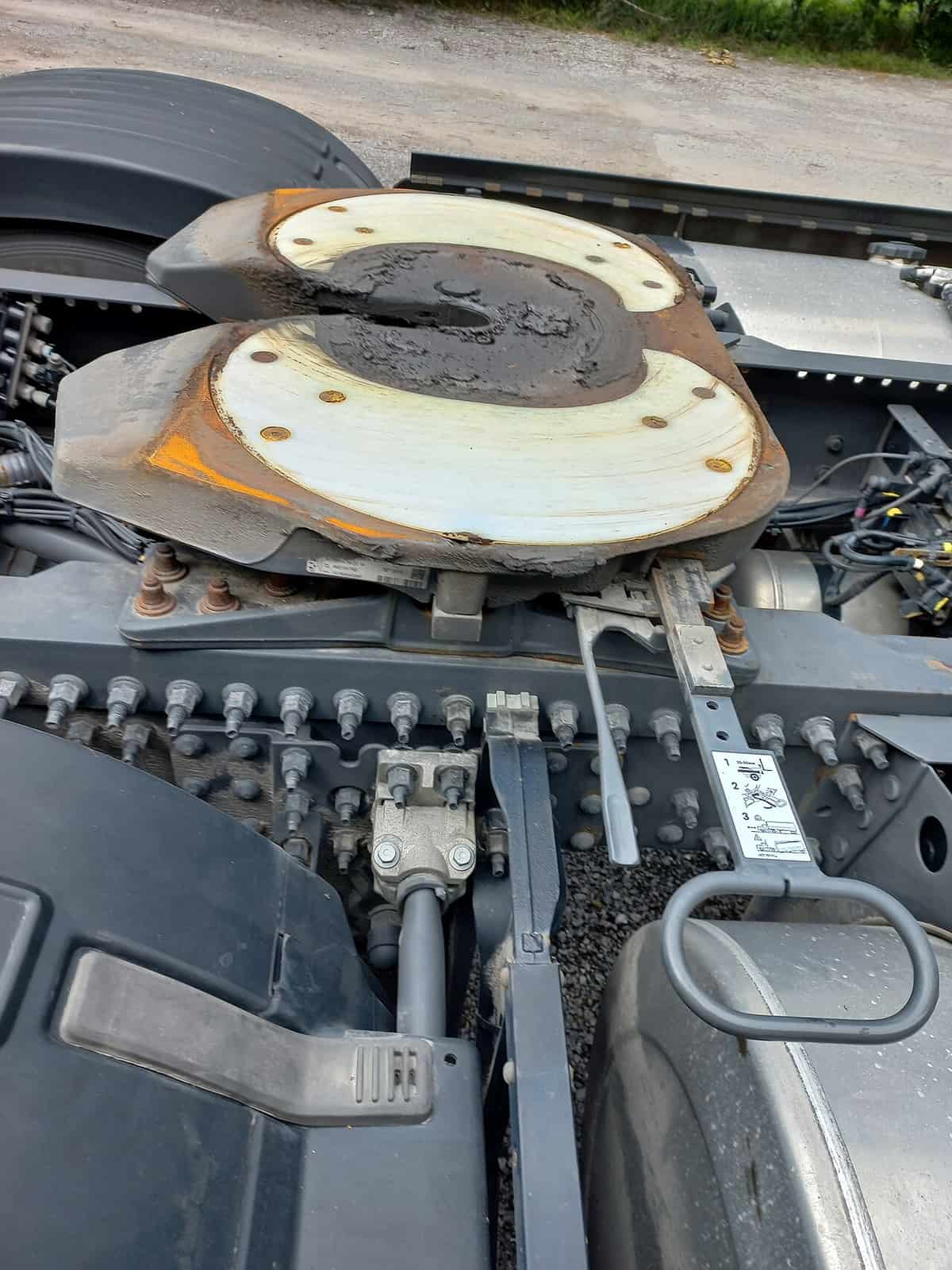
A fifth wheel hitch is a plate with jaws that grip a kingpin hanging down from the trailer's overhang - the same principle as a semi tractor. A gooseneck hitch is a ball in the bed that a coupler on a vertical trailer neck drops onto. Fifth wheel plates are large and have pivot articulation built into them; gooseneck balls are compact and let the trailer's own coupler handle articulation.
| Fifth wheel | Gooseneck | |
|---|---|---|
| Bed space when not towing | Large plate, unless removable | A ball that often stows flush |
| Ride quality | Generally smoother - more articulation and cushioning | Firmer, more feedback |
| Typical trailers | RV fifth wheels | Livestock, flatbed, equipment, some campers |
| Typical capacity | High | Often higher |
| Install | Rails or puck system in the bed | Ball and plate in the bed |
| Adapters | Exist in both directions | Exist, and derate the connection |
Why both beat a bumper pull at weight
The load sits ahead of the rear axle instead of behind it. That removes the see-saw entirely - there is no lever lifting the front of the truck, so no weight distribution hitch is needed and never is one used. It also places the pivot point near the rear axle, which dramatically reduces the trailer's ability to push the truck around. A heavy trailer that would be a handful as a bumper pull is routine as a fifth wheel.
Quick picks
Tap any row to jump to the full write-up. How these are chosen - and what we do and do not claim to know - is published in full on our research methodology page.
| # | Product | Best for | Our read | Price |
|---|---|---|---|---|
| 1 | 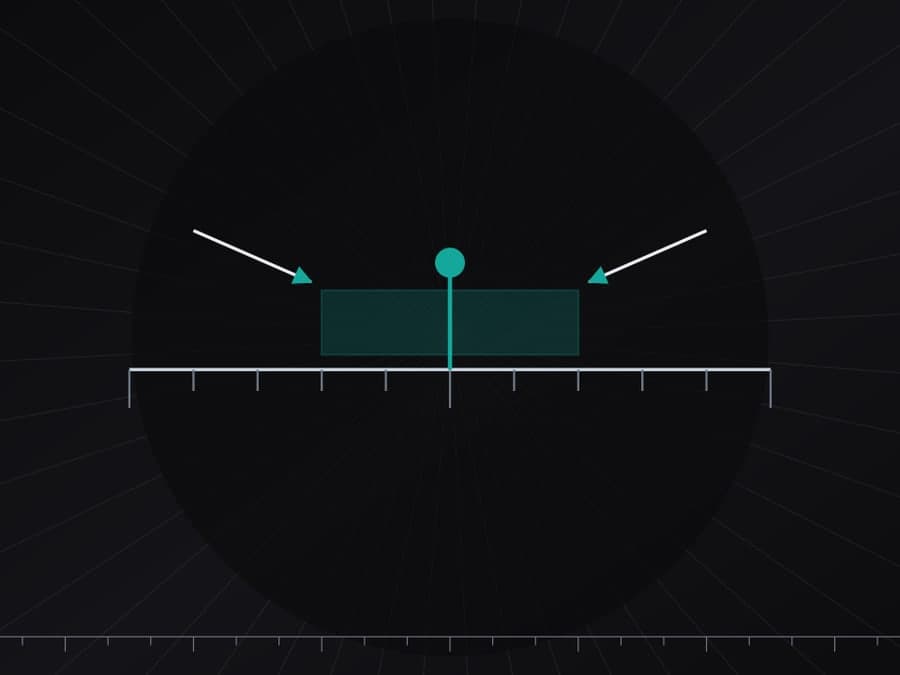 Weigh Safe Adjustable Drop Hitch with Built-in Tongue Weight Scale For the bumper-pull you still own | Owners who will never visit a scale | Reads tongue weight on the conventional trailer | Check price on Amazon #ad Affiliate link - we publish no price; Amazon shows the current one |
| 2 |  CURT Adjustable Channel Mount with Dual Ball (2 in shank, 6 in drop) Bumper-pull alternative | Garages with several trailers | For trailers below gooseneck territory | Check price on Amazon #ad Affiliate link - we publish no price; Amazon shows the current one |
| 3 |  Camco Trailer Wheel Chocks Needed either way | Every trailer, without exception | Chock before unhitching, always | Check price on Amazon #ad Affiliate link - we publish no price; Amazon shows the current one |
1. For the bumper-pull you still own
Weigh Safe Adjustable Drop Hitch with Built-in Tongue Weight Scale
Weigh Safe · Best for owners who will never visit a scale
An adjustable drop hitch with a hydraulic gauge in the shank, so the tongue weight reads out as you lower the trailer onto the ball. It turns the single most-skipped step in towing into something that happens automatically, which is worth more than the hardware itself.
We have not sourced a full specification table for this model from the manufacturer’s own site at a stable address. Rather than repeat figures we cannot cite, the assessment above is limited to what the design and the maker’s published description genuinely establish.
What works
- Reads tongue weight every time you hitch, with no extra step
- Adjustable height and reversible for rise as well as drop
- Makes the 10-15 percent rule checkable instead of theoretical
What does not
- The gauge reads at the ball, so it is sensitive to being parked on a slope
- Heavier and considerably more expensive than a plain mount
Skip it if
Not needed if you already weigh at a public scale - the gauge is convenience, and a certified scale is still the more accurate number.
#ad Affiliate link - we publish no price; Amazon shows the current one
Raw specifications: Weigh Safe’s own page. We earn nothing on that link.
2. Bumper-pull alternative
CURT Adjustable Channel Mount with Dual Ball (2 in shank, 6 in drop)
CURT · Best for garages with several trailers
One mount that covers two ball sizes and a range of heights, which is the answer when the garage contains a boat trailer, a utility trailer and a camper that all sit at different heights. Capacity drops to the lower-rated ball you are actually using.
Published specifications
What works
- Two ball sizes and a height range in a single mount
- Flipping it gives rise as well as drop
- Rated to 14,000 lb on the larger ball
What does not
- Heavy, and more joints means more places for rattle to start
- The pins and bolts need checking for torque, unlike a one-piece mount
Skip it if
Pointless if you own one trailer and tow it with one truck - a fixed mount at the right height is lighter, quieter and cheaper.
#ad Affiliate link - we publish no price; Amazon shows the current one
Raw specifications: CURT’s own page. We earn nothing on that link.
3. Needed either way
Camco Trailer Wheel Chocks
Camco · Best for every trailer, without exception
Chocks go in before you unhitch, every time. They are not an upgrade and they are not interesting; they are the thing standing between a parked trailer and a slow roll down a campground slope.
We have not sourced a full specification table for this model from the manufacturer’s own site at a stable address. Rather than repeat figures we cannot cite, the assessment above is limited to what the design and the maker’s published description genuinely establish.
What works
- Cheap insurance against the most preventable trailer accident there is
- Works on any trailer regardless of brakes or jack type
- Takes seconds and needs no setup
What does not
- Plastic chocks degrade in sun over several seasons
- Easy to leave behind at a site
Skip it if
There is no situation where you should skip chocks - if these do not suit your tire size, buy different ones rather than none.
#ad Affiliate link - we publish no price; Amazon shows the current one
Key takeaways
- The trailer's own coupling type decides which hitch you need.
- Fifth wheel generally rides better; gooseneck frees up more bed space.
- Neither uses weight distribution - the load is ahead of the rear axle.
- Pin weight is a larger share of trailer weight and still counts against payload.
How we sourced this
Every figure on this page came from one of the following, each fetched while the page was written. Where a manufacturer or regulator does not publish a number, we say so rather than estimate it.
Common questions
- Can I use an adapter to tow a fifth wheel on a gooseneck ball?
- Adapters exist in both directions. They change the load path and often derate the connection, and some trailer manufacturers void warranty cover for their use. Check both the trailer maker's and the adapter maker's documentation before relying on one.
- Which is better for a short-bed truck?
- Both need attention to cab clearance on a short bed. Sliding fifth wheel hitches exist specifically to solve it; goosenecks rely on the trailer's neck geometry giving enough swing clearance.
- Do I need a different brake controller?
- No. Fifth wheel and gooseneck trailers use the same electric brake system and the same 7-way connection as a conventional trailer.
More in Hitches, Receivers & Ball Mounts
Class, receiver size, ball diameter, drop. Four numbers decide whether your setup is right, and three of them are stamped on parts you already own.
Read next
Best heavy-duty hitch setup
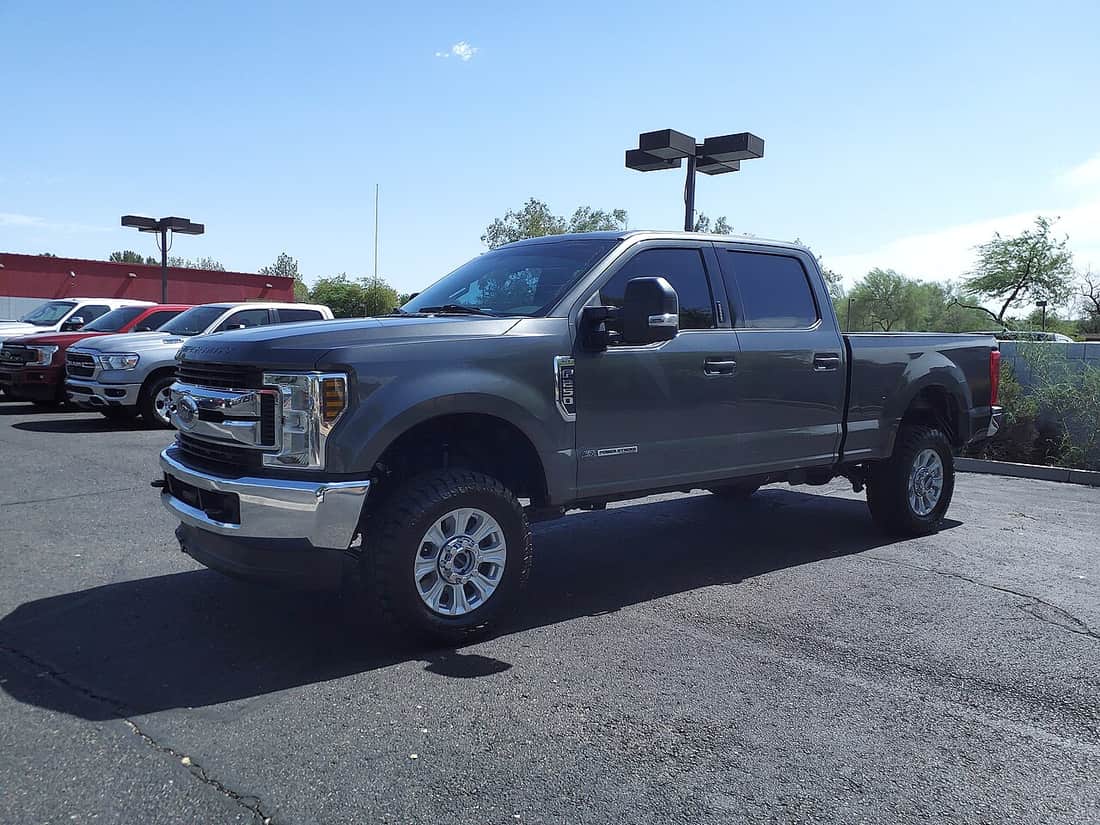
Best Hitch for F-250/F-350
What changes on a heavy-duty truck: more drop needed, bigger balls, and the point at which a bed-mounted hitch makes more sense.
Head to head
WD Hitch vs Airbags
Why leveling the truck and redistributing load are not the same thing, and when airbags are the right buy anyway.
Head to head
Payload vs Towing Capacity
Why the tow rating rarely binds first, how to calculate your real limit from the labels on your vehicle, and what counts against payload.

Best brake controller
Best Brake Controllers
Hardwired and plug-in proportional controllers compared on published specifications and how each behaves when something goes wrong.
Found something out of date, or a figure you can source better than we did? Corrections get read first. How we research explains how these pages are put together, and contact is one click away.