Wiring, Lights & Towing Mirrors
How to Adjust Towing Mirrors
A towing mirror has one job: show you the lane beside the trailer, not the trailer. Most are aimed at the trailer.
Disclosure: we earn a commission if you buy through the Amazon links on this page, at no extra cost to you. Commission never decides a verdict or a ranking position - read our editorial policy and affiliate disclosure.
How we assessed these: A method that applies to any mirror type. Products are assessed from each maker's published specifications; this site runs no instrumented tests.
Short answer
Aim each mirror so the trailer's flank occupies roughly the inner quarter of the glass and the rest shows the lane alongside and behind it. Set the flat glass first with the trailer hitched on level ground, then angle the convex section down and out to cover the wedge beside the trailer's rear wheels.
Mirror extension is the part owners buy and mirror aim is the part they skip, which is why so many rigs have expensive mirrors showing a detailed view of the trailer's own side. The trailer is not the thing you need to see. What you need is the lane next to it, and specifically the piece of road that a car occupies just before it disappears from view.
Set them up with the trailer attached
Aim is only meaningful with the trailer in place. Hitch up on level ground, sit in your normal driving position with the seat where it lives, and put your hands on the wheel. Every adjustment below is made from that position - standing beside the truck and eyeballing the glass produces a setting that is wrong as soon as you sit down.
The sequence
Start from the inside edge
Adjust each mirror inward until you can just see the side of the trailer at the inner edge of the glass. That is your reference point - it tells you where the trailer is without using up the mirror.
Rotate outward until the trailer takes a quarter
Swing the mirror out until the trailer occupies roughly the inner quarter of the width of the glass. The outer three quarters is now lane, which is what you are actually buying.
Set the vertical
Aim so the horizon sits a little above the middle of the glass. Too high and you lose the road surface beside the trailer; too low and you see pavement.
Aim the convex section separately
If the mirror has a convex spot, angle it down and outward so it covers the wedge immediately beside and behind the trailer's rear wheels - the piece the flat glass cannot reach.
Check the far corner
Look for the trailer's rearmost corner. On a long trailer you should be able to see it when the rig is straight; if you cannot, you need more extension, not more angle.
Drive a short loop and re-check
Highway speed reveals vibration and a clamp that creeps. Re-tension and re-aim before the trip, not during it.
What the two sections of glass are for
| Section | What it shows | How to aim it |
|---|---|---|
| Flat glass | An accurate sense of distance down the lane | Trailer in the inner quarter, horizon slightly high |
| Convex spot | The wedge beside and just behind the trailer | Down and outward, covering what the flat glass misses |
| Both together | A continuous view from the trailer's flank into the next lane | No gap between the two fields - that gap is where a car hides |
Not all towing mirrors have a convex section. On a wide truck with a narrow trailer, adding one is often more useful than adding reach.
The mistakes that waste good mirrors
- Aiming at the trailer. If half the glass is trailer, half your mirror is doing nothing. You know where your own trailer is.
- Setting them unhitched. The trailer changes what matters, and the aim you chose in an empty driveway is not the aim you need.
- Forgetting to re-aim after changing trailers. A narrow utility trailer and a wide travel trailer want different settings on the same truck.
- Leaving a gap between flat and convex fields. A vehicle can sit entirely in that gap. Overlap the two views slightly.
- Tightening a clip-on hard on one side. Even tension is what keeps the image steady; uneven tension is what lets a clamp creep and mark paint.
Quick picks
Tap any row to jump to the full write-up. How these are chosen - and what we do and do not claim to know - is published in full on our research methodology page.
| # | Product | Best for | Our read | Price |
|---|---|---|---|---|
| 1 |  K Source Universal Clip-On Towing Mirror Best if you need more reach | Occasional towing with a wide trailer | Extension for a trailer wider than the truck | Check price on Amazon #ad Affiliate link - we publish no price; Amazon shows the current one |
| 2 |  CIPA Clip-On Towing Mirror Best quick-fit option | Trailers barely wider than the truck | On and off in a minute, little to aim wrong | Check price on Amazon #ad Affiliate link - we publish no price; Amazon shows the current one |
| 3 |  K Source Fit System Custom-Fit Towing Mirror Best stay-aimed option | Towing most weekends | Powered glass that holds its setting | Check price on Amazon #ad Affiliate link - we publish no price; Amazon shows the current one |
The mirrors in detail
1. Best if you need more reach
K Source Universal Clip-On Towing Mirror
K Source · Best for occasional towing with a wide trailer
Straps over the existing mirror to extend the view past a wide trailer. The honest limitation of every clip-on is vibration: they work, they are legal where extension is required, and they will never be as steady as a replacement mirror.
We have not sourced a full specification table for this model from the manufacturer’s own site at a stable address. Rather than repeat figures we cannot cite, the assessment above is limited to what the design and the maker’s published description genuinely establish.
What works
- Fits almost any vehicle and transfers between them
- Removable, so the vehicle looks standard the rest of the year
- Far cheaper than replacement mirrors
What does not
- Vibration at highway speed blurs the view, which is worst on rough surfaces
- Straps mark paint and mirror housings if grit gets underneath
Skip it if
Not the one if you tow weekly - the daily on-off routine gets old fast and replacement mirrors stay aligned.
#ad Affiliate link - we publish no price; Amazon shows the current one
Raw specifications: K Source’s own page. We earn nothing on that link.
2. Best quick-fit option
CIPA Clip-On Towing Mirror
CIPA · Best for trailers barely wider than the truck
A slimmer clip-on aimed at vehicles whose factory mirrors are already fairly large. It adds less width than a full extension mirror, which is the right trade when the trailer is only slightly wider than the tow vehicle.
We have not sourced a full specification table for this model from the manufacturer’s own site at a stable address. Rather than repeat figures we cannot cite, the assessment above is limited to what the design and the maker’s published description genuinely establish.
What works
- Adds the width you need without a cartoonishly large mirror
- Quick to fit and remove
- Works on a wide range of mirror housings
What does not
- Limited extension, so a genuinely wide trailer still blocks the view
- Clip-on vibration applies here too
Skip it if
Not enough mirror for a wide fifth wheel or a car hauler - buy the extension you actually need rather than the one that looks tidier.
#ad Affiliate link - we publish no price; Amazon shows the current one
3. Best stay-aimed option
K Source Fit System Custom-Fit Towing Mirror
K Source · Best for towing most weekends
A direct replacement mirror built for one vehicle family, usually with a telescoping or extendable head. It stays aligned trip after trip, which is the whole reason to spend more than a clip-on costs.
We have not sourced a full specification table for this model from the manufacturer’s own site at a stable address. Rather than repeat figures we cannot cite, the assessment above is limited to what the design and the maker’s published description genuinely establish.
What works
- Stays put and stays aimed - no realignment every trip
- No vibration penalty from strapped-on hardware
- Often retains factory features like heat and signals, depending on the part
What does not
- Vehicle-specific, so the part has to match year and model exactly
- Permanent change to how the truck looks
Skip it if
Not worth it if you tow twice a year - the extra cost buys convenience you will barely use.
#ad Affiliate link - we publish no price; Amazon shows the current one
Raw specifications: K Source’s own page. We earn nothing on that link.
If aiming does not fix it, you need reach
There is a limit to what angle can solve. If the trailer's rear corner is invisible with the rig straight, no amount of rotation will bring it into view - the glass is simply not outboard of the trailer. At that point the fix is extension: measure outer glass to outer glass across the truck, measure the trailer at its widest, subtract and halve. That number is how much reach each side needs.
Which route to take is a separate decision. Clip-on against replacement mirrors covers the trade, and the general mirror picks cover what to buy if you tow behind more than one vehicle.
Key takeaways
- The trailer should take about a quarter of the glass, no more.
- Always aim with the trailer hitched, from the driving position.
- Aim the convex section separately, down and outward.
- Overlap the flat and convex views so no car can hide between them.
- If the trailer's rear corner is invisible, you need extension, not angle.
How we sourced this
Every figure on this page came from one of the following, each fetched while the page was written. Where a manufacturer or regulator does not publish a number, we say so rather than estimate it.
Common questions
- How much of the trailer should I see in a towing mirror?
- About a quarter of the glass width, at the inner edge. That is enough to know where the trailer is while leaving most of the mirror showing the lane beside it.
- Should I adjust towing mirrors with the trailer attached?
- Yes. The aim that matters is the one that shows the lane past the trailer, and you cannot judge that without the trailer there. Set them on level ground from your normal driving position.
- Why do my towing mirrors vibrate?
- Usually a clamp that is not evenly tensioned, grit between the clamp pads and the housing, or more extension than the clamp can hold steady. Clean both faces, tighten evenly, and if it persists, take less extension.
- How do I aim the small convex mirror?
- Point it down and outward so it covers the road immediately beside and just behind the trailer's rear wheels. Overlap its view slightly with the flat glass so there is no gap between the two.
More in Wiring, Lights & Towing Mirrors
Nearly every trailer electrical fault is corrosion or a bad ground. Knowing which wire does what turns a roadside mystery into a five-minute check.
Read next
Best towing mirrors
Best Towing Mirrors
Clip-on versus replacement mirrors, with an honest read on vibration, reach and which one your towing frequency justifies.
Head to head
Clip-On vs Replacement Mirrors
The two mirror routes compared on vibration, alignment, cost and what happens to the vehicle when you are not towing.
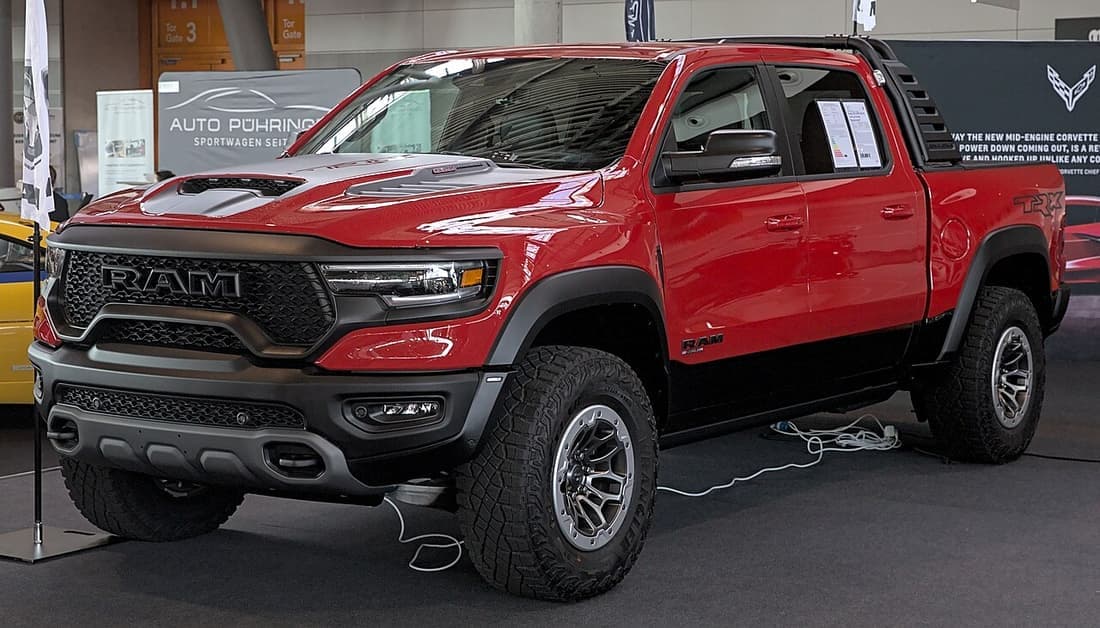
Best Ram 2500 towing mirrors
Towing Mirrors for a Ram 2500
Why a Ram 2500 needs less extension than a mid-size truck, when factory mirrors are already enough, and the three options worth fitting.
How to
How to Hook Up a Trailer
The full hitching sequence, why chains cross, where the breakaway cable goes, and what to check before you move.
Found something out of date, or a figure you can source better than we did? Corrections get read first. How we research explains how these pages are put together, and contact is one click away.