Trailer Brake Controllers
Surge Brakes vs Electric Trailer Brakes
One is a hydraulic reflex built into the coupler. The other is a wire from your dash. The trailer usually decides, not you.
Disclosure: we earn a commission if you buy through the Amazon links on this page, at no extra cost to you. Commission never decides a verdict or a ranking position - read our editorial policy and affiliate disclosure.
How we assessed these: A comparison of the two braking systems as fitted to consumer trailers. Hardware is assessed from each maker's published specifications; this site runs no instrumented brake testing and publishes no stopping distances.
Short answer
Surge brakes are self-contained hydraulic brakes that apply when the trailer pushes against the coupler under braking - no controller, no wiring, and they work behind any vehicle. Electric brakes are operated from the tow vehicle by a brake controller, which gives you adjustable braking and a manual override but needs a seven-way connector and a controller fitted.
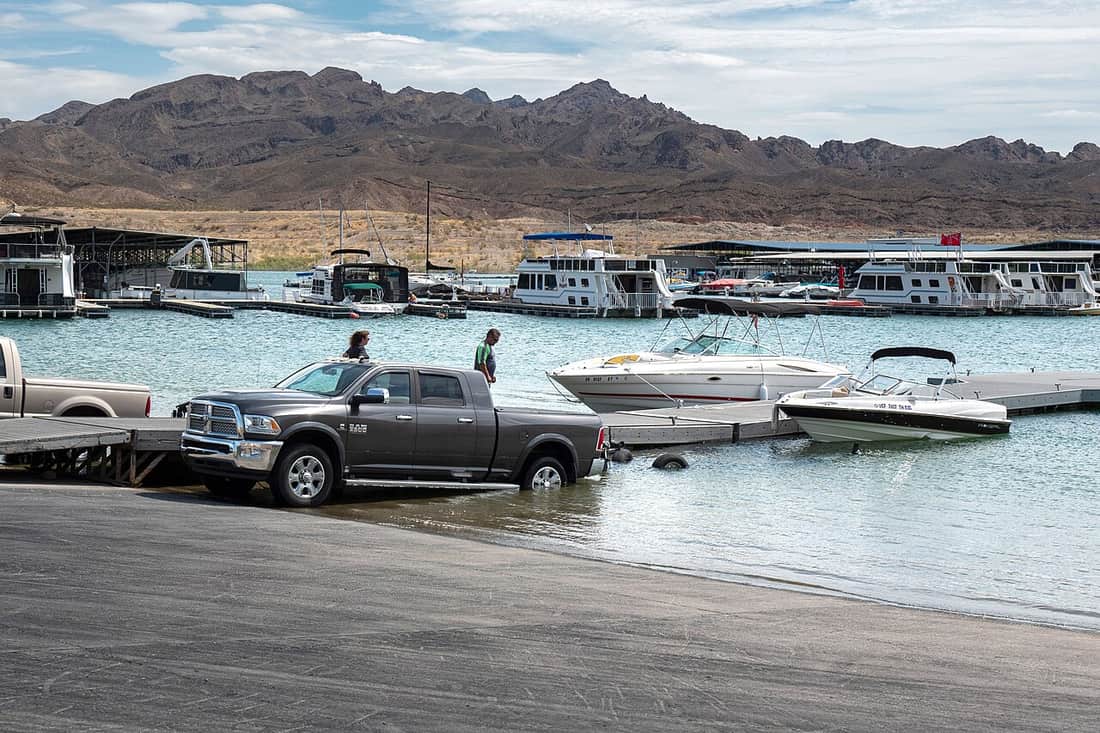
Most owners do not choose between these; the trailer arrives with one or the other and the choice is really about what the tow vehicle needs to provide. Boat trailers are overwhelmingly surge, because the system has no electrical connections to immerse at a launch ramp. Travel trailers, utility trailers and car haulers are overwhelmingly electric, because the owner wants control and adjustability from the cab.
How each system actually works
A surge coupler contains a sliding section and a small master cylinder. When the tow vehicle slows, the trailer's momentum pushes the coupler forward against that cylinder, which pressurizes hydraulic brakes at the wheels. The harder the push, the harder the brakes - it is a purely mechanical proportionality, and it requires nothing from the vehicle but a ball to push against.
Electric brakes put an electromagnet inside each drum. The controller in the cab sends current proportional to the truck's own deceleration; the magnet grabs the rotating drum face and levers the shoes outward. Because the signal is electrical and adjustable, you get a gain dial and a manual override lever - and because it is electrical, it depends on connectors, grounds and a controller that works.
| Consideration | Surge (hydraulic) | Electric |
|---|---|---|
| Controller needed | None | Yes, in the tow vehicle |
| Tow vehicle wiring | Lights only; a reverse-lockout circuit on some designs | Seven-way connector with a live brake pin |
| Works behind any vehicle | Yes - rental trucks included | Only a vehicle with a controller fitted |
| Adjustable from the cab | No | Yes, by gain |
| Manual override for sway | No | Yes |
| Backing up | Needs a lockout or a reverse solenoid, or it fights you | Backs freely |
| Immersion | Tolerates launch ramps well | Connectors and magnets dislike immersion |
| Typical fitment | Boat trailers, rental trailers | Travel trailers, utility trailers, car haulers |
Describes the two systems in general. Individual trailers vary - read your own coupler and axle hardware rather than assuming by trailer type.
The backing-up problem is the real difference in daily use
Reversing compresses a surge coupler the same way braking does, so the brakes try to apply while you are backing up a ramp or a driveway. Designs handle this differently: some use a mechanical lockout pin you insert, some use a reverse solenoid energized by the tow vehicle's reverse circuit, and some use a free-backing wheel cylinder arrangement. If your trailer uses a solenoid, the vehicle has to supply that signal, which is what a five-way flat connector carries and a plain four-way does not.
That is the one case where a surge trailer needs more than lights from the tow vehicle, and it is why four-to-five adapters exist. Electric brakes have no equivalent problem - they simply do nothing in reverse unless commanded.
Maintenance differs more than people expect
- Surge: hydraulic fluid, flexible lines, a master cylinder inside the coupler and wheel cylinders at the drums. Leaks and seized cylinders are the failure modes, and a trailer parked for a season is where they show up.
- Electric: magnets, shoes, wiring and grounds. Corroded connections and worn magnet faces are the failure modes, and a bad ground at the trailer frame causes more complaints than anything else.
- Both: the drums and shoes themselves wear, and both systems are commonly neglected for years. If you bought a used trailer, assume the brakes need attention until you have seen them work.
- Both: a braked trailer also needs a breakaway system, which is a separate item from the brakes themselves. Safety chains and breakaway cables covers how that is arranged.
Quick picks
Tap any row to jump to the full write-up. How these are chosen - and what we do and do not claim to know - is published in full on our research methodology page.
| # | Product | Best for | Our read | Price |
|---|---|---|---|---|
| 1 |  CURT 4-Way to 5-Way Flat Adapter for Surge Brakes Best for a surge trailer | Boat trailers with surge brakes | Adds the reverse-lockout circuit a surge trailer needs | Check price on Amazon #ad Affiliate link - we publish no price; Amazon shows the current one |
| 2 |  Tekonsha Primus IQ Trailer Brake Controller Best for electric brakes | One truck, one trailer | Proportional control at a sensible price | Check price on Amazon #ad Affiliate link - we publish no price; Amazon shows the current one |
| 3 |  CURT Echo Mobile Trailer Brake Controller Best for a borrowed truck | Rental trucks and borrowed tow vehicles | Plugs into the 7-way, no cab wiring at all | Check price on Amazon #ad Affiliate link - we publish no price; Amazon shows the current one |
The hardware in detail
1. Best for a surge trailer
CURT 4-Way to 5-Way Flat Adapter for Surge Brakes
CURT · Best for boat trailers with surge brakes
The small adapter that lets a 4-way vehicle feed a boat trailer with surge brakes, which need a fifth wire to disable the brakes while reversing. Specific, unglamorous, and the difference between backing down a ramp and fighting the trailer's own brakes.
Published specifications
What works
- Solves the reverse-lockout problem without rewiring the vehicle
- Small enough to live in the glovebox as a spare
- Standard connector shapes on both ends
What does not
- Only relevant to surge-brake trailers
- Another connection in the circuit, and connections are what corrode
Skip it if
Irrelevant to electric trailer brakes - those need a 7-way and a brake controller, not an adapter.
#ad Affiliate link - we publish no price; Amazon shows the current one
Raw specifications: CURT’s own page. We earn nothing on that link.
2. Best for electric brakes
Tekonsha Primus IQ Trailer Brake Controller
Tekonsha · Best for one truck, one trailer
Proportional braking without the memory, the boost profiles or the big display. For one truck and one trailer, that subtraction costs you almost nothing in how the rig actually stops, which is why it stays the default recommendation for a first controller.
We have not sourced a full specification table for this model from the manufacturer’s own site at a stable address. Rather than repeat figures we cannot cite, the assessment above is limited to what the design and the maker’s published description genuinely establish.
What works
- Proportional response at a far lower price than a flagship controller
- Small enough to mount where a larger unit will not fit
- Mounts at a range of angles without needing to be level
What does not
- No per-trailer memory, so a second trailer means re-setting gain each time
- Display tells you much less when something is wrong
Skip it if
Not the one if you swap between a light utility trailer and a heavy camper - without stored settings you will eventually drive off on the wrong gain.
#ad Affiliate link - we publish no price; Amazon shows the current one
3. Best for a borrowed truck
CURT Echo Mobile Trailer Brake Controller
CURT · Best for rental trucks and borrowed tow vehicles
Plugs into the 7-way instead of being wired under the dash, and runs from a phone app over Bluetooth. Tri-axis inertia sensing means it does not care how it sits. The trade is that your brake interface is a phone, which is a real objection and not a small one.
Published specifications
What works
- No wiring, no drilling, and it moves between vehicles in seconds
- Tri-axis sensing removes the level-mounting requirement entirely
- Ideal when the tow vehicle is not yours to modify
What does not
- The manual override lives in a phone app, which is the wrong place for it in an emergency
- Rated for one and two-axle trailers only
Skip it if
Not for a triple-axle trailer, and not for anyone who wants a physical lever they can hit without looking.
#ad Affiliate link - we publish no price; Amazon shows the current one
Raw specifications: CURT’s own page. We earn nothing on that link.
Can you convert from one to the other?
Yes, and people do - usually surge to electric, so they get gain control and a manual override. It means a new coupler or a new actuator, electric drum assemblies or an electric-over-hydraulic pump, trailer wiring, and a controller in the truck. That is a real project rather than an afternoon, and the case for it is strongest on a trailer you tow often behind one vehicle.
The opposite conversion is rare. The main reason to want it is towing behind vehicles that have no controller, which a connector-mounted electric controller also solves for far less money.
Key takeaways
- Surge brakes need no controller and work behind any vehicle.
- Electric brakes give you gain adjustment and a manual override for sway.
- Surge couplers fight you in reverse unless locked out or given a reverse signal.
- Immersion favors surge; adjustability favors electric.
- Read your own coupler before buying either kind of hardware.
How we sourced this
Every figure on this page came from one of the following, each fetched while the page was written. Where a manufacturer or regulator does not publish a number, we say so rather than estimate it.
Common questions
- Do surge brakes need a brake controller?
- No. A surge actuator applies the trailer's hydraulic brakes mechanically when the trailer pushes against the coupler, so no controller and no brake wiring from the tow vehicle are involved.
- Are surge brakes or electric brakes better for a boat trailer?
- Surge, in almost every case. A launch ramp immerses the trailer's wheels and wiring, and a hydraulic system with no electrical connections at the brakes tolerates that far better than magnets and connectors do.
- Why do my surge brakes apply when I back up?
- Reversing pushes the coupler closed just as braking does. The trailer should have a lockout - a pin, a reverse solenoid fed from the tow vehicle, or free-backing cylinders. If none of those are working, backing up will fight you.
- Can I tow an electric-brake trailer without a controller?
- The trailer's brakes will not operate, so the tow vehicle absorbs the entire stopping job. Beyond being unsafe on any grade, many states require working brakes on trailers above a stated weight - fit a controller rather than tow without one.
More in Trailer Brake Controllers
If the trailer has electric brakes, something has to tell them how hard to work. That something is a controller, and how you set it decides how the rig stops.
Read next

Guide
Do I Need a Brake Controller?
A decision path covering unbraked, surge-brake and electric-brake trailers, plus what to check on your tow vehicle first.

Reference
Brake Controller Wiring
The brake circuit from battery to magnet, the role of each conductor, and the connection points that cause most faults.

Guide
4-Pin to 7-Pin Adapters
What adapters genuinely solve, the direction that works, and why the brake circuit cannot be adapted into existence.
Best boat trailer hardware
Best Hitch for a Boat Trailer
What to buy for a boat trailer specifically: corrosion-resistant ball hardware, the surge-brake adapter nobody mentions, and lights rated for immersion.
Found something out of date, or a figure you can source better than we did? Corrections get read first. How we research explains how these pages are put together, and contact is one click away.