Hitches, Receivers & Ball Mounts
Drop Hitches for Lifted Trucks
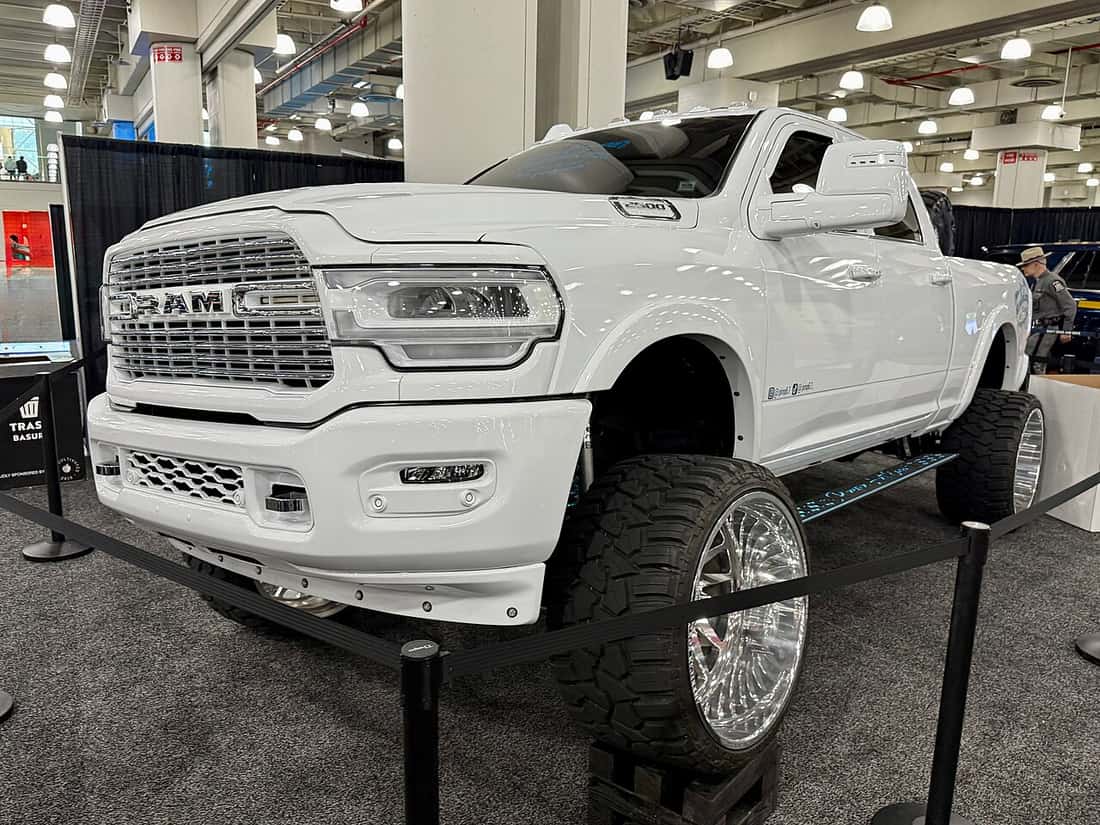
A lift does not just change how the truck looks. It changes how the trailer sits - and a nose-high trailer loses tongue weight.
Disclosure: we earn a commission if you buy through the Amazon links on this page, at no extra cost to you. Commission never decides a verdict or a ranking position - read our editorial policy and affiliate disclosure.
Short answer
A lift raises the receiver, so the same trailer now sits nose-high. That shifts weight rearward in the trailer and reduces tongue weight, which is the leading cause of sway. Measure the new drop you need and fit a mount that provides it.
Why nose-high is a safety issue, not a look
Tilt a trailer nose-up and its load shifts toward the back. Less weight presses on the tongue, more sits behind the axles - which is the exact combination that produces sway. A truck that towed its trailer beautifully before a lift can become genuinely unpleasant afterwards, with nothing changed but the ball height.
There is a braking consequence too: a nose-high trailer transfers less load to its front axle under braking, and on a tandem trailer the brakes work less evenly.
Measuring the drop you need now
After the lift, before the next tow
Level the trailer on its jack
Use a level on the trailer frame, not on the A-frame, and not by eye.
Measure ground to the bottom of the coupler
This is the height the ball needs to be at.
Measure ground to the top of the receiver tube
On a lifted truck this number is larger than it used to be, which is the whole problem.
Subtract and allow for settle
The difference is your required drop. Take off roughly an inch for the truck squatting under tongue weight.
Check your result against available mounts
Six inches covers many lifts; deeper drops exist but check their ratings, which often fall as the drop increases.
Ground clearance works against you too
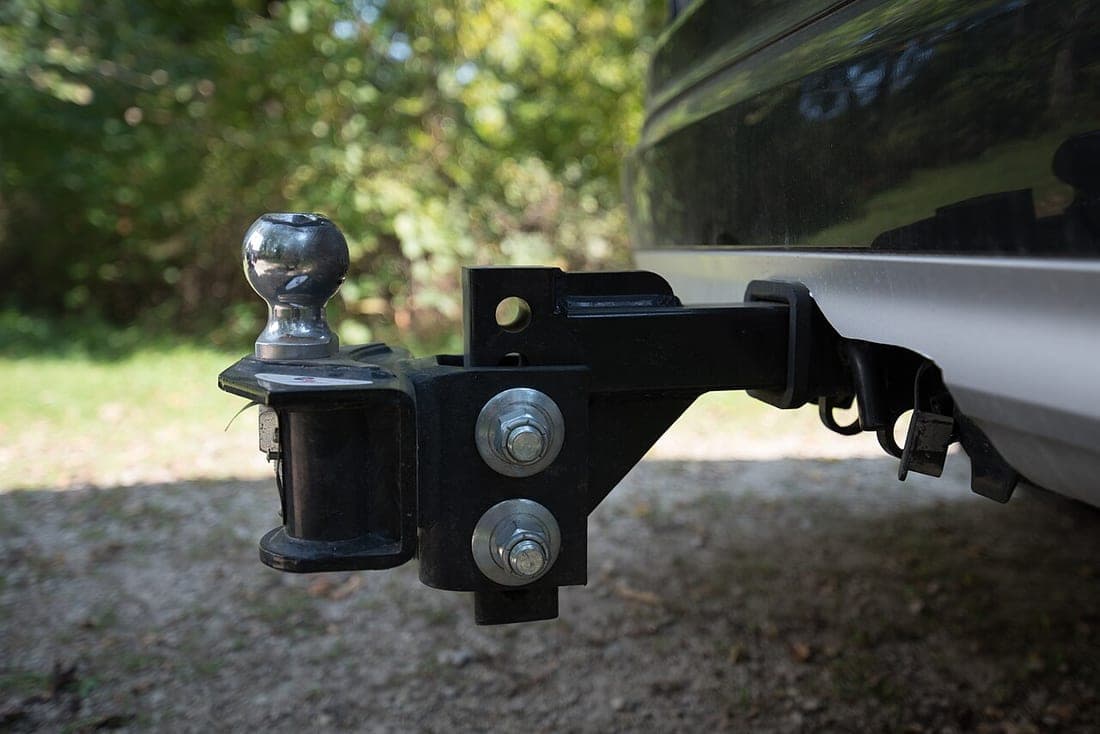
You lifted the truck for clearance, and a deep drop hitch puts a steel bar back down where it was. It becomes the lowest point at the rear, and on a steep approach it is the thing that makes contact. A stowing mount that folds up when not towing is the practical answer here.
Quick picks
Tap any row to jump to the full write-up. How these are chosen - and what we do and do not claim to know - is published in full on our research methodology page.
| # | Product | Best for | Our read | Price |
|---|---|---|---|---|
| 1 |  CURT Adjustable Channel Mount with Dual Ball (2 in shank, 6 in drop) Best for most lifts | Garages with several trailers | 6 in of drop, 14,000 lb capable | Check price on Amazon #ad Affiliate link - we publish no price; Amazon shows the current one |
| 2 |  B&W Tow & Stow Adjustable Ball Mount Deep drop plus stowing | Daily drivers that tow occasionally | Pin heights plus a fold-away head | Check price on Amazon #ad Affiliate link - we publish no price; Amazon shows the current one |
| 3 |  Weigh Safe Adjustable Drop Hitch with Built-in Tongue Weight Scale Drop plus measurement | Owners who will never visit a scale | Shows what the new geometry did to tongue weight | Check price on Amazon #ad Affiliate link - we publish no price; Amazon shows the current one |
1. Best for most lifts
CURT Adjustable Channel Mount with Dual Ball (2 in shank, 6 in drop)
CURT · Best for garages with several trailers
One mount that covers two ball sizes and a range of heights, which is the answer when the garage contains a boat trailer, a utility trailer and a camper that all sit at different heights. Capacity drops to the lower-rated ball you are actually using.
Published specifications
What works
- Two ball sizes and a height range in a single mount
- Flipping it gives rise as well as drop
- Rated to 14,000 lb on the larger ball
What does not
- Heavy, and more joints means more places for rattle to start
- The pins and bolts need checking for torque, unlike a one-piece mount
Skip it if
Pointless if you own one trailer and tow it with one truck - a fixed mount at the right height is lighter, quieter and cheaper.
#ad Affiliate link - we publish no price; Amazon shows the current one
Raw specifications: CURT’s own page. We earn nothing on that link.
2. Deep drop plus stowing
B&W Tow & Stow Adjustable Ball Mount
B&W Trailer Hitches · Best for daily drivers that tow occasionally
Two balls on a pivoting head that tucks up under the bumper when nothing is attached, which is the part owners actually rave about - no more shin-height steel bar in a parking lot. Height adjusts in pin increments rather than continuously.
We have not sourced a full specification table for this model from the manufacturer’s own site at a stable address. Rather than repeat figures we cannot cite, the assessment above is limited to what the design and the maker’s published description genuinely establish.
What works
- Stows up out of the way instead of projecting behind the bumper
- Two ball sizes on one head, flipped rather than swapped
- Solid, heavily built, and quiet when pinned correctly
What does not
- Heavy to handle and to store
- Height steps are fixed by the pin holes, so an exact level may not be available
Skip it if
Not the right buy if you need a precise level height - a continuously adjustable channel mount will get closer than pin increments will.
#ad Affiliate link - we publish no price; Amazon shows the current one
Raw specifications: B&W Trailer Hitches’s own page. We earn nothing on that link.
3. Drop plus measurement
Weigh Safe Adjustable Drop Hitch with Built-in Tongue Weight Scale
Weigh Safe · Best for owners who will never visit a scale
An adjustable drop hitch with a hydraulic gauge in the shank, so the tongue weight reads out as you lower the trailer onto the ball. It turns the single most-skipped step in towing into something that happens automatically, which is worth more than the hardware itself.
We have not sourced a full specification table for this model from the manufacturer’s own site at a stable address. Rather than repeat figures we cannot cite, the assessment above is limited to what the design and the maker’s published description genuinely establish.
What works
- Reads tongue weight every time you hitch, with no extra step
- Adjustable height and reversible for rise as well as drop
- Makes the 10-15 percent rule checkable instead of theoretical
What does not
- The gauge reads at the ball, so it is sensitive to being parked on a slope
- Heavier and considerably more expensive than a plain mount
Skip it if
Not needed if you already weigh at a public scale - the gauge is convenience, and a certified scale is still the more accurate number.
#ad Affiliate link - we publish no price; Amazon shows the current one
Raw specifications: Weigh Safe’s own page. We earn nothing on that link.
Key takeaways
- A lift makes the trailer nose-high, and nose-high costs you tongue weight.
- Measure after the lift - the old mount is almost certainly wrong now.
- Capacity often falls as drop increases; check the position-specific rating.
- A deep drop undoes some of the clearance the lift gave you.
How we sourced this
Every figure on this page came from one of the following, each fetched while the page was written. Where a manufacturer or regulator does not publish a number, we say so rather than estimate it.
Common questions
- How much drop do I need for a 6 inch lift?
- Not necessarily 6 inches. The required drop is the difference between your coupler height and your receiver height, which depends on the trailer as well as the truck. Measure rather than matching the lift height.
- Is a lifted truck worse at towing?
- It changes the geometry and raises the center of gravity. With the correct drop fitted and the trailer level, a lifted truck tows perfectly well - the problem is almost always the wrong mount, not the lift itself.
- Can I use a longer shank instead?
- No. Shank length sets how far the ball sits behind the receiver, which increases leverage on the hitch. Drop is the dimension you want to change.
More in Hitches, Receivers & Ball Mounts
Class, receiver size, ball diameter, drop. Four numbers decide whether your setup is right, and three of them are stamped on parts you already own.
Read next
Best ball mount
Best Ball Mounts
Fixed, adjustable, stowing and scale-equipped mounts compared on drop range, capacity and how much they rattle.
Guide
Adjustable Ball Mounts
How channel-style adjustable mounts work, what to check before each tow, and when a fixed mount is simply better.
How to
Measuring Tongue Weight
Three methods for measuring tongue weight, what each one requires, and how to interpret the result against the 10-15 percent band.

Guide
Why Trailers Sway
The physics in plain terms, the three causes ranked by how often they are to blame, and how to tell which one you have.
Found something out of date, or a figure you can source better than we did? Corrections get read first. How we research explains how these pages are put together, and contact is one click away.