Weight Distribution Hitches
The Best Weight Distribution Hitch for a Lifted Truck
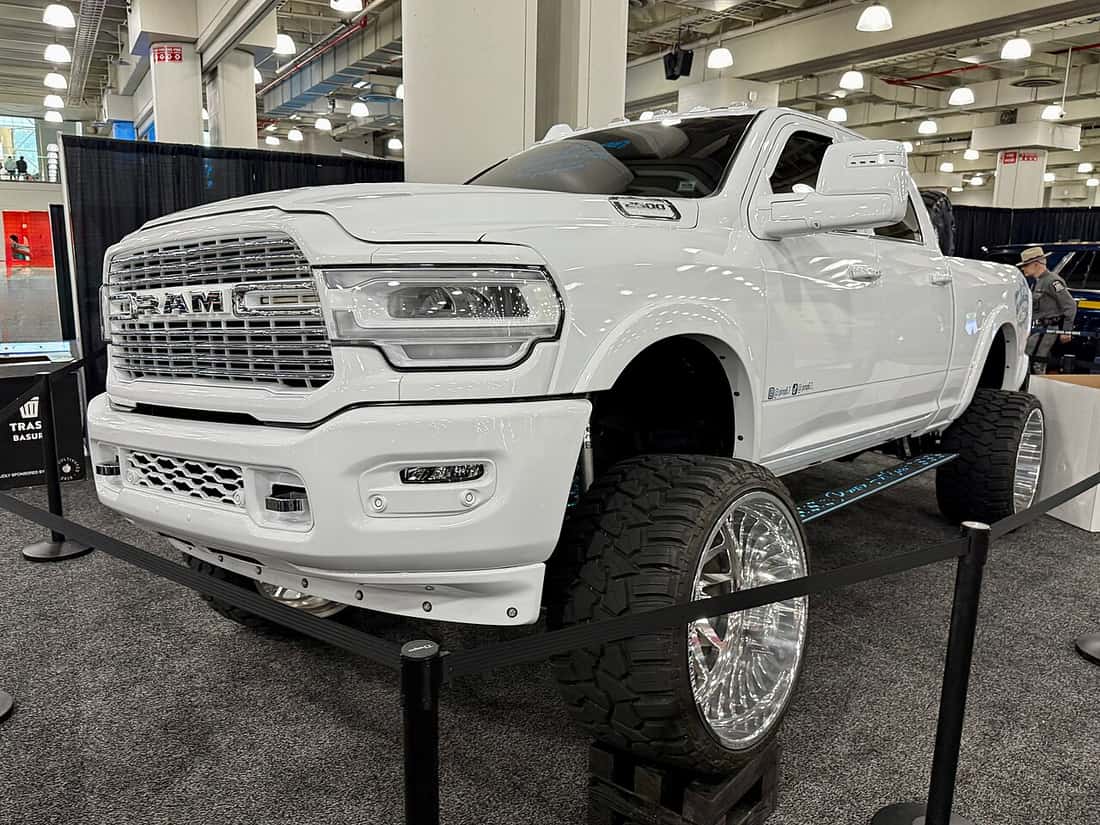
On a lifted truck the drop comes first and the bars come second. Get that order wrong and no amount of bar tension fixes the geometry.
Disclosure: we earn a commission if you buy through the Amazon links on this page, at no extra cost to you. Commission never decides a verdict or a ranking position - read our editorial policy and affiliate disclosure.
How we assessed these: Assessed from each manufacturer's published ratings and the geometry each design uses. Shank drop availability varies by part number and changes over time, so confirm the drop on the exact listing before ordering. This site runs no instrumented tests and publishes no measured figures of its own.
Short answer
On a lifted truck, choose the weight distribution hitch by the shank drop it is available in and then by bar rating. The CURT round-bar system with sway control is the sensible default at 14,000 lb gross and 1,400 lb tongue, provided you can source it in a shank drop that brings the ball back down to coupler height.
A lift kit does one thing to towing that nothing else does: it raises the receiver. Everything downstream follows from that. The coupler on the trailer has not moved, so a ball sitting two or three inches high tilts the whole trailer nose-up, moves weight off the tongue and onto the rear trailer axle, and makes the trailer behave like one that was loaded badly - because, functionally, it has been.
Work out how much drop you need before you shop
This is a tape-measure job and it takes ten minutes. Park on a level surface with the trailer unhitched and sitting level on its jack, then take two measurements.
Measuring drop on a lifted truck
Measure the trailer coupler height
With the trailer level on its jack, measure from the ground to the bottom inside face of the coupler socket. Write the number down.
Measure the receiver height
Measure from the ground to the top inside face of the receiver tube on the truck, unloaded and unhitched.
Subtract, then add the hitch rise
The difference between the two is the drop you need at the ball. A weight distribution head adds its own rise on top of that, so read the head's published rise figure and include it in the total.
Re-measure hitched
Fit the hitch, load the bars, then measure the trailer frame at the front and at the rear. Level, or within about an inch, is the target.
That hitch rise figure is the step people miss. A head with a published 5.75 in rise fitted on a shank with a 4 in drop nets out as a rise, not a drop. The same arithmetic drives ordinary drop hitch selection, and on a lifted truck the weight distribution head simply adds another term to it.
What to look for
- Shank drop availability. This is the first filter. A hitch sold only with a modest drop is the wrong hitch for a 6 in lift however good its bars are.
- Trunnion bars rather than round bars, if the truck crosses rough transitions. Trunnion bars ride higher. A lifted truck on a steep trail entry has more approach clearance up front and no more under the shank.
- Rated capacity at the drop you need. Some ratings are published for a specific shank configuration. A deep drop shank is a longer lever and the rating can change with it - read the listing, not the family specification.
- Sway control that does not depend on bar geometry you have altered. A head-based or friction-based system is less sensitive to shank length than one tuned around a standard ride height.
- Serviceable hardware. Lifted trucks tend to see dirt roads, and grit is the enemy of every friction sway surface on the market.
Quick picks
Tap any row to jump to the full write-up. How these are chosen - and what we do and do not claim to know - is published in full on our research methodology page.
| # | Product | Best for | Our read | Price |
|---|---|---|---|---|
| 1 |  CURT Round Bar Weight Distribution Hitch with Sway Control (14K) Best overall | Mid-size travel trailers | 14,000 lb gross, lubricated head, 1,400 lb tongue | Check price on Amazon #ad Affiliate link - we publish no price; Amazon shows the current one |
| 2 |  Husky Towing Centerline TS Weight Distribution Hitch Best ground clearance | Setting up single-handed | Trunnion bars ride higher than round bars | Check price on Amazon #ad Affiliate link - we publish no price; Amazon shows the current one |
| 3 |  Andersen No-Sway Weight Distribution Hitch Best if the drop is extreme | Anyone who struggles with bar weight | Chain tension, nothing long hanging below the shank | Check price on Amazon #ad Affiliate link - we publish no price; Amazon shows the current one |
| 4 |  Equal-i-zer 4-point Sway Control Hitch Best sway resistance | Travel trailers that already sway | Four friction points built into the geometry | Check price on Amazon #ad Affiliate link - we publish no price; Amazon shows the current one |
The picks in detail
1. Best overall
CURT Round Bar Weight Distribution Hitch with Sway Control (14K)
CURT · Best for mid-size travel trailers
A conventional round-bar system with integrated lubrication and sway control, rated to 14,000 lb gross and 1,400 lb tongue. The built-in lubrication matters more than it sounds: a dry weight distribution head is the usual source of the groaning people mistake for a failing hitch.
Published specifications
What works
- Integrated lubrication at the head, which is where the noise usually comes from
- Round bars sit lower and clear more trailer tongues than trunnion bars
- Limited lifetime warranty
What does not
- Round bars hang lower than trunnion bars and are the first thing to catch on a steep driveway
- Sway control here is a function of the head, not an adjustable four-point system
Skip it if
Skip it if you regularly cross steep transitions - a round bar is the lowest part of the whole rig and will find the pavement before anything else does.
#ad Affiliate link - we publish no price; Amazon shows the current one
Raw specifications: CURT’s own page. We earn nothing on that link.
2. Best ground clearance
Husky Towing Centerline TS Weight Distribution Hitch
Husky Towing · Best for setting up single-handed
Trunnion bars with sway control built into the head rather than bolted alongside it, and no chains to snap up - the bars seat and lock. For owners who found a chain-type hitch awkward to set up alone, the hook-up sequence is the whole argument.
We have not sourced a full specification table for this model from the manufacturer’s own site at a stable address. Rather than repeat figures we cannot cite, the assessment above is limited to what the design and the maker’s published description genuinely establish.
What works
- No chains to tension, which is the hardest part of a conventional hitch to do alone
- Trunnion bars sit higher than round bars and clear steep driveways better
- Sway control integrated rather than a separate bolt-on bar
What does not
- Head height and washer stack still have to be set correctly, which is the fiddly part
- Fewer bar ratings offered than the biggest brands, so sizing options are coarser
Skip it if
Not the choice if your tongue weight falls between its bar ratings - a mismatched bar is worse than a simpler hitch sized correctly.
#ad Affiliate link - we publish no price; Amazon shows the current one
Raw specifications: Husky Towing’s own page. We earn nothing on that link.
3. Best if the drop is extreme
Andersen No-Sway Weight Distribution Hitch
Andersen Hitches · Best for anyone who struggles with bar weight
A chain-and-bracket system instead of spring bars, which cuts the assembled weight dramatically and takes the greasy steel bars out of the equation. Sway resistance comes from a friction cone at the ball rather than from bar friction, so it keeps working in reverse.
We have not sourced a full specification table for this model from the manufacturer’s own site at a stable address. Rather than repeat figures we cannot cite, the assessment above is limited to what the design and the maker’s published description genuinely establish.
What works
- Far lighter to lift and store than a conventional spring-bar system
- No greased bars to handle, and no bars to drag on a steep transition
- Tension is set with a wrench rather than a snap-up bracket
What does not
- Chains and the friction cone need periodic re-tensioning and inspection
- Behaves differently from a spring-bar hitch, so advice written for those does not transfer cleanly
Skip it if
Not for you if you want a system a trailer shop down the road will recognize instantly - most of the setup advice you will find assumes spring bars.
#ad Affiliate link - we publish no price; Amazon shows the current one
Raw specifications: Andersen Hitches’s own page. We earn nothing on that link.
4. Best sway resistance
Equal-i-zer 4-point Sway Control Hitch
Equal-i-zer · Best for travel trailers that already sway
The reference point for integrated sway control. Friction happens at four places at once - both L-brackets and both sockets - so resistance is always on rather than something you remember to engage. Setup is bracket-height and bar-angle work, and it rattles; both are the price of a system with no separate parts to forget.
Published specifications
- Models offered (gross trailer weight)
- 4,000, 6,000, 10,000, 12,000, 14,000 and 16,000 lb source
- Tongue weight rating
- Matched to each model: 400, 600, 1,000, 1,200, 1,400 and 1,600 lb source
- Sway control points
- Four - two in the hitch head sockets, two at the rigid trailer brackets source
- Warranty
- Limited lifetime warranty source
What works
- Sway resistance is built into the geometry, so there is nothing to connect or disconnect at the ramp
- Works in reverse and in the wet, unlike a friction bar you have to release
- One assembly rather than a hitch plus a bolt-on sway bar
What does not
- Audible rattle and creak at low speed is normal and surprises first-time owners
- Bracket height and bar angle have to be set properly or the sway control does little
Skip it if
Skip it if your loaded tongue weight sits well inside your receiver's weight-carrying rating and the truck stays level - you would be buying hardware to solve a problem you do not have.
#ad Affiliate link - we publish no price; Amazon shows the current one
Raw specifications: Equal-i-zer’s own page. We earn nothing on that link.
Three things a lift changes that nobody mentions
The first is that a taller truck has a higher center of gravity and a longer moment arm to the ball, so the rig is slightly more willing to be pushed around by a trailer than the same truck at stock height. That is an argument for better sway control, not an argument against towing.
The second is that a lift kit generally does not change the axle ratings, the brakes or the frame - and those are what the tow rating was built from. A lift adds no capacity. Payload is still the number that binds, and larger tires and wheels usually make it worse rather than better.
The third is that a lifted truck sags no less than a stock one under tongue weight. If the front end rises when you hitch up, you have the same problem every other owner has, and the three checks that settle whether you need load transfer apply unchanged.
Key takeaways
- Measure coupler height and receiver height before buying anything.
- Add the hitch head's published rise to the drop you calculate.
- Trunnion bars clear rough transitions better than round bars.
- A lift adds no capacity - the tow rating and payload are unchanged.
- If the trailer still sits nose-high, the drop is wrong, not the bars.
How we sourced this
Every figure on this page came from one of the following, each fetched while the page was written. Where a manufacturer or regulator does not publish a number, we say so rather than estimate it.
- CURT round bar weight distribution hitch with sway control - published specifications (part 17063)
- Husky Towing Products - manufacturer site
- Andersen Hitches - manufacturer site
- Equal-i-zer hitch - manufacturer site
- 49 CFR 567.4 - certification label content, including Gross Vehicle Weight Rating and Gross Axle Weight Rating
Common questions
- How much drop do I need for a lifted truck?
- Whatever brings the ball down to your trailer's level coupler height, which is the measured difference between coupler height and receiver height, plus the published rise of the weight distribution head you fit. There is no standard figure, because lift heights and coupler heights both vary.
- Can I use a drop shank with a weight distribution hitch?
- Yes, and on a lifted truck you generally have to. Use a shank the hitch maker sells or approves for that head, and confirm the rating published for that shank rather than assuming it carries the family rating.
- Does a lift kit reduce my towing capacity?
- It does not change the manufacturer's published tow rating, but it does not raise it either, and taller tires and heavier wheels eat into payload. Treat the factory ratings as unchanged and the payload headroom as slightly worse than stock.
- Will a weight distribution hitch level my lifted truck?
- It levels the rig front to rear by transferring tongue load onto the truck's front axle and the trailer axles. It does not raise or lower the ball, so it cannot fix a trailer that sits nose-high because of lift height.
More in Weight Distribution Hitches
A weight distribution hitch moves load off the back of your truck. Whether you need one is a number, not an opinion - and the number is on your door jamb.
Read next
Guide
Drop Hitches for Lifted Trucks
Why a lift creates a towing problem, how to measure the drop you now need, and the extended-drop options available.

Head to head
Round Bar vs Trunnion Bar
Ground clearance, A-frame fit and capacity ceilings compared - the three things that actually separate the two bar styles.

How to
WD Hitch Setup Guide
The full setup sequence with the measurements that make it verifiable, plus how to read the symptoms of each wrong setting.

Troubleshooting
Truck Sags When Towing
What rear squat actually indicates, why it affects steering and braking, and which of the three common fixes addresses the real problem.

Guide
Do I Need a WD Hitch?
The three-check test that answers the question definitively, plus the cases where the answer is a clear no.
Found something out of date, or a figure you can source better than we did? Corrections get read first. How we research explains how these pages are put together, and contact is one click away.