Hitches, Receivers & Ball Mounts
B&W Tow & Stow Alternatives That Make Sense
The Tow & Stow earns its reputation on a pivoting head that gets out of the way. Here is where that design is not what you need, and what to buy instead.

Disclosure: we earn a commission if you buy through the Amazon links on this page, at no extra cost to you. Commission never decides a verdict or a ranking position - read our editorial policy and affiliate disclosure.
How we assessed these: A comparison of published manufacturer specifications only - per-shank gross trailer and tongue weight ratings, drop and rise ranges, unit weights, materials, ball options and certifications, each linked to the maker's own page. This site has not installed or towed with any of these mounts and publishes no measurements, scores or star ratings of its own.
Short answer
The B&W Tow & Stow is known for a pivoting multi-ball head that tucks under the bumper when you are not towing, with published ratings up to 21,000 lb on the 3 inch shank. Look elsewhere if you need weight distribution or sway bars, which B&W states do not fit it; if you want tongue weight shown as you hitch, which the Weigh Safe gauge does; if you are tired of lifting steel, which the aluminum Andersen Rapid Hitch answers; or if you tow one trailer at one height, where a fixed mount is lighter, quieter and cheaper.
Start with what the Tow & Stow actually gets right, because it is not a mystery why people buy it. The head pivots up and stows beneath the bumper, so the usual shin-height steel bar is simply not there when you are parked. Two ball sizes live on one head, flipped rather than swapped. B&W publishes gross trailer weight by shank size - 10,000 lb on the 2 inch, 18,000 lb on the 2-1/2 inch, 21,000 lb on the 3 inch - with matching vertical tongue weight figures and SAE J684 testing. Our full assessment of it goes through those numbers in detail.
None of that makes it the right mount for everybody. There are four specific situations where it is the wrong tool, and in each one a different mount is the obvious answer. This page is organized by those situations rather than by brand, because the reason you are shopping decides which alternative you want.
Reason 1: you need weight distribution or sway control
This is the one that sends most people looking, and it is not a flaw so much as a design boundary. B&W's own published specification says sway bar and weight distribution systems do not fit the Tow & Stow. The pivoting head is what makes the mount pleasant to live with, and it is also what leaves nowhere for spring bar brackets to attach.
If your trailer is heavy enough to need load transfer - and a travel trailer over roughly 5,000 lb usually is, with the tow vehicle's manual having the final word - then an adjustable ball mount of any kind is the wrong product and a weight distribution hitch is the right one. The two are not interchangeable: a weight distribution hitch replaces the ball mount entirely and brings its own ball, head and spring bars.
Where to go next: the weight distribution hitches with sway control built in, and if you are not sure your trailer needs one, the honest version of that question.
Reason 2: you want to see tongue weight, not estimate it
Tongue weight should sit between 10 and 15 percent of a conventional trailer's loaded weight. Almost nobody checks, because checking has historically meant a bathroom scale and a plank or a trip to a public scale with the trailer attached.
The Weigh Safe Drop Hitch puts a hydraulic gauge in the shank, so the number appears as you lower the trailer onto the ball. Weigh Safe publishes it in aircraft-grade aluminum with stainless balls, 12,500 lb gross and 1,500 lb tongue on the 2 inch shank, rising to 21,000 lb gross and 2,200 lb tongue on the 3 inch, with V5 and SAE J684 certification. Drop sizes are published at 4, 6, 8 and 10 inches, adjustable in 1 inch increments - finer than the pin steps on a stowing mount, which is a second, quieter reason people switch.
The honest caveat is that the gauge reads at the ball and is therefore sensitive to being parked on a slope, and a certified public scale is still the more accurate figure. It is a convenience instrument, not a laboratory one. But a number you actually look at every time beats a precise number you never collect. If you would rather keep your current mount and add a scale, a dedicated tongue weight scale does the same job without replacing hardware.
Reason 3: the steel is too heavy to keep lifting
Adjustable steel mounts are heavy. That is the price of a part that has to carry a five-figure trailer weight through a single pin. If the mount lives in the receiver permanently, the weight is irrelevant. If it lives in the garage and goes in and out, it is the thing you will complain about most.
Andersen's Rapid Hitch is the aluminum answer: published at a 12,500 lb maximum gross trailer weight and 1,500 lb tongue weight, with 4, 6, 8 and 10 inch drop and rise racks, 2 inch and 2-1/2 inch shanks, and V5 and SAE J684 certification. Balls thread onto a stainless pin instead of bolting through a hole, so changing ball size is a tool-light operation rather than a torque job.
What you trade is ceiling and cosmetics. A 12,500 lb maximum is below the 18,000 to 21,000 lb a large-shank steel mount publishes, and aluminum scuffs where powder-coated steel shrugs. The aluminum against steel question in full covers the corrosion and strength arguments on both sides without picking a winner for you.
Reason 4: you tow one trailer, at one height, and want it simple
Adjustable mounts solve a problem that not everybody has. If your garage contains exactly one trailer and your truck is the only thing that pulls it, then the correct drop is a fixed number you can measure once and never think about again.
A one-piece loaded mount - ball already fitted and torqued at the factory - is lighter, has no pins or bolts to work loose, and cannot rattle at the joints because it has none. CURT publishes its 2 inch drop loaded mount at 7,500 lb gross and 750 lb tongue weight with a 2 inch ball. That ceiling rules out heavier trailers, and the single published drop means you have to measure before ordering rather than adjusting after. Both are fair trades for a part that is simply never a problem.
If you want the middle ground - a height range and two ball sizes without the stowing head or the gauge - CURT's adjustable channel mount publishes 14,000 lb gross with a 2-5/16 inch ball fitted, 10,000 lb with the 2 inch, 6 inches of maximum drop and 5-1/4 inches of rise when flipped. It is the plain version of an adjustable mount and it is the one most garages with several trailers actually need.
Quick picks
Tap any row to jump to the full write-up. How these are chosen - and what we do and do not claim to know - is published in full on our research methodology page.
| # | Product | Best for | Our read | Price |
|---|---|---|---|---|
| 1 |  Weigh Safe Adjustable Drop Hitch with Built-in Tongue Weight Scale Closest alternative, with a scale | Owners who will never visit a scale | Adjustable in 1 in steps, tongue weight gauge built in | Check price on Amazon #ad Affiliate link - we publish no price; Amazon shows the current one |
| 2 |  Andersen Rapid Hitch Aluminum Adjustable Ball Mount Lightest alternative | Anyone tired of lifting steel mounts | Aluminum, 12,500 lb ceiling, thread-on balls | Check price on Amazon #ad Affiliate link - we publish no price; Amazon shows the current one |
| 3 |  CURT Adjustable Channel Mount with Dual Ball (2 in shank, 6 in drop) Best value adjustable | Garages with several trailers | Two balls, 6 in drop, 14,000 lb on the larger ball | Check price on Amazon #ad Affiliate link - we publish no price; Amazon shows the current one |
| 4 |  CURT Loaded Ball Mount with 2 in Ball (2 in drop, 7,500 lb) Budget pick, if you tow one trailer | One trailer at a known height | One piece, ball fitted, nothing to rattle | Check price on Amazon #ad Affiliate link - we publish no price; Amazon shows the current one |
How the published numbers line up
Ratings below are each manufacturer's own published figures, for the shank size noted. They are not directly comparable unless the shank sizes match, which is the detail most comparison tables quietly skip.
| Mount | Gross trailer weight | Tongue weight | Height adjustment |
|---|---|---|---|
| B&W Tow & Stow (the original) | 10,000 lb (2 in shank); 21,000 lb (3 in shank) | 1,000 lb (2 in); 2,100 lb (3 in) | Fixed pin steps, published drops by shank |
| Weigh Safe Drop Hitch | 12,500 lb (2 in shank); 21,000 lb (3 in shank) | 1,500 lb (2 in); 2,200 lb (3 in) | 1 in increments, 4 to 10 in drop racks |
| Andersen Rapid Hitch | 12,500 lb maximum | 1,500 lb | 4, 6, 8 and 10 in drop and rise racks |
| CURT adjustable channel mount | 14,000 lb with 2-5/16 in ball | Not published separately | 6 in drop, 5-1/4 in rise |
| CURT loaded ball mount | 7,500 lb | 750 lb | None - fixed 2 in drop |
Capacity on any mount falls to the lowest-rated part in the chain, which is often the ball or the coupler rather than the mount. Match the ball rating to the coupler stamping, and both to the receiver's class.
Two patterns are worth naming from that table. First, the Tow & Stow's 2 inch shank figures are the lowest in its own range - the headline 21,000 lb belongs to the 3 inch shank that most half-ton and three-quarter-ton receivers cannot take. Compare like with like. Second, every alternative here gives up the stowing head, which is the feature its owners like most. If that feature is why you are interested in the Tow & Stow, none of these replaces it, and the right answer may be to keep it and solve your actual problem a different way.
1. Closest alternative, with a scale
Weigh Safe Adjustable Drop Hitch with Built-in Tongue Weight Scale
Weigh Safe · Best for owners who will never visit a scale
An adjustable drop hitch with a hydraulic gauge in the shank, so the tongue weight reads out as you lower the trailer onto the ball. It turns the single most-skipped step in towing into something that happens automatically, which is worth more than the hardware itself.
Published specifications
- Gross trailer weight by shank
- 2 in shank 12,500 lb; 2-1/2 in shank 18,500 lb; 3 in shank 21,000 lb source
- Tongue weight rating by shank
- 2 in shank 1,500 lb; 2-1/2 in and 3 in shanks 2,200 lb source
- Published drop sizes
- 4, 6, 8 and 10 in, adjustable in 1 in increments; rise is 1 in more than the drop source
- Unit weight
- 16 lb at 4 in drop, 18 lb at 6 in, 19 lb at 8 in, 20 lb at 10 in source
- Balls supplied
- Stainless steel 2 in and 2-5/16 in; 1-7/8 in is a separate option source
- Material and certification
- Aircraft-grade aluminum body with stainless balls; V5 and SAE J684 certified source
What works
- Reads tongue weight every time you hitch, with no extra step
- Adjustable height and reversible for rise as well as drop
- Makes the 10-15 percent rule checkable instead of theoretical
What does not
- The gauge reads at the ball, so it is sensitive to being parked on a slope
- Heavier and considerably more expensive than a plain mount
Skip it if
Not needed if you already weigh at a public scale - the gauge is convenience, and a certified scale is still the more accurate number.
#ad Affiliate link - we publish no price; Amazon shows the current one
Raw specifications: Weigh Safe’s own page. We earn nothing on that link.
2. Lightest alternative
Andersen Rapid Hitch Aluminum Adjustable Ball Mount
Andersen Hitches · Best for anyone tired of lifting steel mounts
An aluminum adjustable mount, which is the point: a steel channel mount is genuinely heavy to carry, and this one is not. Balls thread into the stainless pin rather than bolting through a hole, so swapping sizes takes seconds.
Published specifications
- Maximum gross trailer weight
- 12,500 lb source
- Capacity by ball fitted
- 2 in with 2-5/16 in combo ball 10,000 to 12,500 lb; 1-7/8 in with 2 in combo ball 5,000 to 12,500 lb source
- Tongue weight rating
- 1,500 lb source
- Drop/rise racks
- 4, 6, 8 and 10 in source
- Shank sizes
- 2 in and 2-1/2 in source
- Certification
- V5 and SAE J684 source
What works
- Dramatically lighter than a steel adjustable mount of similar capacity
- Ball changes are a thread-on operation, not a torque-and-nut job
- Aluminum does not rust streak down a painted bumper
What does not
- Aluminum marks more easily than powder-coated steel
- Capacity depends on which ball and pin combination you fit, so read the chart
Skip it if
Not the one if you leave the mount permanently in the receiver through salted winters - the convenience you are paying for is weight, and you would never be lifting it.
#ad Affiliate link - we publish no price; Amazon shows the current one
Raw specifications: Andersen Hitches’s own page. We earn nothing on that link.
3. Best value adjustable
CURT Adjustable Channel Mount with Dual Ball (2 in shank, 6 in drop)
CURT · Best for garages with several trailers
One mount that covers two ball sizes and a range of heights, which is the answer when the garage contains a boat trailer, a utility trailer and a camper that all sit at different heights. Capacity drops to the lower-rated ball you are actually using.
Published specifications
What works
- Two ball sizes and a height range in a single mount
- Flipping it gives rise as well as drop
- Rated to 14,000 lb on the larger ball
What does not
- Heavy, and more joints means more places for rattle to start
- The pins and bolts need checking for torque, unlike a one-piece mount
Skip it if
Pointless if you own one trailer and tow it with one truck - a fixed mount at the right height is lighter, quieter and cheaper.
#ad Affiliate link - we publish no price; Amazon shows the current one
Raw specifications: CURT’s own page. We earn nothing on that link.
4. Budget pick, if you tow one trailer
CURT Loaded Ball Mount with 2 in Ball (2 in drop, 7,500 lb)
CURT · Best for one trailer at a known height
A one-piece mount with the ball already fitted and torqued, rated to 7,500 lb gross and 750 lb tongue with a 2 in drop. Nothing adjusts, which is exactly why nothing rattles or works loose.
Published specifications
What works
- Arrives with the ball fitted, so there is no torque step to get wrong
- One piece means nothing to loosen or rattle
- Light enough to leave in the receiver or throw in a toolbox
What does not
- The 2 in drop is the only drop - measure before you buy
- 7,500 lb ceiling rules out heavier trailers
Skip it if
Useless on a lifted truck, where a 2 in drop will still leave the trailer nose-high and the weight on the rear axle of the trailer.
#ad Affiliate link - we publish no price; Amazon shows the current one
Raw specifications: CURT’s own page. We earn nothing on that link.
Which to buy, by situation
| Your situation | What to buy | Why |
|---|---|---|
| Travel trailer that needs load transfer | A weight distribution hitch, not a ball mount | B&W publishes that sway bars and weight distribution do not fit the Tow & Stow |
| You never check tongue weight | Weigh Safe Drop Hitch | The gauge reads as you hitch, in 1 in height increments |
| The mount lives in the garage, not the receiver | Andersen Rapid Hitch | Aluminum, and ball changes thread on |
| Several trailers at different heights | CURT adjustable channel mount | Two ball sizes and a 6 in drop range without the extras |
| One trailer, known height | CURT loaded ball mount | Nothing adjusts, so nothing loosens or rattles |
| You want the head out of the way when parked | Keep the Tow & Stow | No mount here replicates the stowing design |
Before you order any of them: measure
Every mount on this page is sold in drop sizes, and the wrong drop is the single most common mistake in this category. A trailer that rides nose-high moves weight onto its rear axle and makes sway more likely; nose-low overloads the front axle and the tongue. Level is the target.
Getting the drop right
Measure the coupler height on level ground, loaded
Park the trailer level and loaded the way you actually tow it, then measure from the ground to the bottom inside face of the coupler.
Measure the receiver height
Ground to the top inside face of the receiver tube, with the truck carrying whatever it normally carries.
Subtract, then add the ball platform
The difference is your required drop or rise, before accounting for the ball mount's own platform thickness. The full method, with the numbers worked through, avoids the off-by-one-inch results.
Check for squat under tongue weight
A truck drops at the rear once the tongue is on the ball. If it drops more than an inch or two, the trailer is heavy for the vehicle and the conversation is about load transfer, not drop size.
The bottom line
If the thing you like about the Tow & Stow is the head that folds out of the way, keep it - nothing here does that. If the thing stopping you is that your trailer needs weight distribution, no adjustable mount is the answer and a weight distribution hitch is. If you want the number that governs safe towing in front of you every time you hitch, the Weigh Safe gauge is the reason to switch and it adjusts in finer steps as a bonus. If the complaint is weight, the aluminum Andersen is the direct answer at a lower published ceiling.
And if you have read this far mainly comparing two premium adjustable mounts, the head-to-head between the Tow & Stow and the Weigh Safe is the shorter version of that decision.
Key takeaways
- B&W publishes that weight distribution and sway bar systems do not fit the Tow & Stow - that is the main legitimate reason to look elsewhere.
- Compare shank sizes, not headline numbers: the Tow & Stow's 21,000 lb figure is the 3 in shank, and its 2 in shank publishes 10,000 lb.
- Weigh Safe publishes 12,500 lb gross and 1,500 lb tongue on the 2 in shank, with a built-in gauge and 1 in height increments.
- Andersen's aluminum Rapid Hitch publishes 12,500 lb maximum gross and 1,500 lb tongue, with thread-on balls.
- CURT's adjustable channel mount publishes 14,000 lb with the 2-5/16 in ball and 6 in of drop - the plain adjustable option.
- For one trailer at one height, a fixed loaded mount has no joints to loosen and publishes 7,500 lb gross and 750 lb tongue.
- No mount here reproduces the stowing head, so keep the original if that is the feature you want.
- Measure coupler and receiver height before ordering any drop size; level is the target, not close enough.
How we sourced this
Every figure on this page came from one of the following, each fetched while the page was written. Where a manufacturer or regulator does not publish a number, we say so rather than estimate it.
- B&W Trailer Hitches - Tow & Stow Adjustable Ball Mount, published model options with GTW and VTW per shank size
- Weigh Safe - Weigh Safe Drop Hitch (aluminum), published specifications including per-shank GTW and tongue weight ratings
- Andersen Hitches - Rapid Hitch, published specifications including drop/rise racks, shank sizes, ball capacities and certifications
- CURT adjustable channel mount with dual ball - published specifications (part 45900)
- CURT loaded ball mount, 2 in ball, 2 in drop - published specifications (part 45036)
Common questions
- Can you use a weight distribution hitch with a B&W Tow & Stow?
- No. B&W's published specification for the Tow & Stow states that sway bar and weight distribution systems do not fit it. If your trailer needs load transfer, the ball mount comes out and a weight distribution hitch goes in - there is no adapter that bridges the two.
- What is the closest alternative to a Tow & Stow?
- The Weigh Safe Drop Hitch is the nearest comparable product: a premium adjustable drop hitch with multiple ball sizes, published per-shank ratings in the same range, and SAE J684 certification. It adjusts in 1 inch increments rather than fixed pin steps and adds a tongue weight gauge, but it does not fold away under the bumper.
- Is an aluminum ball mount strong enough?
- Within its published rating, yes - Andersen publishes the Rapid Hitch at a 12,500 lb maximum gross trailer weight with V5 and SAE J684 certification. The practical difference is the ceiling rather than the safety margin: heavy-shank steel mounts publish up to 21,000 lb, so aluminum rules itself out at the top of the range rather than failing inside it.
- Do I need an adjustable ball mount at all?
- Only if you tow more than one trailer, or one trailer with more than one vehicle. With a single trailer and a single truck the correct drop is a fixed measurement, and a one-piece mount at that height is lighter, quieter and cheaper than anything adjustable.
- Why does my adjustable mount rattle when the Tow & Stow did not?
- Adjustable mounts have joints, and joints have tolerance. Most of the noise is actually the gap between mount and receiver rather than the mount itself, and an anti-rattle pin with a wedge shim removes it. Check the mount's own pins and bolts for the published torque as well, since those loosen over time in a way a one-piece mount cannot.
- Does a heavier shank size really change the rating that much?
- Yes, and it is the most misread number in this category. B&W publishes 10,000 lb gross on the 2 inch shank against 21,000 lb on the 3 inch, and Weigh Safe publishes 12,500 lb against 21,000 lb across the same step. Your receiver decides which shank you can use, so check the receiver opening before comparing any headline figure.
More in Hitches, Receivers & Ball Mounts
Class, receiver size, ball diameter, drop. Four numbers decide whether your setup is right, and three of them are stamped on parts you already own.
Read next

Review
Tow & Stow Review
Ratings for all three shank sizes, the tri-ball and pintle variants, and why a travel trailer owner who needs weight distribution should look elsewhere.

Head to head
Tow & Stow vs Weigh Safe
A tri-ball mount that stows out of the way against a drop hitch with a built-in tongue weight scale - which feature earns its keep.
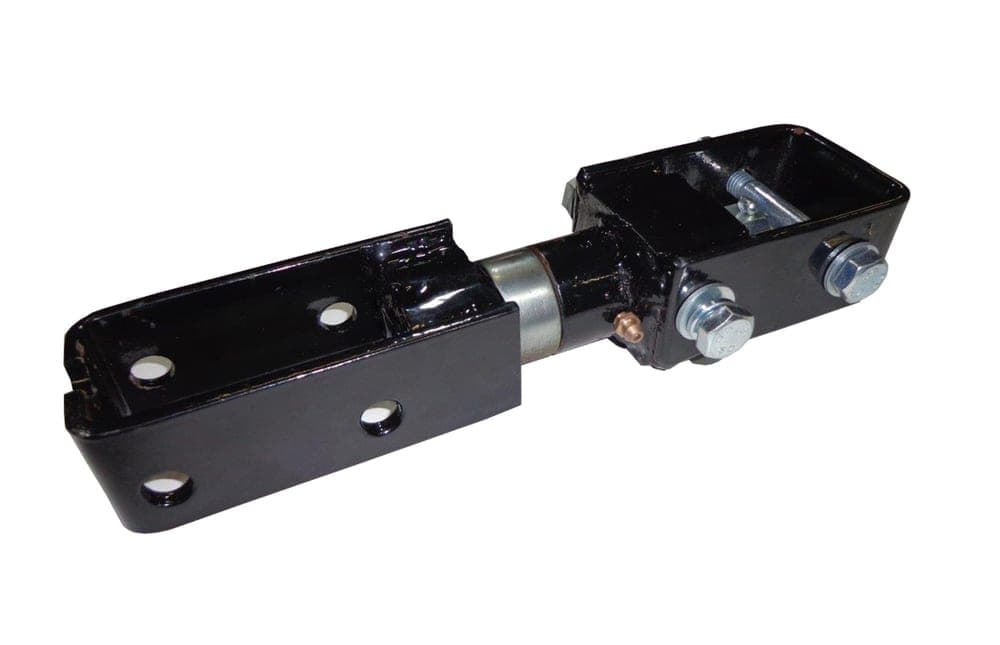
Best ball mount
Best Ball Mounts
Fixed, adjustable, stowing and scale-equipped mounts compared on drop range, capacity and how much they rattle.
Head to head
Adjustable vs Fixed Mount
The honest head-to-head: what an adjustable mount buys you, what it costs you, and why a fixed mount still wins for most owners.
Guide
What Drop Hitch Do I Need
Measure the coupler, measure the receiver, allow for squat - the method that gets a trailer level, and the mounts that cover each answer.
Found something out of date, or a figure you can source better than we did? Corrections get read first. How we research explains how these pages are put together, and contact is one click away.