Hitches, Receivers & Ball Mounts
Adjustable vs Fixed Ball Mount
One trailer at one height needs a fixed mount. Count your trailers before you read anything else about this decision.

Disclosure: we earn a commission if you buy through the Amazon links on this page, at no extra cost to you. Commission never decides a verdict or a ranking position - read our editorial policy and affiliate disclosure.
How we assessed these: Compared on each manufacturer's published ratings, drops and weights, and on the mechanism each design uses. This site runs no instrumented tests and publishes no durability or load figures of its own.
Short answer
Buy a fixed ball mount if you tow one trailer at one coupler height - it is lighter, quieter, cheaper and has fewer things to check. Buy an adjustable mount if you tow two or more trailers at different heights, or if you need a drop you cannot find in a fixed mount.
This is one of the few decisions in towing where the expensive answer is genuinely wrong for most people. An adjustable ball mount is a better product than a fixed one in almost every dimension that appears on a specification sheet, and it is the wrong buy for a reader with a single trailer. The question is not which is better engineered. It is how many coupler heights you own.
The decision in one table
| Fixed mount | Adjustable mount | |
|---|---|---|
| Heights it covers | One drop, decided when you buy | A range, usually in 1 in steps |
| Ball sizes | One, unless you swap the ball | Commonly two on the same head |
| Weight to lift | Lighter - it is one piece of steel | Heavier, unless it is aluminum |
| Rattle | Receiver slop only | Receiver slop plus the adjustment joint |
| Things to check before towing | Pin and clip | Pin, clip, pin through the adjustment, ball nut torque |
| Ball mounting torque | Often already done at the factory | Usually yours to apply |
| Price bracket | Entry-level | Mid to premium |
| Right for | One trailer, one known height | Several trailers, or an unusual drop |
A comparison of the two designs rather than of two specific parts. Ratings, drops and ball sizes vary by part number within both categories.
The case for a fixed mount
A fixed mount is a single forging with a ball on it. There is no joint, no second pin, no adjustment to creep. It weighs less, which matters because the mount comes out of the receiver and goes back in more often than any other part you own. And the good ones ship with the ball already fitted and torqued, which quietly removes the step owners get wrong most often.
That torque step deserves naming, because it is the strongest practical argument for a fixed mount. Published trailer ball mounting torque runs into the hundreds of ft-lb - CURT publishes 250 ft-lb for its 2 in stainless ball. That is well beyond a wrench and a firm pull, and an under-torqued ball nut works loose in service. The ball sizes reference covers the figure and why it is a specification rather than a suggestion. A loaded mount arrives with the job done.
- Lighter to carry and store. One piece of steel rather than a head, a shank and the hardware joining them.
- Fewer pre-trip checks. Pin and clip, and you are finished.
- Quieter. An adjustment joint is one more interface that can move under load.
- Cheaper, usually by a wide margin, and the money is better spent on sway control or a tongue weight scale.
- No torque job when the ball comes pre-fitted.
The case for an adjustable mount
An adjustable mount solves one problem completely: more than one coupler height. If you own a boat trailer, a utility trailer and a camper, their couplers almost certainly sit at three different heights, and a fixed mount sized for one of them tows the other two nose-high or nose-low. That is not a comfort issue. A nose-high trailer shifts weight off the tongue and onto the rear trailer axle, which is the exact condition that produces sway.
The second real case is a drop you cannot buy fixed. Lifted trucks need more drop than the fixed catalog generally goes to, and stacking an adapter under a fixed mount is a worse answer than one adjustable mount rated for the job. The drop arithmetic for a lifted truck is worth doing before you shop either way.
- One mount for several trailers, which is the whole point.
- Two ball sizes on one head on most designs, so a 2 in and a 2-5/16 in coupler are both covered.
- Deeper drops available than the fixed catalog typically reaches.
- Some fold or flip so the ball is not at shin height in a parking lot.
- One version weighs the tongue for you, which replaces a separate tool and a trip to a scale.
Where the money actually goes
Keeping to brackets rather than numbers, because prices move: a fixed loaded ball mount sits at the entry end of the hitch aisle, a steel adjustable mount lands in the middle, and an aluminum adjustable mount or one with a built-in scale sits at the top. The spread between the cheapest fixed mount and the most expensive adjustable one is large enough that it is worth asking what else that money could buy - a friction sway control bar, say, or a tongue weight scale, both of which address causes rather than convenience.
The exception is the mount with a scale in it. That one is not really competing with other mounts; it is competing with buying a mount and a scale separately, and against never measuring tongue weight at all. If you would honestly never measure the tongue weight any other way, it is the cheapest route to a number that matters more than anything else on this page.
Quick picks
Tap any row to jump to the full write-up. How these are chosen - and what we do and do not claim to know - is published in full on our research methodology page.
| # | Product | Best for | Our read | Price |
|---|---|---|---|---|
| 1 |  CURT Loaded Ball Mount with 2 in Ball (2 in drop, 7,500 lb) Best fixed mount | One trailer at a known height | 7,500 lb, ball fitted and torqued, nothing to adjust | Check price on Amazon #ad Affiliate link - we publish no price; Amazon shows the current one |
| 2 |  B&W Tow & Stow Adjustable Ball Mount Best adjustable mount | Daily drivers that tow occasionally | Two ball sizes, folds up out of the shin line | Check price on Amazon #ad Affiliate link - we publish no price; Amazon shows the current one |
| 3 |  Andersen Rapid Hitch Aluminum Adjustable Ball Mount Lightest adjustable | Anyone tired of lifting steel mounts | Aluminum body, the weight complaint answered | Check price on Amazon #ad Affiliate link - we publish no price; Amazon shows the current one |
| 4 |  CURT Adjustable Channel Mount with Dual Ball (2 in shank, 6 in drop) Cheapest adjustable | Garages with several trailers | 6 in drop, 14,000 lb gross, two ball sizes | Check price on Amazon #ad Affiliate link - we publish no price; Amazon shows the current one |
| 5 |  Weigh Safe Adjustable Drop Hitch with Built-in Tongue Weight Scale Adjustable with a scale | Owners who will never visit a scale | Reads tongue weight at the hitch, no trip to a scale | Check price on Amazon #ad Affiliate link - we publish no price; Amazon shows the current one |
The picks in detail
1. Best fixed mount
CURT Loaded Ball Mount with 2 in Ball (2 in drop, 7,500 lb)
CURT · Best for one trailer at a known height
A one-piece mount with the ball already fitted and torqued, rated to 7,500 lb gross and 750 lb tongue with a 2 in drop. Nothing adjusts, which is exactly why nothing rattles or works loose.
Published specifications
What works
- Arrives with the ball fitted, so there is no torque step to get wrong
- One piece means nothing to loosen or rattle
- Light enough to leave in the receiver or throw in a toolbox
What does not
- The 2 in drop is the only drop - measure before you buy
- 7,500 lb ceiling rules out heavier trailers
Skip it if
Useless on a lifted truck, where a 2 in drop will still leave the trailer nose-high and the weight on the rear axle of the trailer.
#ad Affiliate link - we publish no price; Amazon shows the current one
Raw specifications: CURT’s own page. We earn nothing on that link.
2. Best adjustable mount
B&W Tow & Stow Adjustable Ball Mount
B&W Trailer Hitches · Best for daily drivers that tow occasionally
Two balls on a pivoting head that tucks up under the bumper when nothing is attached, which is the part owners actually rave about - no more shin-height steel bar in a parking lot. Height adjusts in pin increments rather than continuously.
We have not sourced a full specification table for this model from the manufacturer’s own site at a stable address. Rather than repeat figures we cannot cite, the assessment above is limited to what the design and the maker’s published description genuinely establish.
What works
- Stows up out of the way instead of projecting behind the bumper
- Two ball sizes on one head, flipped rather than swapped
- Solid, heavily built, and quiet when pinned correctly
What does not
- Heavy to handle and to store
- Height steps are fixed by the pin holes, so an exact level may not be available
Skip it if
Not the right buy if you need a precise level height - a continuously adjustable channel mount will get closer than pin increments will.
#ad Affiliate link - we publish no price; Amazon shows the current one
Raw specifications: B&W Trailer Hitches’s own page. We earn nothing on that link.
3. Lightest adjustable
Andersen Rapid Hitch Aluminum Adjustable Ball Mount
Andersen Hitches · Best for anyone tired of lifting steel mounts
An aluminum adjustable mount, which is the point: a steel channel mount is genuinely heavy to carry, and this one is not. Balls thread into the stainless pin rather than bolting through a hole, so swapping sizes takes seconds.
We have not sourced a full specification table for this model from the manufacturer’s own site at a stable address. Rather than repeat figures we cannot cite, the assessment above is limited to what the design and the maker’s published description genuinely establish.
What works
- Dramatically lighter than a steel adjustable mount of similar capacity
- Ball changes are a thread-on operation, not a torque-and-nut job
- Aluminum does not rust streak down a painted bumper
What does not
- Aluminum marks more easily than powder-coated steel
- Capacity depends on which ball and pin combination you fit, so read the chart
Skip it if
Not the one if you leave the mount permanently in the receiver through salted winters - the convenience you are paying for is weight, and you would never be lifting it.
#ad Affiliate link - we publish no price; Amazon shows the current one
Raw specifications: Andersen Hitches’s own page. We earn nothing on that link.
4. Cheapest adjustable
CURT Adjustable Channel Mount with Dual Ball (2 in shank, 6 in drop)
CURT · Best for garages with several trailers
One mount that covers two ball sizes and a range of heights, which is the answer when the garage contains a boat trailer, a utility trailer and a camper that all sit at different heights. Capacity drops to the lower-rated ball you are actually using.
Published specifications
What works
- Two ball sizes and a height range in a single mount
- Flipping it gives rise as well as drop
- Rated to 14,000 lb on the larger ball
What does not
- Heavy, and more joints means more places for rattle to start
- The pins and bolts need checking for torque, unlike a one-piece mount
Skip it if
Pointless if you own one trailer and tow it with one truck - a fixed mount at the right height is lighter, quieter and cheaper.
#ad Affiliate link - we publish no price; Amazon shows the current one
Raw specifications: CURT’s own page. We earn nothing on that link.
5. Adjustable with a scale
Weigh Safe Adjustable Drop Hitch with Built-in Tongue Weight Scale
Weigh Safe · Best for owners who will never visit a scale
An adjustable drop hitch with a hydraulic gauge in the shank, so the tongue weight reads out as you lower the trailer onto the ball. It turns the single most-skipped step in towing into something that happens automatically, which is worth more than the hardware itself.
We have not sourced a full specification table for this model from the manufacturer’s own site at a stable address. Rather than repeat figures we cannot cite, the assessment above is limited to what the design and the maker’s published description genuinely establish.
What works
- Reads tongue weight every time you hitch, with no extra step
- Adjustable height and reversible for rise as well as drop
- Makes the 10-15 percent rule checkable instead of theoretical
What does not
- The gauge reads at the ball, so it is sensitive to being parked on a slope
- Heavier and considerably more expensive than a plain mount
Skip it if
Not needed if you already weigh at a public scale - the gauge is convenience, and a certified scale is still the more accurate number.
#ad Affiliate link - we publish no price; Amazon shows the current one
Raw specifications: Weigh Safe’s own page. We earn nothing on that link.
Three mistakes this decision produces
- Buying adjustable for one trailer. You pay for range you will set once, carry the extra weight at every hitch-up, and add a joint to your pre-trip checks. A fixed mount in the right drop is the better part for that reader.
- Buying fixed without measuring. A fixed mount is only right if the drop is right, and the drop is the measured difference between your trailer's level coupler height and your receiver height. Guessing is how people end up owning two fixed mounts and then an adjustable one.
- Treating the ball size as a preference. Neither type changes this. The stamp on the coupler decides the ball, and a smaller ball will latch in a larger coupler and still come off under load.
If you are still unsure which camp you are in, the mechanism side of adjustable mounts - how the adjustment carries load, and what wears - is covered separately in the adjustable ball mount explainer, and the full field of mounts worth owning is in the ball mount roundup.
The verdict, by reader
| If this is you | Buy | Why |
|---|---|---|
| One trailer, one coupler height | Fixed, ball pre-fitted | Lighter, quieter, cheaper, no torque job |
| Two or more trailers | Adjustable, steel | One mount covers every coupler height you own |
| Lifting it is the problem | Adjustable, aluminum | Range without the steel weight penalty |
| Lifted truck | Adjustable with a deep drop | Fixed catalogs rarely reach the drop you need |
| You will never visit a scale | Adjustable with a built-in scale | Replaces a separate tool and the trip |
| Budget is tight and you have two trailers | Cheapest rated adjustable | Still beats towing one of them nose-high |
Ratings and drops differ by part number in every row. Confirm both on the listing for the exact part before ordering.
Two follow-ons. Among adjustable mounts, the Tow & Stow against the Weigh Safe compares the two designs people most often shortlist, and aluminum against steel decides how much the thing weighs in your hands.
Key takeaways
- Count your coupler heights - that is the whole decision.
- Fixed is lighter, quieter, cheaper and has fewer pre-trip checks.
- Adjustable earns its money on two or more trailers, or an unusual drop.
- An adjustable mount's second load path is on your checklist forever.
- The coupler stamp decides the ball size either way.
How we sourced this
Every figure on this page came from one of the following, each fetched while the page was written. Where a manufacturer or regulator does not publish a number, we say so rather than estimate it.
- CURT loaded ball mount, 2 in ball, 2 in drop - published specifications (part 45036)
- B&W Trailer Hitches - manufacturer site
- Andersen Hitches - manufacturer site
- CURT adjustable channel mount with dual ball - published specifications (part 45900)
- Weigh Safe - manufacturer site
- CURT 2 in stainless trailer ball - published specifications including 250 ft-lb mounting torque (part 40083)
Common questions
- Is an adjustable ball mount worth it?
- It is if you tow more than one trailer or need a drop the fixed catalog does not reach. For one trailer at one coupler height it is not - a fixed mount in the correct drop is lighter, quieter, cheaper and has fewer things to check before each trip.
- Are adjustable ball mounts safe?
- Rated adjustable mounts from established makers are, within their published ratings and when the adjustment hardware is fitted correctly. The practical risk is procedural rather than structural: an adjustable design adds a second load path that has to be checked before every tow.
- Do adjustable ball mounts rattle more than fixed ones?
- Generally yes, because the adjustment joint is one more interface that can move. Most of the noise people blame on the mount is actually slop in the receiver tube, which an anti-rattle pin addresses on either type.
- Can I use an adjustable mount with a weight distribution hitch?
- Not interchangeably. Weight distribution heads mount on their own shanks, and the shank has to be one the hitch maker sells or approves for that head. Do not put a weight distribution head on a general-purpose adjustable ball mount.
- How do I know which drop I need?
- Measure from the ground to the bottom inside face of the coupler with the trailer sitting level on its jack, then from the ground to the top inside face of your receiver tube. The difference is the drop. Do it before buying either type.
More in Hitches, Receivers & Ball Mounts
Class, receiver size, ball diameter, drop. Four numbers decide whether your setup is right, and three of them are stamped on parts you already own.
Read next
Guide
Adjustable Ball Mounts
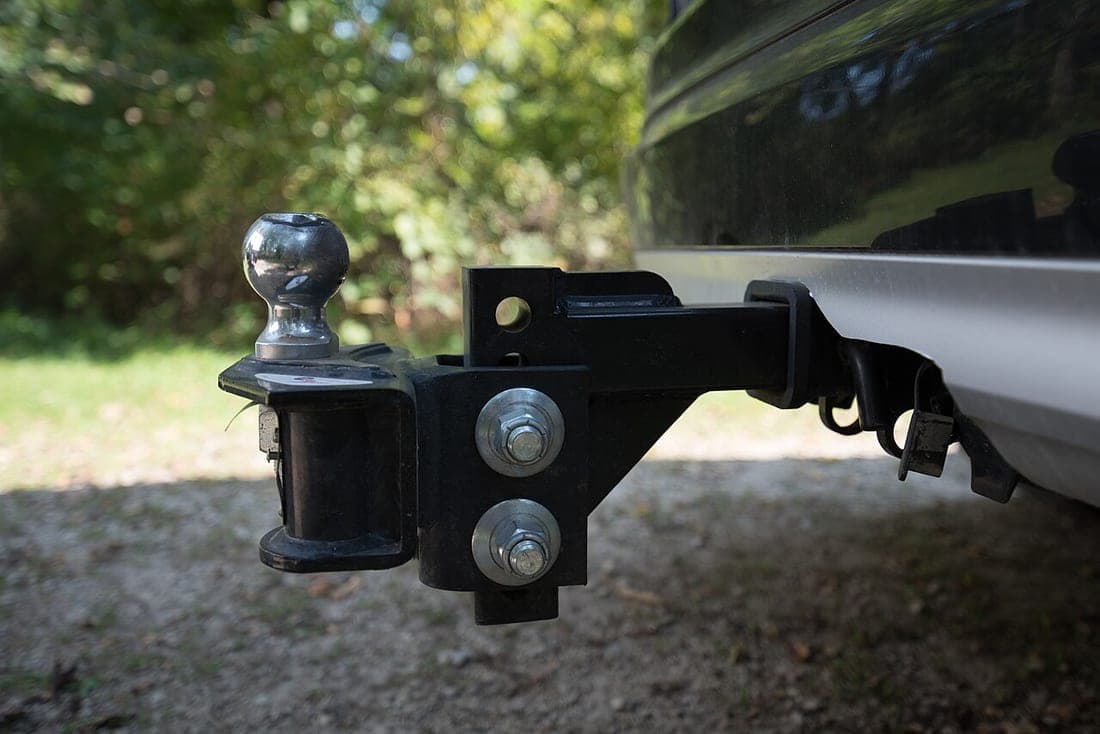
How channel-style adjustable mounts work, what to check before each tow, and when a fixed mount is simply better.
Best ball mount
Best Ball Mounts
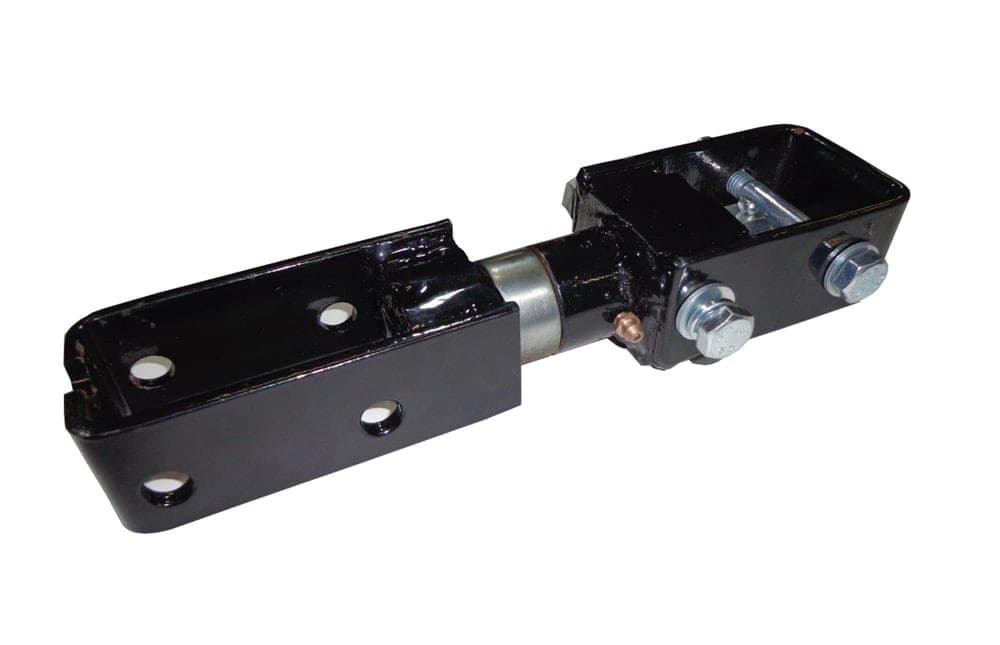
Fixed, adjustable, stowing and scale-equipped mounts compared on drop range, capacity and how much they rattle.
Guide
Ball Mount vs Hitch Ball
What each part does, how their ratings interact, and the torque step that gets skipped when you buy them separately.
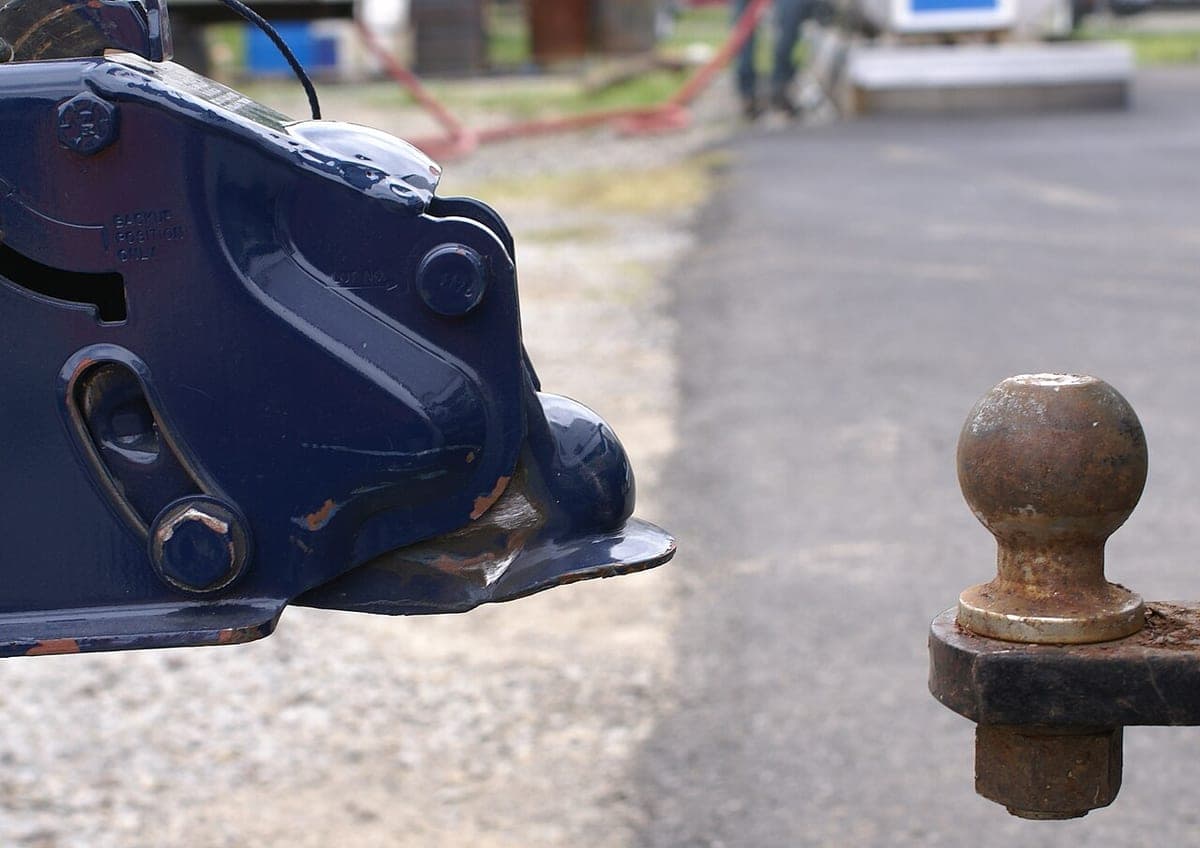
Reference
Trailer Ball Sizes
The three standard ball diameters, how shank dimensions work, and why mounting torque is a specification rather than a suggestion.
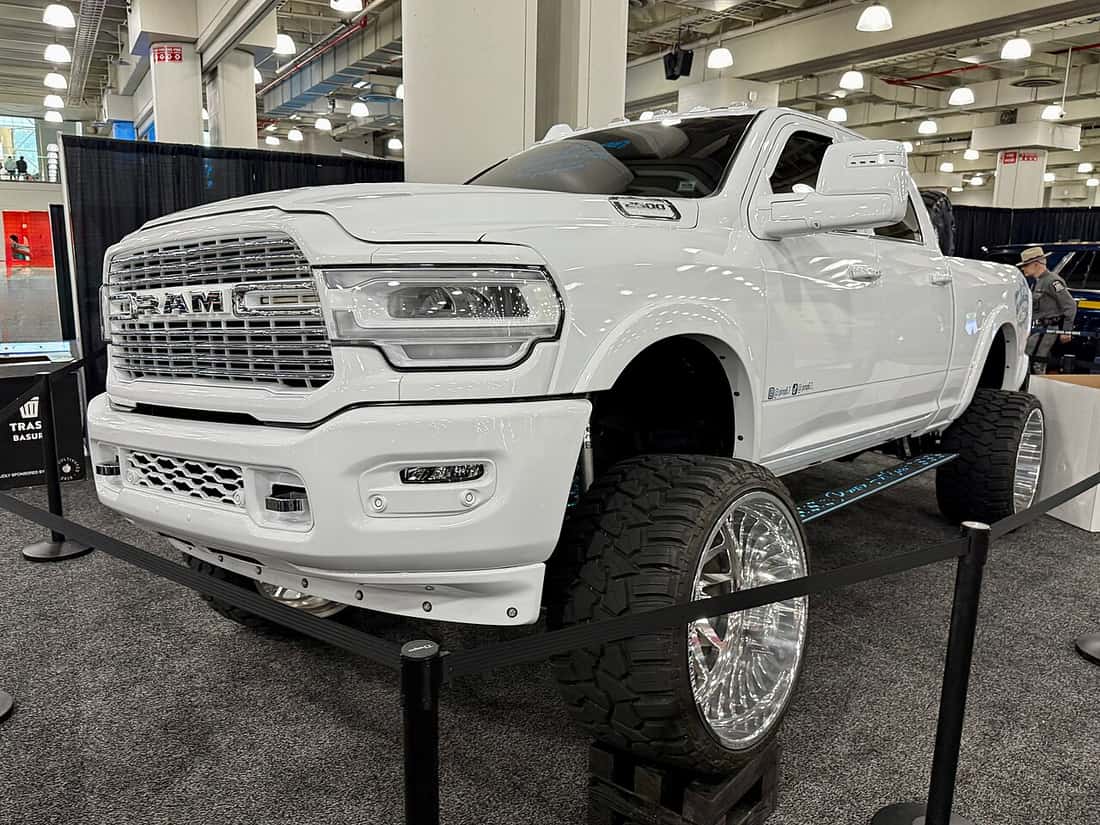
Guide
Drop Hitches for Lifted Trucks
Why a lift creates a towing problem, how to measure the drop you now need, and the extended-drop options available.
Found something out of date, or a figure you can source better than we did? Corrections get read first. How we research explains how these pages are put together, and contact is one click away.