Hitches, Receivers & Ball Mounts
Weigh Safe Drop Hitch: An Honest Review
The only ball mount that answers the question most owners never ask. The hardware is ordinary; the gauge in the shank is the whole argument.

Disclosure: we earn a commission if you buy through the Amazon links on this page, at no extra cost to you. Commission never decides a verdict or a ranking position - read our editorial policy and affiliate disclosure.
How we assessed these: Assessed from Weigh Safe's own published specifications for the aluminum Drop Hitch - per-shank ratings, drop sizes, unit weights and certifications - and from what the design of a ball-mounted hydraulic gauge implies about how it reads. This site has not towed this hitch, runs no instrumented tests, and publishes no accuracy measurements of its own.
Short answer
Buy the Weigh Safe Drop Hitch if you tow a trailer whose load changes and you will never put the rig on a public scale. The gauge in the shank reads tongue weight as the trailer settles onto the ball, which turns the ten-to-fifteen-percent rule into something you actually check. Skip it if you already weigh at a certified scale, if you run a weight distribution hitch, or if you tow one trailer at one height - a fixed mount is lighter, quieter and far cheaper.
Most towing problems trace back to a number nobody measured. Tongue weight decides whether a trailer tracks or sways, and it is also the figure most likely to be guessed, because measuring it properly means either a bathroom-scale-and-lever routine in the driveway or a trip to a truck scale. The Weigh Safe Drop Hitch exists to remove that excuse: it puts a hydraulic gauge inside the shank so the weight appears on a dial as you crank the jack down.
That is a genuinely good idea, and it is worth separating from the hardware it is attached to. As a ball mount, this is a competent adjustable aluminum unit - not remarkable. As a measuring instrument permanently fitted to the one place the measurement matters, it is the only mainstream product of its kind. Whether you should buy it comes down almost entirely to whether you would otherwise ever get the number.
What problem it solves
Two, in order of importance. First, it measures. The gauge sits in the load path between the ball and the receiver, so the weight the trailer coupler is pressing down with shows up on the dial without any extra step, any extra equipment or any trip anywhere. Second, it adjusts - the ball platform moves up and down the shank in one-inch increments, so one mount covers a boat trailer, a utility trailer and a camper that all sit at different heights.
The measuring half is what you are paying for. Our guide to measuring tongue weight walks through the free methods, and they work, but all of them share a weakness: they are a separate chore, so they happen once and then never again. Load shifts. You add a generator, fill the fresh water tank, move the bikes to the rear rack - and the number you measured in April no longer describes the trailer you are towing in August. A gauge you cannot avoid looking at solves that in a way a one-time measurement does not.
The published numbers
Weigh Safe publishes the aluminum Drop Hitch in three shank sizes and four drop sizes. The shank you buy sets the capacity ceiling; the drop you buy sets how far the ball sits below the receiver. Both decisions are made before you ever see the gauge.
| Shank | Max gross trailer weight | Max tongue weight |
|---|---|---|
| 2 in | 12,500 lb | 1,500 lb |
| 2-1/2 in | 18,500 lb | 2,200 lb |
| 3 in | 21,000 lb | 2,200 lb |
Read off Weigh Safe's own published specifications for the aluminum Drop Hitch. The maker's page also states a lower figure for the 2 in shank - 7,500 to 12,500 lb depending on which ball you fit - alongside the 12,500 lb table value, so treat the ball you are actually using as the limit and read the rating stamped on your own unit before you load to it.
| Drop | Rise when inverted | Unit weight |
|---|---|---|
| 4 in | 5 in | 16 lb |
| 6 in | 7 in | 18 lb |
| 8 in | 9 in | 19 lb |
| 10 in | 11 in | 20 lb |
Rise is published as one inch more than the drop, and total height from the top of the receiver to the base of the hitch is three inches more than the drop. Adjustment is in one-inch increments. Two stainless balls, 2 in and 2-5/16 in, are supplied; a 1-7/8 in ball is a separate option.
Three practical consequences fall out of those tables. The drop you need is not a preference, it is arithmetic - working out the drop from your receiver height and your coupler height comes first, because a 10 in drop fitted where you needed 4 in points the trailer nose-down and moves weight off the tongue. The unit weights are real: twenty pounds of aluminum is lighter than the steel equivalent but it is still twenty pounds you lift in and out. And the 3 in shank is published as not stowable, so if you were buying partly to tuck the mount away, that version does not do it.
Where the gauge is honest and where it is not
This is the part worth reading carefully, because the gauge is the reason to buy the hitch and it has real limits that the marketing does not dwell on.
It reads at the ball. That is correct in principle - the ball is where tongue load enters the tow vehicle - but it means the reading depends on the geometry at the moment you take it. Park with the truck and trailer on a crossfall, a camber or the lip of a driveway and some of the coupler's weight is being carried sideways or by the jack rather than straight down through the gauge. On a slope, the number drifts. The habit that fixes it is dull and effective: take the reading on the flattest ground you have, with the trailer coupled, the jack fully up and the trailer sitting level.
It also cannot read through a weight distribution hitch. This is a plain ball mount: spring bars need a weight distribution head, and once bars are tensioned they are deliberately moving load off the ball and onto the front and trailer axles, which is the opposite of what a ball-mounted gauge is set up to measure. If your trailer is heavy enough to want weight distribution, this specific product is not the hitch you are shopping for.
Living with it
Day to day it behaves like any other adjustable mount, with one extra habit and one extra chore.
The routine the gauge adds
Set the height once per trailer
Pull the pins, slide the ball platform to the hole that levels this particular trailer, pin it. Write the hole position down for next time - it does not change unless the trailer does.
Couple on the flattest ground available
Crossfall and driveway lips are the main source of a misleading reading. If you only have a slope, note that the number is approximate rather than treating it as gospel.
Lower the jack all the way
The reading is only valid once the coupler's weight is entirely on the ball. A jack still taking part of the load reads low, which is the direction that gets people into trouble.
Read the dial and act on it
Compare against 10 to 15 percent of your loaded trailer weight. Low means move cargo forward of the axles; high means move it back or check your payload headroom.
Keep the shank and gauge face clean
Grit in the sliding section makes height changes stiff, and a dirty lens is a dial you stop reading. The ball and coupler still want grease; the adjustment faces do not need it.
Everything else is familiar adjustable-mount behavior. It rattles in a loose receiver like every mount does, and the fix is the same cheap one - an anti-rattle pin or a tighter clamp. Aluminum marks more readily than powder-coated steel, so it will look used sooner than a painted mount, which matters to nobody in year three.
What it costs you, besides money
Three things, and they are worth naming because the reviews that only talk about the clever gauge skip them. It is expensive for a ball mount - clearly a premium-tier purchase, several times what a plain fixed mount costs. It is heavier than a plain mount at the same drop, because the shank has to carry a hydraulic cylinder as well as the load. And it is one more mechanism: a fixed one-piece mount has nothing to seize, nothing to leak and nothing to read, which is a legitimate thing to prefer.
If it is the aluminum rather than the gauge that appeals, the Andersen Rapid Hitch review covers the lighter adjustable mount without the scale, and at a lower published capacity ceiling.
There is also a cheaper path to the same information that deserves a fair hearing. A standalone tongue weight scale costs a fraction of this hitch, gives you a number on the same ten-to-fifteen-percent question, and pairs with whatever mount you already own. The catch is that it is a separate object you have to get out, which is exactly the friction the Weigh Safe design removes. If you are the kind of owner who will genuinely use a scale twice a season, buy the scale and a plain mount. If you know you will not, the gauge is the one that gets used.
Who should buy something else
- You already weigh at a truck scale. The certified number beats the dial, and you are paying a premium for convenience you do not need.
- You need weight distribution. Spring bars require a weight distribution head; this is a ball mount, and the gauge cannot read through tensioned bars.
- You tow one trailer at one height. A fixed mount at the correct drop is lighter, quieter, cheaper and has nothing to adjust or misread.
- You want the mount out of your shins. A folding design that stows behind the bumper solves that problem directly; this one stays proud of the receiver, and the 3 in shank version is published as not stowable at all - the B&W Tow & Stow review covers the mount that folds.
- Budget is the binding constraint. A steel adjustable channel mount covers two ball sizes and a height range for far less, and a separate scale covers the measuring.
1. The subject
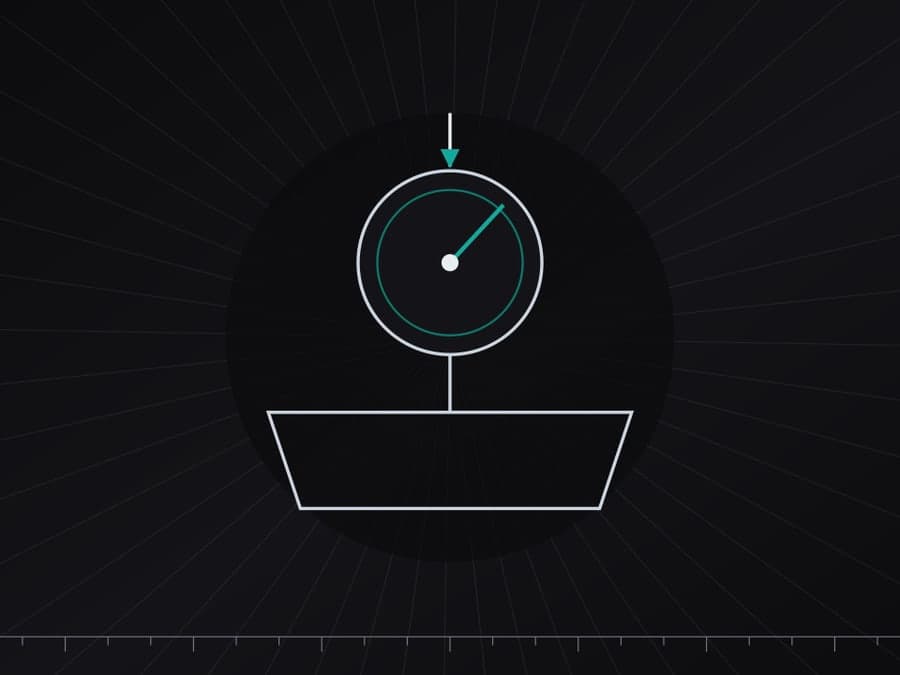
Weigh Safe Adjustable Drop Hitch with Built-in Tongue Weight Scale
Weigh Safe · Best for owners who will never visit a scale
An adjustable drop hitch with a hydraulic gauge in the shank, so the tongue weight reads out as you lower the trailer onto the ball. It turns the single most-skipped step in towing into something that happens automatically, which is worth more than the hardware itself.
Published specifications
- Gross trailer weight by shank
- 2 in shank 12,500 lb; 2-1/2 in shank 18,500 lb; 3 in shank 21,000 lb source
- Tongue weight rating by shank
- 2 in shank 1,500 lb; 2-1/2 in and 3 in shanks 2,200 lb source
- Published drop sizes
- 4, 6, 8 and 10 in, adjustable in 1 in increments; rise is 1 in more than the drop source
- Unit weight
- 16 lb at 4 in drop, 18 lb at 6 in, 19 lb at 8 in, 20 lb at 10 in source
- Balls supplied
- Stainless steel 2 in and 2-5/16 in; 1-7/8 in is a separate option source
- Material and certification
- Aircraft-grade aluminum body with stainless balls; V5 and SAE J684 certified source
What works
- Reads tongue weight every time you hitch, with no extra step
- Adjustable height and reversible for rise as well as drop
- Makes the 10-15 percent rule checkable instead of theoretical
What does not
- The gauge reads at the ball, so it is sensitive to being parked on a slope
- Heavier and considerably more expensive than a plain mount
Skip it if
Not needed if you already weigh at a public scale - the gauge is convenience, and a certified scale is still the more accurate number.
#ad Affiliate link - we publish no price; Amazon shows the current one
Raw specifications: Weigh Safe’s own page. We earn nothing on that link.
2. The cheaper route to the same number
Sherline Trailer Tongue Weight Scale
Sherline · Best for measuring tongue weight at home
A dedicated scale you sit under the coupler to read tongue weight directly, with no arithmetic and no trip to a weighbridge. It is the one tool on this site that turns the single most important towing number from a guess into a measurement.
We have not sourced a full specification table for this model from the manufacturer’s own site at a stable address. Rather than repeat figures we cannot cite, the assessment above is limited to what the design and the maker’s published description genuinely establish.
What works
- Direct reading, with no bathroom-scale-and-lever arithmetic
- Repeatable, so you can see what moving the load actually does
- Mechanical gauge with no batteries to be flat when you need it
What does not
- Must be used on level ground with the coupler at towing height
- Single-purpose tool that spends most of its life in a cupboard
Skip it if
Unnecessary if your hitch already has a built-in gauge, or if you have a public scale nearby and are happy to use it.
#ad Affiliate link - we publish no price; Amazon shows the current one
Raw specifications: Sherline’s own page. We earn nothing on that link.
3. The stowing alternative
B&W Tow & Stow Adjustable Ball Mount
B&W Trailer Hitches · Best for daily drivers that tow occasionally
Two balls on a pivoting head that tucks up under the bumper when nothing is attached, which is the part owners actually rave about - no more shin-height steel bar in a parking lot. Height adjusts in pin increments rather than continuously.
Published specifications
- Gross trailer weight by shank
- 2 in shank 10,000 lb; 2-1/2 in shank 18,000 lb; 3 in shank 21,000 lb source
- Vertical tongue weight by shank
- 2 in shank 1,000 lb; 2-1/2 in shank 1,800 lb; 3 in shank 2,100 lb source
- Published drop options
- 2-1/2, 3, 5, 7 and 9 in on the 2 in shank; 5, 7 and 8-1/2 in on the 2-1/2 in shank; 4-1/2 and 7-1/2 in on the 3 in shank source
- Ball configurations
- 2 in with 2-5/16 in; 1-7/8 in with 2 in; or all three on the tri-ball head source
- Certification
- Tested to SAE J684 source
- Weight distribution compatibility
- None - the maker states sway bar and weight distribution systems do not fit it source
What works
- Stows up out of the way instead of projecting behind the bumper
- Two ball sizes on one head, flipped rather than swapped
- Solid, heavily built, and quiet when pinned correctly
What does not
- Heavy to handle and to store
- Height steps are fixed by the pin holes, so an exact level may not be available
Skip it if
Not the right buy if you need a precise level height - a continuously adjustable channel mount will get closer than pin increments will.
#ad Affiliate link - we publish no price; Amazon shows the current one
Raw specifications: B&W Trailer Hitches’s own page. We earn nothing on that link.

4. The lightest alternative
Andersen Rapid Hitch Aluminum Adjustable Ball Mount
Andersen Hitches · Best for anyone tired of lifting steel mounts
An aluminum adjustable mount, which is the point: a steel channel mount is genuinely heavy to carry, and this one is not. Balls thread into the stainless pin rather than bolting through a hole, so swapping sizes takes seconds.
Published specifications
- Maximum gross trailer weight
- 12,500 lb source
- Capacity by ball fitted
- 2 in with 2-5/16 in combo ball 10,000 to 12,500 lb; 1-7/8 in with 2 in combo ball 5,000 to 12,500 lb source
- Tongue weight rating
- 1,500 lb source
- Drop/rise racks
- 4, 6, 8 and 10 in source
- Shank sizes
- 2 in and 2-1/2 in source
- Certification
- V5 and SAE J684 source
What works
- Dramatically lighter than a steel adjustable mount of similar capacity
- Ball changes are a thread-on operation, not a torque-and-nut job
- Aluminum does not rust streak down a painted bumper
What does not
- Aluminum marks more easily than powder-coated steel
- Capacity depends on which ball and pin combination you fit, so read the chart
Skip it if
Not the one if you leave the mount permanently in the receiver through salted winters - the convenience you are paying for is weight, and you would never be lifting it.
#ad Affiliate link - we publish no price; Amazon shows the current one
Raw specifications: Andersen Hitches’s own page. We earn nothing on that link.

5. The budget adjustable mount
CURT Adjustable Channel Mount with Dual Ball (2 in shank, 6 in drop)
CURT · Best for garages with several trailers
One mount that covers two ball sizes and a range of heights, which is the answer when the garage contains a boat trailer, a utility trailer and a camper that all sit at different heights. Capacity drops to the lower-rated ball you are actually using.
Published specifications
What works
- Two ball sizes and a height range in a single mount
- Flipping it gives rise as well as drop
- Rated to 14,000 lb on the larger ball
What does not
- Heavy, and more joints means more places for rattle to start
- The pins and bolts need checking for torque, unlike a one-piece mount
Skip it if
Pointless if you own one trailer and tow it with one truck - a fixed mount at the right height is lighter, quieter and cheaper.
#ad Affiliate link - we publish no price; Amazon shows the current one
Raw specifications: CURT’s own page. We earn nothing on that link.
The verdict
The Weigh Safe Drop Hitch is a decent adjustable mount wrapped around one genuinely useful instrument, and it should be judged on the instrument. If you tow a trailer whose load changes between trips and you have never put a number on the tongue, this hitch will tell you something you do not currently know, every single time you hitch, without you having to decide to find out. That is worth real money.
What it is not is a certified scale, a weight distribution hitch, or good value for anyone who already measures. The gauge reads at the ball and is sensitive to the ground you are parked on, the maker publishes no accuracy figure, and the premium over a plain mount is substantial. Buy it for the habit it forces rather than for the precision it promises - and if you want to see how it stacks up against the other adjustable mount people compare it with, the head-to-head with the B&W Tow & Stow sets the two designs side by side.
Key takeaways
- The gauge is the product; the ball mount around it is ordinary but competent.
- Three shanks: 2 in to 12,500 lb, 2-1/2 in to 18,500 lb, 3 in to 21,000 lb.
- Four drops - 4, 6, 8 and 10 in - adjustable in 1 in steps, rise one inch more than drop.
- Read it on flat ground with the jack fully up, or the number drifts low.
- No published accuracy figure, so treat the dial as relative, not certified.
- Cannot be used with spring bars - it is a ball mount, not a weight distribution head.
- A standalone scale plus a plain mount gets the same number for far less, if you will actually use it.
How we sourced this
Every figure on this page came from one of the following, each fetched while the page was written. Where a manufacturer or regulator does not publish a number, we say so rather than estimate it.
- Weigh Safe - Weigh Safe Drop Hitch (aluminum), published specifications including per-shank GTW and tongue weight ratings
- Weigh Safe - manufacturer site
- B&W Trailer Hitches - Tow & Stow Adjustable Ball Mount, published model options with GTW and VTW per shank size
- Sherline Products - manufacturer site
- 49 CFR 567.4 - certification label content, including Gross Vehicle Weight Rating and Gross Axle Weight Rating
Common questions
- How accurate is the Weigh Safe tongue weight gauge?
- Weigh Safe publishes no accuracy figure or measurement range for the gauge on its Drop Hitch page, so we will not quote one. The gauge is reliable for telling you whether a load is inside or well outside the 10 to 15 percent band and whether it changed since last trip. For a certified figure, a public truck scale is still the more accurate source.
- Does the Weigh Safe Drop Hitch work with a weight distribution hitch?
- No. This is a ball mount, and spring bars need a weight distribution head to attach to. Tensioned bars also deliberately transfer load away from the ball, which is the one place this gauge measures, so the reading would no longer describe your tongue weight.
- Which Weigh Safe shank size do I need?
- The one that matches your receiver tube - 2 in, 2-1/2 in or 3 in - and whose published ratings exceed your loaded trailer and tongue weights. The 2 in shank is rated to 12,500 lb gross and 1,500 lb tongue; the 2-1/2 in to 18,500 lb and 2,200 lb; the 3 in to 21,000 lb and 2,200 lb. Note that the 3 in version is published as not stowable.
- Why does my Weigh Safe reading change on different ground?
- Because the gauge measures the load passing straight down through the ball. On a crossfall, a camber or a driveway lip, part of the coupler's weight is carried at an angle or still on the jack, so less of it reaches the gauge. Take readings on the flattest ground you have with the jack fully raised and the trailer level.
- Is a Weigh Safe worth it over a regular ball mount and a tongue weight scale?
- Only if you would not use the separate scale. A standalone scale plus a plain mount costs far less and gives you the same number, but it is a separate chore that tends to happen once and then never again. The Weigh Safe's value is that the measurement happens automatically every time you hitch.
More in Hitches, Receivers & Ball Mounts
Class, receiver size, ball diameter, drop. Four numbers decide whether your setup is right, and three of them are stamped on parts you already own.
Read next

Head to head
Tow & Stow vs Weigh Safe
A tri-ball mount that stows out of the way against a drop hitch with a built-in tongue weight scale - which feature earns its keep.

Head to head
Adjustable vs Fixed Mount
The honest head-to-head: what an adjustable mount buys you, what it costs you, and why a fixed mount still wins for most owners.
How to
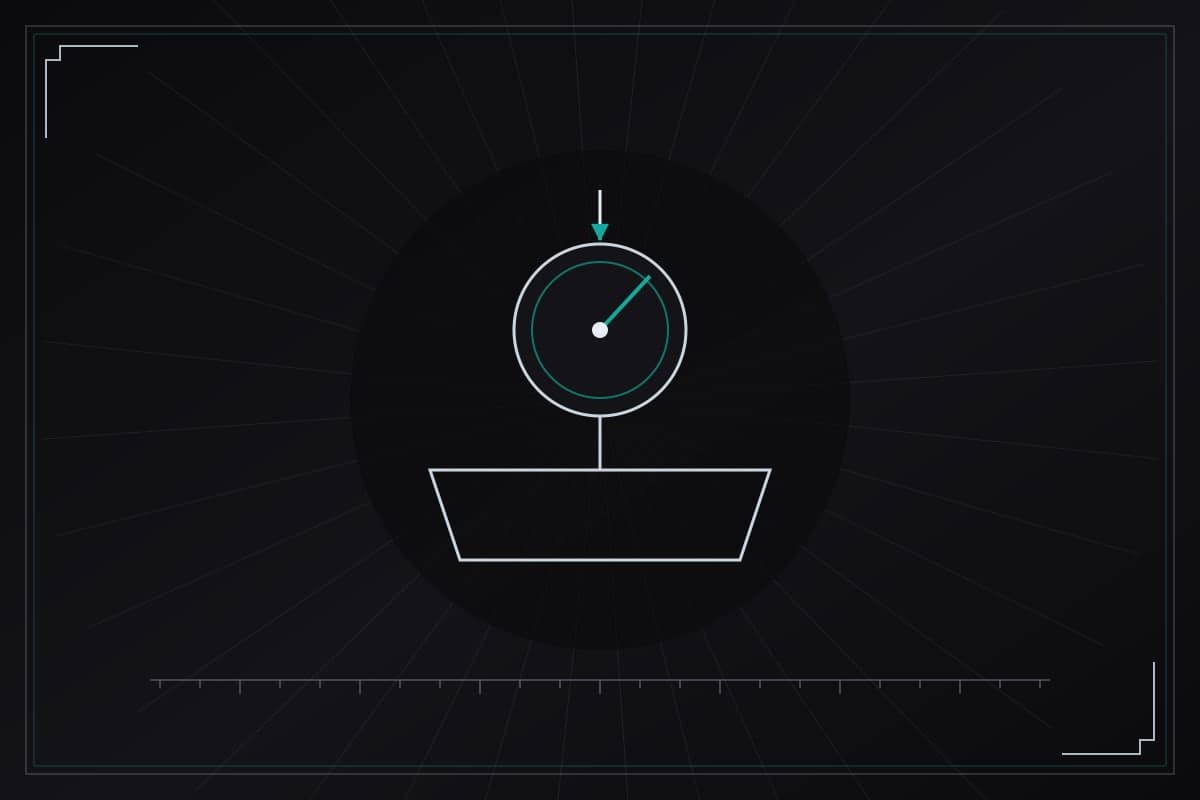
Measuring Tongue Weight
Three methods for measuring tongue weight, what each one requires, and how to interpret the result against the 10-15 percent band.
Guide
What Drop Hitch Do I Need
Measure the coupler, measure the receiver, allow for squat - the method that gets a trailer level, and the mounts that cover each answer.
Found something out of date, or a figure you can source better than we did? Corrections get read first. How we research explains how these pages are put together, and contact is one click away.