Weight Distribution Hitches
The Best Weight Distribution Hitch for a Ford F-150
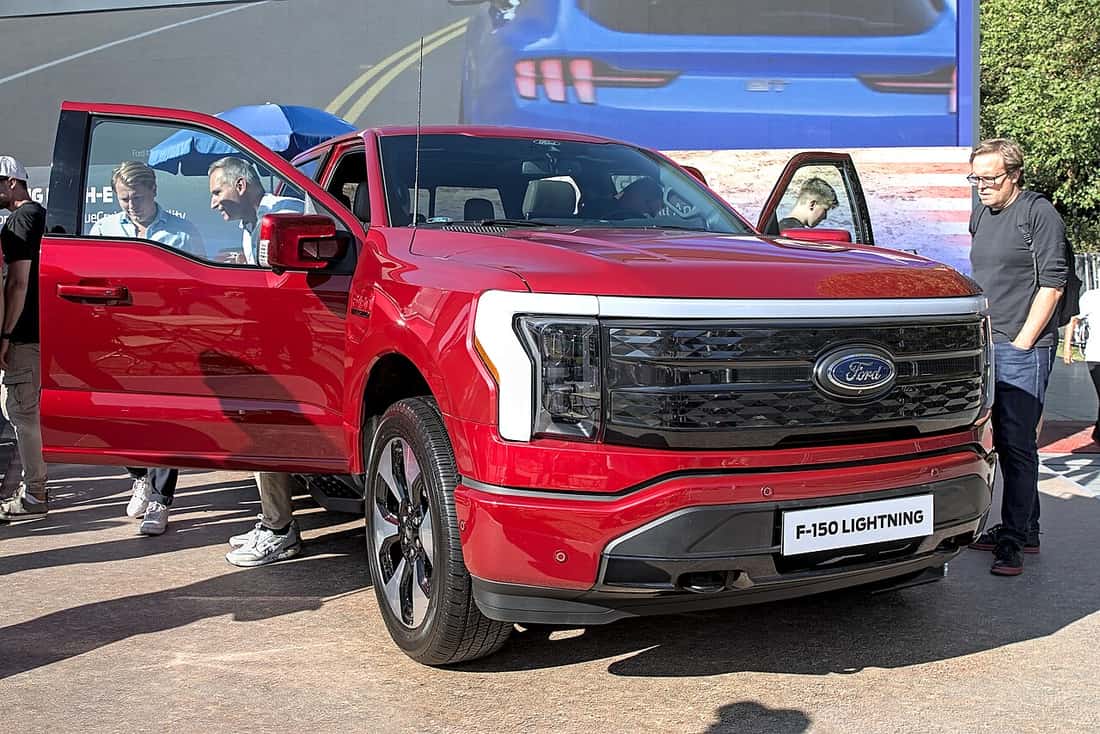
Two F-150s on the same lot can differ by a thousand pounds of payload. The sticker on your door decides this, not the badge.
Disclosure: we earn a commission if you buy through the Amazon links on this page, at no extra cost to you. Commission never decides a verdict or a ranking position - read our editorial policy and affiliate disclosure.
How we assessed these: We publish no vehicle capacity figures. F-150 payload and tow ratings vary by engine, cab, bed, axle ratio and options, so the only correct number is the one on your own vehicle's placard and in its towing guide.
Short answer
Start at your F-150's door placard, subtract passengers, cargo and the hitch hardware, and size the spring bars to the tongue weight that remains. A 750 or 1,000 lb band covers most F-150 travel trailer setups.
Why the model year is the wrong starting point
F-150 payload is set by the specific build - engine, cab configuration, bed length, axle ratio, and the options fitted. The spread across the range is large enough that two trucks of the same year can differ by a four-figure payload number. Which means a recommendation based on "F-150" alone is worthless, and the five minutes you spend reading your own placard replaces all of it.
The federal rules behind those labels are worth knowing: 49 CFR 567.4 requires the certification label to show GVWR and a GAWR for each axle, and FMVSS 110 requires the loading placard that states the combined weight of occupants and cargo that must not be exceeded. Those are the two labels that decide your hitch.
The F-150 pattern
- Mid-size travel trailer, 5,000-7,000 lb loaded. Tongue weight lands roughly 500-900 lb. A 750 or 1,000 lb band suits, with integrated sway control.
- Larger trailer approaching 9,000 lb loaded. Tongue weight pushes past 1,000 lb and payload becomes the question, not the hitch. Do the arithmetic before shopping.
- Utility or boat trailer under 5,000 lb. You may need no weight distribution at all - check the receiver's weight-carrying rating against your measured tongue weight.
Quick picks
Tap any row to jump to the full write-up. How these are chosen - and what we do and do not claim to know - is published in full on our research methodology page.
| # | Product | Best for | Our read | Price |
|---|---|---|---|---|
| 1 |  Blue Ox SwayPro Weight Distribution Hitch Best overall | Owners who hitch and unhitch often | Band sizing suits variable F-150 payloads | Check price on Amazon #ad Affiliate link - we publish no price; Amazon shows the current one |
| 2 |  Equal-i-zer 4-point Sway Control Hitch Best for sway | Travel trailers that already sway | Four-point friction, nothing to forget | Check price on Amazon #ad Affiliate link - we publish no price; Amazon shows the current one |
| 3 |  Andersen No-Sway Weight Distribution Hitch Best when payload is tight | Anyone who struggles with bar weight | Saves meaningful hardware weight | Check price on Amazon #ad Affiliate link - we publish no price; Amazon shows the current one |
| 4 |  CURT TruTrack 4P Weight Distribution Hitch (10-15K) Best for the heaviest trailers | Heavy travel trailers near 15,000 lb | Adjustable friction to 15,000 lb gross | Check price on Amazon #ad Affiliate link - we publish no price; Amazon shows the current one |
1. Best overall
Blue Ox SwayPro Weight Distribution Hitch
Blue Ox · Best for owners who hitch and unhitch often
Underslung spring bars on clamp-on latches, which makes hitching faster than chain-and-snap-up systems and keeps the bars out of the way of a low A-frame. Blue Ox publishes the range in tongue-weight bands rather than one do-everything model, so the sizing decision is made before you buy.
Published specifications
What works
- Latches clamp on rather than needing chains snapped up under tension
- Sold in defined tongue-weight bands, which makes correct sizing the default
- Underslung bars clear low A-frames and front storage boxes
What does not
- Bar bands are narrow, so a big change in how you load the trailer can put you in the wrong band
- Clamp-on brackets are another part to keep clean and lubricated
Skip it if
Not the one if your loaded tongue weight sits near the top of a band - buy up a band, because a bar run at its limit transfers less than a bar running in the middle of its range.
#ad Affiliate link - we publish no price; Amazon shows the current one
Raw specifications: Blue Ox’s own page. We earn nothing on that link.
2. Best for sway
Equal-i-zer 4-point Sway Control Hitch
Equal-i-zer · Best for travel trailers that already sway
The reference point for integrated sway control. Friction happens at four places at once - both L-brackets and both sockets - so resistance is always on rather than something you remember to engage. Setup is bracket-height and bar-angle work, and it rattles; both are the price of a system with no separate parts to forget.
We have not sourced a full specification table for this model from the manufacturer’s own site at a stable address. Rather than repeat figures we cannot cite, the assessment above is limited to what the design and the maker’s published description genuinely establish.
What works
- Sway resistance is built into the geometry, so there is nothing to connect or disconnect at the ramp
- Works in reverse and in the wet, unlike a friction bar you have to release
- One assembly rather than a hitch plus a bolt-on sway bar
What does not
- Audible rattle and creak at low speed is normal and surprises first-time owners
- Bracket height and bar angle have to be set properly or the sway control does little
Skip it if
Skip it if your loaded tongue weight sits well inside your receiver's weight-carrying rating and the truck stays level - you would be buying hardware to solve a problem you do not have.
#ad Affiliate link - we publish no price; Amazon shows the current one
Raw specifications: Equal-i-zer’s own page. We earn nothing on that link.
3. Best when payload is tight
Andersen No-Sway Weight Distribution Hitch
Andersen Hitches · Best for anyone who struggles with bar weight
A chain-and-bracket system instead of spring bars, which cuts the assembled weight dramatically and takes the greasy steel bars out of the equation. Sway resistance comes from a friction cone at the ball rather than from bar friction, so it keeps working in reverse.
We have not sourced a full specification table for this model from the manufacturer’s own site at a stable address. Rather than repeat figures we cannot cite, the assessment above is limited to what the design and the maker’s published description genuinely establish.
What works
- Far lighter to lift and store than a conventional spring-bar system
- No greased bars to handle, and no bars to drag on a steep transition
- Tension is set with a wrench rather than a snap-up bracket
What does not
- Chains and the friction cone need periodic re-tensioning and inspection
- Behaves differently from a spring-bar hitch, so advice written for those does not transfer cleanly
Skip it if
Not for you if you want a system a trailer shop down the road will recognize instantly - most of the setup advice you will find assumes spring bars.
#ad Affiliate link - we publish no price; Amazon shows the current one
Raw specifications: Andersen Hitches’s own page. We earn nothing on that link.
4. Best for the heaviest trailers
CURT TruTrack 4P Weight Distribution Hitch (10-15K)
CURT · Best for heavy travel trailers near 15,000 lb
Four-point sway control with adjustable friction, rated to a 15,000 lb trailer and 1,500 lb tongue. The adjustability is the point: you can dial resistance up for a long, tall trailer and back it off for a short one, instead of living with whatever the geometry gives you.
Published specifications
What works
- Friction is adjustable rather than fixed by the geometry
- Rated range covers the tongue weights that half-ton trucks genuinely struggle with
- Limited lifetime warranty on the structure
What does not
- At 123.6 lb assembled it is a heavy thing to lift on and off a shank
- The 10,000 lb floor means it is over-specified for a small trailer
Skip it if
Wrong tool below about 10,000 lb gross trailer weight - under the rated floor the bars barely flex, so you get the weight penalty without the load transfer.
#ad Affiliate link - we publish no price; Amazon shows the current one
Raw specifications: CURT’s own page. We earn nothing on that link.
Key takeaways
- Read your own door placard - F-150 payload varies by more than a thousand pounds across the range.
- Tongue weight comes out of payload, and so does the hitch hardware.
- Most F-150 travel trailer setups land in the 750 to 1,000 lb bar band.
- If the arithmetic does not work, the trailer is the variable to change, not the hitch.
How we sourced this
Every figure on this page came from one of the following, each fetched while the page was written. Where a manufacturer or regulator does not publish a number, we say so rather than estimate it.
- 49 CFR 567.4 - certification label content, including Gross Vehicle Weight Rating and Gross Axle Weight Rating
- 49 CFR 571.110 (FMVSS 110) - vehicle placard, including the required "combined weight of occupants and cargo" statement
- CURT TruTrack 4P weight distribution hitch - published specifications (part 17501)
- Blue Ox SwayPro weight distribution hitch - published tongue weight bands and towing capacity
Common questions
- What is my F-150's payload?
- It is printed on the tire and loading placard inside the driver's door, as the combined weight of occupants and cargo that should not be exceeded. It is specific to your individual truck, not to the model.
- Do I need a weight distribution hitch on an F-150?
- If your measured loaded tongue weight exceeds the receiver's weight-carrying rating, or the truck squats noticeably when hitched, yes. Check the rating label on the receiver itself.
- Does the Max Tow package change which hitch I need?
- It can change your ratings, not the sizing method. Measure tongue weight and size the bars to that number regardless of which package the truck has.
More in Weight Distribution Hitches
A weight distribution hitch moves load off the back of your truck. Whether you need one is a number, not an opinion - and the number is on your door jamb.
Read next
Best for half-ton trucks
Best WD Hitches for Half-Tons
Hitch picks matched to the tongue weights a half-ton can carry, with the payload arithmetic that decides the answer.

Head to head
Payload vs Towing Capacity
Why the tow rating rarely binds first, how to calculate your real limit from the labels on your vehicle, and what counts against payload.
Best F-150 hitch setup
Best Hitch for F-150
What F-150 owners actually need to buy once the receiver is accounted for, and how to measure the drop properly.
Best WD hitch overall
Best WD Hitch with Sway Control
Integrated sway control plus load transfer, compared on bar sizing granularity, ground clearance and how hard they are to set up alone.
Found something out of date, or a figure you can source better than we did? Corrections get read first. How we research explains how these pages are put together, and contact is one click away.