Hitches, Receivers & Ball Mounts
The Best Fifth Wheel Hitch for Your Truck
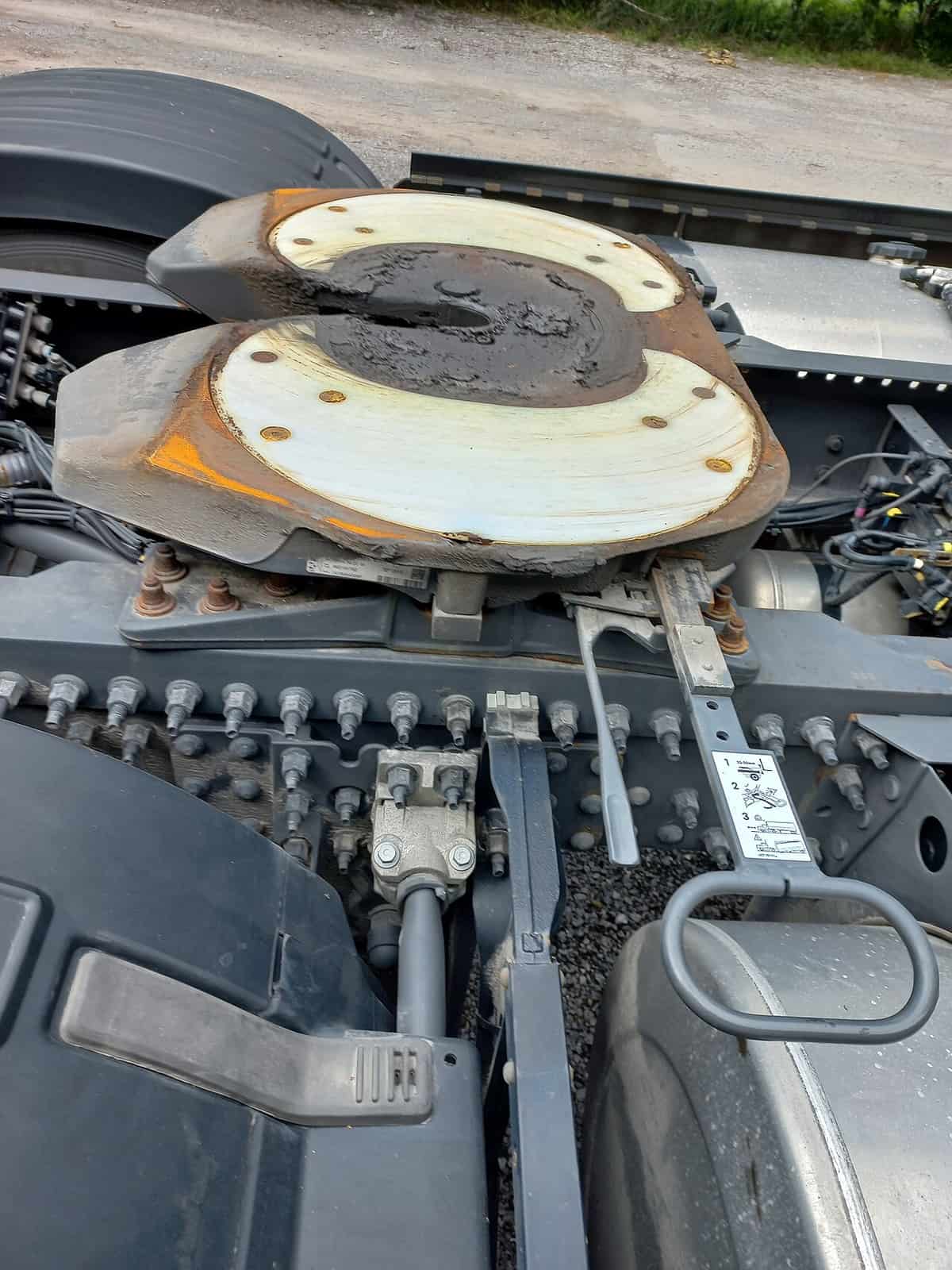
Pin weight, pivot and the mounting path your bed already has. Those three decide this purchase, and the capacity number on the box is rarely the one that binds.
Disclosure: we earn a commission if you buy through the Amazon links on this page, at no extra cost to you. Commission never decides a verdict or a ranking position - read our editorial policy and affiliate disclosure.
How we assessed these: Assembled from the specifications CURT and Reese publish on their own part pages - gross towing weight, pin weight capacity, pivot angles, vertical adjustment range, jaw design, hardware grade, kit contents and warranty. Every figure on this page is linked to the manufacturer page it was read from. This site installs nothing, runs no instrumented tests and publishes no measurements, star ratings or scores of its own.
Short answer
Choose a fifth wheel hitch by pin weight first, not gross capacity: your loaded trailer's pin weight has to sit under the hitch's vertical rating and inside your truck's remaining payload. Then match the mounting path your bed already has - factory pucks, industry-standard rails, or an existing gooseneck ball. A 20K-class head on standard rails suits most heavy fifth wheels; a 16K head covers the trailers most owners actually tow; a short bed needs either a sliding head or an offset coupling point.
The frustrating thing about shopping for a fifth wheel hitch is that the number printed largest on the box - 16,000 lb, 20,000 lb, 30,000 lb - is almost never the number that decides anything. A three-quarter-ton truck is not rated to pull 20,000 lb. A half-ton with a fifth wheel is usually out of payload before it is out of tow rating. The capacity figure is a ceiling you will probably never touch.
The numbers that actually decide the purchase are quieter: the vertical load rating, the pivot angles, the vertical adjustment range, and what the kit does and does not include. This page sorts the options by those instead.
How we picked: the criteria, in order of how much they matter
A fifth wheel hitch is a structural part bolted into a truck you intend to keep. It is worth being deliberate in this order.
- Pin weight against two ceilings. A conventional fifth wheel puts roughly 15 to 25 percent of its loaded weight on the truck, far more than a bumper-pull's 10 to 15 percent. That load has to clear the hitch's published vertical rating AND fit inside the payload left on your door jamb placard. Payload is the limit that bites first on a fifth wheel, and no hitch raises it.
- The mounting path your bed already has. Factory pucks, rails already installed, a gooseneck ball in the floor, or a bare bed. These are not close substitutes and the wrong assumption here is the expensive mistake. Check the bed before you shop.
- Pivot, in both axes. Fore-and-aft pivot handles dips and crests. Side-to-side pivot handles cross-slope, which is every unlevel campsite entrance and most gravel. Reese publishes 15 degrees in both directions for the M5 and only 4 to 5 degrees side to side on its sliding hitch - a real difference in what the kingpin feels on broken ground.
- Vertical adjustment range. You need roughly 6 inches of clearance between the trailer's underside and the bed rails, and the hitch's adjustment range is how you get there. A head that adjusts 13 to 17 in and one that adjusts 14 to 18 in suit different trucks.
- What is in the box. This is where list prices mislead badly. CURT publishes the A16 as head, legs and hardware with rails and brackets sold separately. Reese publishes the M5 without mounting hardware. A head-only part number is cheaper for a reason.
- Weight, and whether you will remove it. These hitches run 117 to 158 lb before rails. If the bed does other work during the week, you will be lifting that out and back in regularly, and a modular hitch that comes apart is a different proposition from a single lump.
- Jaw design and how it couples. A single jaw that sits open and ready, or a double jaw that wraps the kingpin from both sides. Both lock; they differ in how forgiving they are of an imperfect approach and how much slack they leave.
Work out your mounting path before you compare heads
Walk out to the truck and look in the bed. What you see decides which of these four columns you are shopping in, and it is a two-minute check that saves a four-figure mistake.
| What you see in the bed | What you need | Drilling | Notes |
|---|---|---|---|
| Four or five capped holes (factory puck system) | A hitch with puck-system legs | None | You already paid for this feature - do not drill over it |
| Two rails bolted across the bed | Any head with industry-standard legs | Already done | The standard is why a Reese head fits CURT rails |
| A single round hole with a ball or cover | A gooseneck-to-fifth-wheel adapter plate | None | Lower rated than rails, but installs in a minute |
| A bare bed floor | Rails plus vehicle-specific under-bed brackets, then a head | Yes | Two part numbers to match, and permanent holes |
If the bed is bare, read the rail decision properly before ordering - which rails and brackets your truck needs is the part of this purchase people get wrong most often, and the holes are not reversible.
Quick picks
Tap any row to jump to the full write-up. How these are chosen - and what we do and do not claim to know - is published in full on our research methodology page.
| # | Product | Best for | Our read | Price |
|---|---|---|---|---|
| 1 |  Reese M5 Fifth Wheel Hitch, 20,000 lb, Industry Standard Mount Best overall | Heavy fifth wheels on standard rails | 20,000 lb, 5,000 lb pin, 15 degrees of pivot both ways | Check price on Amazon #ad Affiliate link - we publish no price; Amazon shows the current one |
| 2 |  CURT A16 5th Wheel Hitch with Legs (16,000 lb) Best for the common weight class | 16,000 lb class fifth wheels | 16,000 lb and 4,000 lb pin, where most owners actually sit | Check price on Amazon #ad Affiliate link - we publish no price; Amazon shows the current one |
| 3 |  Reese Sliding Fifth Wheel Hitch, 16,000 lb (Double Jaw) Best for a short bed | Short-bed trucks pulling a fifth wheel | Gliding head, 16,000 lb, Grade 8 hardware | Check price on Amazon #ad Affiliate link - we publish no price; Amazon shows the current one |
| 4 |  CURT Universal Fifth Wheel Base Rails (25,000 lb) The part people forget to buy | Any traditional fifth wheel install | 25,000 lb industry-standard rails, brackets separate | Check price on Amazon #ad Affiliate link - we publish no price; Amazon shows the current one |
| 5 |  CURT X5 Gooseneck-to-Fifth-Wheel Adapter Plate, Square Shank (20,000 lb) If you already have a gooseneck hitch | Gooseneck hitch installed, fifth wheel trailer to pull | 20,000 lb rails on demand, no drilling at all | Check price on Amazon #ad Affiliate link - we publish no price; Amazon shows the current one |
The weight classes, and who each one is really for
Fifth wheel heads cluster into classes, and the gap between them is mostly vertical rating rather than gross capacity. Vertical rating is the one you will actually approach.
| Hitch | Gross towing weight | Pin weight | Vertical adjustment |
|---|---|---|---|
| Reese M5, industry standard mount | 20,000 lb | 5,000 lb | 14 in to 18 in |
| CURT A16 with legs | 16,000 lb | 4,000 lb | 13 in to 17 in |
| Reese sliding, double jaw | 16,000 lb | 4,000 lb | 14.75 in to 17 in |
Figures as published by each manufacturer on its own part page and linked in the sources below. Both makers state that capacity is limited by the lowest-rated component in the towing system.
Here is the practical reading of that table. A 16K head with a 4,000 lb vertical rating covers a very large share of the fifth wheel market: a trailer with a 12,000 lb gross weight and a 20 percent pin carries 2,400 lb on the truck, comfortably inside it. Step up to a 20K head when the trailer is genuinely heavy, when you load the front compartments hard, or when you would rather not run any component near its ceiling. Do not step up because the number looks reassuring - the extra capacity costs you 25 lb of lifting and buys nothing your truck can use.
Short beds: the problem nobody mentions until it happens
On a bed shorter than about 8 feet, a fifth wheel's front cap can reach the back of the cab during a tight turn. It does not happen on the highway. It happens at a fuel island, backing into a site, or making a 90-degree turn out of a gas station, and it happens at walking pace with a sickening noise.
There are two legitimate answers. A sliding - Reese calls it gliding - hitch lets you move the head rearward in the bed before the turn, buying clearance at the cost of a manual step and some pivot range. Alternatively, on a truck with factory pucks, an offset ball or hitch moves the coupling point back without any slider at all. The second is simpler; the first is available on any rail-equipped truck.
What the pivot numbers are actually telling you
Pivot is the specification buyers skip and owners notice. A fifth wheel head is a single rigid connection carrying thousands of pounds, and every bit of ground movement the head cannot absorb goes into the kingpin, the pin box and the trailer's frame instead.
- Fore and aft is the dip at the end of a driveway and the crest of a railway crossing. Every head on this page publishes 15 degrees, which is plenty.
- Side to side is cross-slope: one wheel up on a verge, a cambered gravel entrance, a site that is level the wrong way. The Reese M5 publishes 15 degrees. The Reese sliding hitch publishes 4 to 5 degrees.
- Why the slider gives up pivot is structural - the head sits on a slide mechanism rather than directly on its legs, and that assembly is what limits lateral articulation.
If you camp on prepared pads, the lateral figure barely matters. If your towing involves ranch gates, construction entrances and unlevel gravel, it matters a great deal, and it is the strongest argument for a fixed head on a long-bed truck.
1. Best overall
Reese M5 Fifth Wheel Hitch, 20,000 lb, Industry Standard Mount
Reese · Best for heavy fifth wheels on standard rails
A three-piece hitch - head, center section, legs - that drops onto industry-standard rails and gives you 20,000 lb of capacity with 15 degrees of pivot in both axes. The published pivot figures are the reason to look at it: a head that moves side to side as well as fore and aft is what stops a cross-sloped campsite driveway from loading the kingpin diagonally.
Published specifications
- Gross towing weight
- 20,000 lb source
- Pin weight capacity
- 5,000 lb source
- Pivot
- 15 degrees fore and aft, 15 degrees side to side source
- Jaw
- Talon single jaw, lockable source
- Vertical adjustment
- 14 in to 18 in source
- Weight
- 142.5 lb source
- Mounting
- In-bed industry-standard rails; 4 mounting holes, no drilling, no welding, mounting hardware not included source
- What is included
- Fifth wheel head (30892), center section (30884) and leg kit (30926) - all three required source
- Hardware
- Metric 10.9 bolt grade source
- Warranty
- Limited lifetime warranty source
What works
- 15 degrees of side-to-side pivot published, not just fore and aft, which is what uneven ground actually asks of a hitch
- Three-part modular build means a damaged head or leg kit is a part order rather than a new hitch
- Single-jaw Talon design sits open and ready, so coupling is one reversing attempt rather than three
What does not
- Reese publishes mounting hardware as not included, so the rail bolts are a separate line on the order
- 142.5 lb means two people or a hoist to get it in and out of the bed
- 20,000 lb of capacity is wasted money if your trailer is a 9,000 lb half-ton fifth wheel
Skip it if
Not the hitch for a truck with a factory puck system and no rails - buy a puck-legged hitch instead rather than drilling the bed to fit rails this needs.
#ad Affiliate link - we publish no price; Amazon shows the current one
Raw specifications: Reese’s own page. We earn nothing on that link.
2. Best for the common weight class
CURT A16 5th Wheel Hitch with Legs (16,000 lb)
CURT · Best for 16,000 lb class fifth wheels
The 16,000 lb class is where most half-ton and three-quarter-ton fifth wheel owners actually live, and this is the straightforward version of it: head, legs, hardware, three height positions, tested to SAE J2638. The poly-torsion inserts in the yoke are a noise and shock-load feature rather than a capacity one, which is the right place to spend on a hitch this size.
Published specifications
- Gross trailer weight
- 16,000 lb source
- Vertical load
- 4,000 lb (capacity limited to lowest-rated towing component) source
- Standard
- Tested to SAE J2638 source
- Height range
- 13 in to 17 in, three height adjustment positions source
- What is included
- Fifth wheel head, industry-standard legs and hardware; base rails and brackets sold separately source
- Shipping weight
- 117 lb, freight only source
- Finish
- Carbide black powder coat source
- Warranty
- Limited lifetime warranty (one-year finish, one-year parts) source
What works
- Rated squarely at the weight class most fifth wheel owners are actually in, rather than paying for 20K capacity
- Three height positions and a 13 to 17 in range covers most truck-and-trailer combinations without shims
- Single-throw handle and a coupling indicator you can see from the cab
What does not
- Rails and brackets are not in the box, which is easy to miss when comparing a kit price to a head-only price
- 4,000 lb vertical load is the real ceiling here - a heavy fifth wheel's pin weight reaches it faster than its gross weight reaches 16,000 lb
- Ships freight only, so it does not arrive like a parcel
Skip it if
Not enough hitch if your fifth wheel's loaded pin weight is near or above 4,000 lb - step up to a 20K-class head rather than running a hitch at its limit.
#ad Affiliate link - we publish no price; Amazon shows the current one
Raw specifications: CURT’s own page. We earn nothing on that link.
3. Best for a short bed
Reese Sliding Fifth Wheel Hitch, 16,000 lb (Double Jaw)
Reese · Best for short-bed trucks pulling a fifth wheel
A gliding hitch: the head rides on a slider so you can move the pivot point rearward before a tight turn and get cab clearance a fixed head cannot give you on a short-bed truck. Reese publishes it as a 16,000 lb hitch built around a 20,000 lb Kwik-Slide unit, with a double-jaw lock and SAE Grade 8 bolts.
Published specifications
- Gross towing weight
- 16,000 lb source
- Pin weight capacity
- 4,000 lb source
- Hitch type
- Gliding (slider) source
- Jaw
- Double jaw, lockable source
- Pivot
- 15 degrees fore and aft, 4 to 5 degrees side to side source
- Vertical adjustment
- 14.75 in to 17 in source
- Weight
- 158 lb source
- Slider component
- Kwik-Slide unit rated 20,000 lb (part 30048) source
- Mounting
- 4 mounting holes, no drilling, no welding; rails and installation kit sold separately, mounting hardware not included source
- Hardware
- SAE Grade 8 bolts source
- Warranty
- Limited lifetime warranty source
What works
- The slider buys you cab clearance on a short bed, which is the one problem a fixed head cannot solve
- Grade 8 bolts published, which is a grade above what some rail kits ship with
- Double-jaw lock wraps the kingpin from both sides rather than clamping it against a fixed face
What does not
- Only 4 to 5 degrees of side-to-side pivot published, well under the 15 degrees a non-sliding M5 head gives
- 158 lb and a taller stack than a fixed head, so it costs you bed space and lifting effort
- Sliding is a manual step you have to remember before the turn, not something the hitch does for you
Skip it if
Pointless weight and complexity on a long-bed truck - an 8 ft bed already clears the cab through a full turn, so buy a fixed head and keep the pivot range.
#ad Affiliate link - we publish no price; Amazon shows the current one
Raw specifications: Reese’s own page. We earn nothing on that link.
4. The part people forget to buy
CURT Universal Fifth Wheel Base Rails (25,000 lb)
CURT · Best for any traditional fifth wheel install
The industry-standard pair of rails that almost every fifth wheel hitch bolts to. Buying rails is not really a product decision - it is the decision to use the standard, which is what lets you change hitch brands later without touching the truck again.
Published specifications
What works
- Industry-standard spacing, so most brands of fifth wheel hitch will bolt straight on
- Rated well above what a half-ton or three-quarter-ton can legally pull
- Two-stage finish rather than bare powder coat, which matters in a wet bed
What does not
- Brackets are a separate purchase and they are vehicle-specific
- Installation means drilling the bed floor on most trucks
- The rails stay in the bed unless you unbolt them, which costs you cargo space
Skip it if
Not the right path if your truck came with a factory puck system in the bed - buy the hitch that drops into the pucks instead and leave the bed floor alone.
#ad Affiliate link - we publish no price; Amazon shows the current one
Raw specifications: CURT’s own page. We earn nothing on that link.
5. If you already have a gooseneck hitch
CURT X5 Gooseneck-to-Fifth-Wheel Adapter Plate, Square Shank (20,000 lb)
CURT · Best for gooseneck hitch installed, fifth wheel trailer to pull
The opposite conversion: a shank that drops into the ball hole of an under-bed gooseneck hitch and presents a pair of fifth wheel rails above it. It is the fastest way to tow a fifth wheel trailer with a truck set up for gooseneck.
Published specifications
- Gross trailer weight
- 20,000 lb source
- Mounting
- Solid square shank into the gooseneck ball hole, secured by the gooseneck hitch's own locking mechanism source
- Compatibility
- Gooseneck hitches that take a square-shank removable ball source
- What it presents
- A pair of fifth wheel rails, to accept a fifth wheel hitch rated up to 20,000 lb source
What works
- Installs in about a minute with no drilling and no bed work at all
- Comes straight back out, leaving the bed completely flat
- Lets one truck tow both trailer types without two permanent installations
What does not
- Published at 20,000 lb, below the 25,000 lb that industry-standard rails themselves carry
- Only fits gooseneck hitches with a square-shank removable ball - a round-shank hitch needs a different part
- It raises the fifth wheel hitch, and with it the trailer, which can cost you bed-rail clearance
Skip it if
Not the right answer if the fifth wheel trailer is the one you tow every week - permanent rails sit lower, are rated higher and will not need checking before every trip.
#ad Affiliate link - we publish no price; Amazon shows the current one
Raw specifications: CURT’s own page. We earn nothing on that link.
What else you are buying, whether you planned to or not
A fifth wheel hitch is rarely one purchase. Budget for the whole set before you decide which head you can afford.
- Rails and brackets, unless your bed has pucks or rails already. CURT publishes its universal base rails at 25,000 lb, tested to SAE J2638, with the vehicle-specific under-bed brackets sold separately.
- Mounting hardware. Reese publishes the M5 and the sliding hitch as not including mounting hardware. Read that line on whatever you order.
- A brake controller that can handle the load. A loaded fifth wheel is the heaviest thing most drivers ever tow. The controller choice matters more at this weight, not less.
- A way to weigh the pin. Pin weight is the number that governs this whole purchase and it is not printed anywhere on the trailer. The methods that actually work apply to a fifth wheel pin as much as to a tongue.
- Possibly a cab clearance fix, if you are on a short bed - either the slider above or an offset coupling point.
Who should not buy a fifth wheel hitch at all
- Anyone whose truck is out of payload. A fifth wheel's pin weight lands on the rear axle. If the placard says you have 1,600 lb to play with and the pin is 2,400 lb, no hitch on this page fixes that, and the honest answer is a lighter trailer or a heavier truck.
- Owners of a gooseneck trailer only. You want an under-bed gooseneck ball, not rails and a head. The gooseneck options are a different shopping list.
- Anyone about to change trucks. Brackets do not transfer. Heads and rails often do. Wait, or buy the parts in the order that survives the change.
- Towing a conventional travel trailer. A fifth wheel hitch is irrelevant to you - a weight distribution hitch with sway control is the equivalent purchase on a bumper-pull.
A note on what is not on this page
B&W's Companion is the other name that comes up in every fifth wheel conversation, and its omission here is not a verdict. Its manufacturer site returned rate-limit errors to every request we made while assembling this page, so no published specification table could be read, and this site does not publish figures it cannot cite. We would rather leave a well-regarded hitch off the list than put numbers next to it that we took from a retailer's copy of a copy. The same rule applies to Andersen's aluminum fifth wheel connection.
The bottom line
Measure your loaded pin weight, check what is already in your bed, then buy the lightest head whose vertical rating clears your pin with margin. For most people with rails and a genuinely heavy trailer, that is a 20K-class head like the Reese M5, which also publishes the best pivot figures here at 15 degrees in both axes. For the much larger group towing a mid-weight fifth wheel, the 16K class is the right class and the CURT A16 is the straightforward version of it. Short-bed owners should solve cab clearance deliberately - a gliding head if you are on rails, an offset coupling point if you have pucks - rather than hoping the turn is wide enough.
And if there is a gooseneck ball already sitting in your bed floor, try the adapter plate before you drill anything. It is rated lower than rails and it is the right answer more often than rail manufacturers would like to admit.
Key takeaways
- Pin weight against the hitch's vertical rating and your remaining payload is the governing calculation, not gross towing weight.
- A fifth wheel puts roughly 15 to 25 percent of its loaded weight on the truck, which is why payload runs out before tow rating does.
- Check the bed first: pucks, rails, a gooseneck ball or bare metal each lead to a different purchase.
- The Reese M5 publishes 20,000 lb, a 5,000 lb pin rating and 15 degrees of pivot in both axes.
- CURT publishes the A16 at 16,000 lb and 4,000 lb vertical, with head, legs and hardware included and rails and brackets separate.
- Reese's sliding hitch publishes only 4 to 5 degrees of side-to-side pivot against 15 degrees on the fixed M5 - the slider costs you articulation.
- Verify cab-to-trailer clearance yourself through a full lock; no published figure can tell you that.
- Mounting hardware is published as not included on both Reese hitches here. Read the inclusion line before ordering.
How we sourced this
Every figure on this page came from one of the following, each fetched while the page was written. Where a manufacturer or regulator does not publish a number, we say so rather than estimate it.
- REESE part 30928 - M5 fifth wheel hitch, 20,000 lb capacity, Talon jaw, industry standard mount, published specifications
- REESE part 30051 - sliding fifth wheel hitch, 16,000 lb capacity, double jaw, published specifications including pivot angles and Kwik-Slide component
- CURT A16 5th wheel hitch with legs - published specifications (part 16120)
- REESE - fifth wheel hitch rails and bracket kits, published listing and per-part specifications
- SAE J2807 - Performance Requirements for Determining Tow-Vehicle Gross Combination Weight Rating and Trailer Weight Rating
Common questions
- What size fifth wheel hitch do I need?
- Size it by pin weight, not gross weight. Take your trailer's loaded weight, assume 15 to 25 percent of it lands on the truck, and pick a head whose published vertical rating clears that with margin. A 16K head typically publishes a 4,000 lb vertical rating and a 20K head 5,000 lb, so a trailer with a 2,500 lb pin is comfortably inside the 16K class.
- Do I need a sliding fifth wheel hitch?
- Only if the bed is short enough that the trailer's front cap can reach the cab during a tight turn, which usually means a bed under about 8 feet. The way to know is to couple up on level ground and walk the truck through a full lock in both directions while someone watches the gap. If it closes, you need a slider or an offset coupling point.
- Can a half-ton truck pull a fifth wheel?
- Some can, within narrow limits, and payload is what decides it rather than tow rating. A fifth wheel's pin weight sits directly on the rear axle, so you have to subtract passengers, gear and the hitch itself from the figure on the door jamb placard before comparing what is left to the trailer's pin weight. Many half-ton owners find they are out of payload while still well under the tow rating.
- Does a fifth wheel hitch fit any truck bed?
- The head does, but only through a mounting path your truck supports. Industry-standard rails accept heads from different brands, which is the point of the standard. Trucks with a factory puck system take hitches with puck legs and need no rails. A bare bed needs rails plus under-bed brackets specific to that truck's year, make, model and often bed length.
- What is the difference between a single jaw and a double jaw fifth wheel hitch?
- A single jaw closes against the kingpin from one side, and Reese's Talon design is described as sitting open and ready to receive. A double jaw wraps the kingpin from both sides. Both lock and both are rated for their published capacity; the practical differences are how forgiving coupling is and how much slack is left at the connection.
- Is a fifth wheel hitch better than a gooseneck?
- They answer different questions. A fifth wheel head gives a more stable, better-cushioned ride for an RV and takes up the bed. A gooseneck ball leaves the bed flat and usually carries a higher published rating. Our comparison of the two covers the trade-off in full, including why most RV manufacturers build for a kingpin rather than a ball.
More in Hitches, Receivers & Ball Mounts
Class, receiver size, ball diameter, drop. Four numbers decide whether your setup is right, and three of them are stamped on parts you already own.
Read next
Guide
Fifth Wheel Rails
Universal rails versus rail-and-bracket kits versus factory pucks, the published ratings on each path, and the three cases where buying rails is the wrong move.
Head to head
Gooseneck vs Fifth Wheel
Two bed-mounted hitch types compared on bed usability, ride quality, capacity and what each trailer type requires.
Best gooseneck hitch
Best Gooseneck Hitch
Under-bed, puck-system and rail-mounted gooseneck hitches side by side - published gross and vertical ratings, what gets drilled, and how flat the bed ends up.
Guide
5W / Gooseneck Adapters
Rail-mounted gooseneck plates versus gooseneck-to-rail adapter plates, the published ratings on each, and the height and capacity you give up either way.

Head to head
Payload vs Towing Capacity
Why the tow rating rarely binds first, how to calculate your real limit from the labels on your vehicle, and what counts against payload.
Found something out of date, or a figure you can source better than we did? Corrections get read first. How we research explains how these pages are put together, and contact is one click away.