Hitches, Receivers & Ball Mounts
Fifth Wheel Hitch Rails Explained
The rails are the boring part of a fifth wheel install and the part that decides what you can do for the next decade. Choose the standard, not the brand.
Disclosure: we earn a commission if you buy through the Amazon links on this page, at no extra cost to you. Commission never decides a verdict or a ranking position - read our editorial policy and affiliate disclosure.
How we assessed these: Built from the published specifications CURT and Reese list for their fifth wheel rails, bracket kits and under-bed mounting systems - ratings, standards, hardware grades, what each kit includes and what it does not. This site has not installed these systems, runs no instrumented tests, and publishes no measurements of its own.
Short answer
Most fifth wheel installs need two things: a pair of industry-standard base rails, and a set of under-bed brackets specific to your truck. The rails are the standardized part that any compliant hitch bolts to; the brackets are the vehicle-specific part that carries the load into the frame. Buy them as two matched parts, or as a single rail-and-bracket kit, and expect to drill the bed floor either way. If your truck has a factory puck system, skip rails altogether.
Rails are the least interesting purchase in towing and one of the most consequential. Nobody shops for rails with enthusiasm - you buy them because the hitch you actually wanted will not attach to anything without them. But the rails decide what the truck can do afterward: which hitches fit, whether you can switch to a gooseneck without a second installation, and how much of your bed floor you get back when the trailer is parked.
This page is about getting that decision right once, because the second time costs you another set of holes in the bed.
What the rails are, and why they are standardized
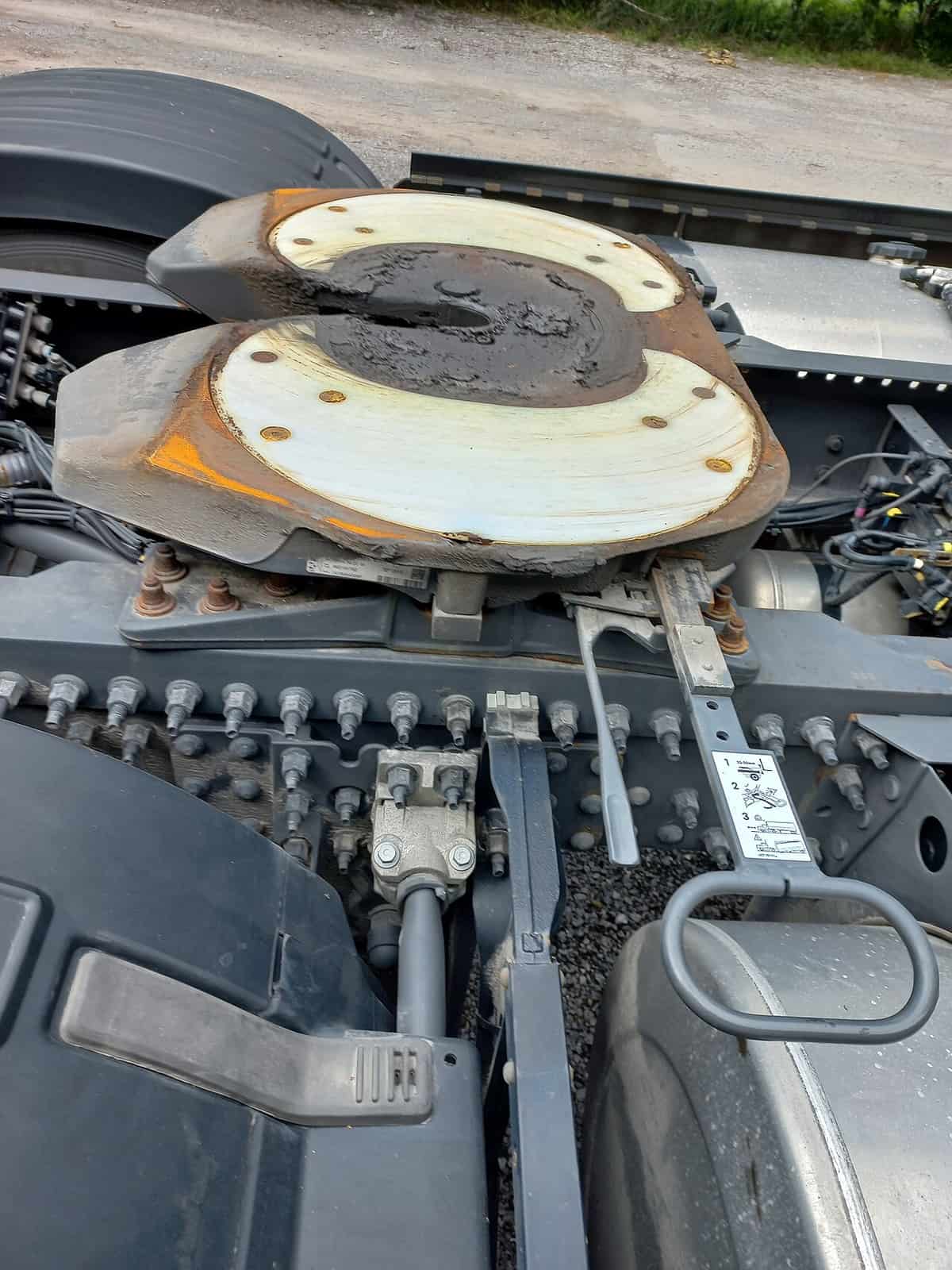
A fifth wheel hitch does not bolt to the bed floor. Sheet metal cannot carry several thousand pounds of pin weight, let alone the dynamic loads of braking and cornering. So the load has to reach the truck's frame, and it does that through two structural pieces working together.
- Under-bed brackets bolt to the frame rails of your specific truck. They are the vehicle-specific half, and they are why a kit for an F-250 will not fit a RAM 2500.
- Base rails bolt across the bed, through the floor, onto those brackets. They are the standardized half - two rails with holes at an agreed spacing, which is what the industry means by "industry-standard rails".
- The hitch attaches to the rails with pins or bolts. Because the rails are standardized, a hitch from one brand attaches to rails from another.
That standardization is the whole reason to care. CURT publishes its universal base rails as industry-standard, meaning the attachment points accept any hitch with industry-standard legs - their own and, by their description, many competitor models. They list the rails at 25,000 lb gross trailer weight and tested to SAE J2638, with a two-stage finish of co-cured liquid A-coat under gloss black powder coat. Critically, they also publish that the rails are sold without brackets: the custom under-bed brackets are a separate purchase.
The three mounting paths
Before comparing part numbers, work out which of these three situations you are in. They are not close substitutes and the wrong one wastes real money.
| Path | What you buy | Bed floor | Best when |
|---|---|---|---|
| Rails plus brackets | Universal rails and vehicle-specific under-bed brackets, as two parts | Drilled | You want the standard and the highest published ratings |
| Rail and bracket kit | One part number containing both | Drilled | You want a single order and a listed fit for your truck |
| Factory puck system | A hitch with legs made for the pucks - no rails at all | Untouched | Your truck came with bed pucks from the factory |
A fourth path exists for some half-tons: an under-bed mounting system that carries the hitch without full-length rails sitting on the bed floor. Reese publishes Max Duty under-bed systems rated at 14,000 lb gross towing weight for the F-150 and Silverado 1500.
The puck case deserves emphasis because people drill beds they did not need to drill. If your truck left the factory with a prep package - four or five capped holes in the bed floor - you buy a hitch with legs designed for those pucks and the installation is a twenty-minute job with no rails and no drilling. Check the bed before you buy anything.
How to choose: the criteria that matter
In rough order of how much each one should move your decision.
- Does it fit your truck? Brackets are vehicle-specific, full stop. A universal rail kit is only universal in the sense that the rails are standard - the brackets inside it still have to list your year, make, model and often bed length.
- Is the published rating above your trailer, with margin? Three ratings are in play - the rails, the hitch and the truck - and the lowest governs. CURT publishes 25,000 lb on its universal rails, which is far above what any half-ton or three-quarter-ton is legally rated to pull, so in practice the truck binds first. What your truck can actually tow is the number that decides this, not the hardware.
- Rails only, or rails plus hardware? This is where part numbers mislead. Reese publishes its universal rail and bracket kit with both rails and mounting hardware included, Grade 5 bolts, no welding required, drilling required, 53.5 lb, under a limited 5-year warranty. But it also publishes a rails-only outboard part with Grade 8 bolts and a limited lifetime warranty, and another rails-only part where mounting hardware is explicitly not included at all. Read the inclusion line before you order, or you will be making a second trip.
- Inboard or outboard rails? Outboard rails sit wider in the bed. Reese lists outboard variants separately for exactly this reason - some bracket kits and some hitches expect one or the other. Match the rail position to the brackets, not to preference.
- Hardware grade and warranty. These track each other more than you would expect. In Reese's own published tables, the rails-only outboard part carries Grade 8 bolts and a lifetime warranty while the combined kit carries Grade 5 and five years. If you are towing near the top of your truck's rating, the better-specified bolt is worth the extra part number.
- How much bed do you need back? Rails are permanent unless you unbolt them, and they are in the way of flat cargo forever. If the bed does double duty as a work truck, factor that in now.
What installation actually involves
Both bolt-in paths are drill-and-bolt jobs rather than welding jobs, which is good news, but they are not trivial and the holes are permanent.
The shape of a rail installation
Confirm the bracket part number against your exact truck
Year, make, model, and bed length where it is listed. This is the step that most often goes wrong, and it goes wrong before any tool comes out.
Drop or lift the bed, or work from underneath
The brackets bolt to the frame. Some kits are designed to be installed from below; others are far easier with the bed off. Read the instructions before you commit a Saturday.
Mark and drill the bed floor
Both CURT and Reese publish these systems as requiring drilling and not requiring welding. Measure twice - the rails have to end up square to the bed and at the published fore-aft position.
Torque to the published figures
Hardware grade is specified for a reason and the torque values go with it. This is a structural connection carrying several thousand pounds of pin weight.
Seal the holes
You have just made penetrations in a painted steel floor that collects water. Sealing them is the difference between rails and rails with rust around them.
Fit the hitch and check clearances
With the hitch in and the trailer coupled, check cab-to-trailer clearance through a full turn before you take it anywhere.
If any of that reads like more Saturday than you want to spend, that is a legitimate conclusion - what a professional hitch installation involves covers what you are paying for when you hand it over.
When rails are the wrong purchase
- Your truck has factory pucks. Buy the puck-compatible hitch. Drilling a bed that came prepared for a hitch is throwing away the feature you paid for.
- You only tow gooseneck. An under-bed gooseneck hitch leaves you a flat bed and a lower ball, and rails would be structure you never use - the gooseneck hitches and balls worth buying is the list to shop from instead.
- You tow a fifth wheel once a year. If a gooseneck hitch is already installed, an adapter plate gives you rails on demand and takes thirty seconds to remove. The adapter options in both directions cover this properly, including the capacity you give up.
- Your truck is not rated for the trailer. Rails rated to 25,000 lb do not raise a half-ton's tow rating by a pound. Settle the vehicle question first.
- You are about to change trucks. The brackets will not transfer. Wait.
The capacity trap worth naming
Pin weight is the one that usually binds. A fifth wheel carries far more of its weight on the truck than a bumper-pull does, and that weight lands on the rear axle and eats payload directly. The placard in the door jamb is the governing document, and reading it correctly matters more than any rail specification on this page.

1. Best standard rails
CURT Universal Fifth Wheel Base Rails (25,000 lb)
CURT · Best for any traditional fifth wheel install
The industry-standard pair of rails that almost every fifth wheel hitch bolts to. Buying rails is not really a product decision - it is the decision to use the standard, which is what lets you change hitch brands later without touching the truck again.
Published specifications
What works
- Industry-standard spacing, so most brands of fifth wheel hitch will bolt straight on
- Rated well above what a half-ton or three-quarter-ton can legally pull
- Two-stage finish rather than bare powder coat, which matters in a wet bed
What does not
- Brackets are a separate purchase and they are vehicle-specific
- Installation means drilling the bed floor on most trucks
- The rails stay in the bed unless you unbolt them, which costs you cargo space
Skip it if
Not the right path if your truck came with a factory puck system in the bed - buy the hitch that drops into the pucks instead and leave the bed floor alone.
#ad Affiliate link - we publish no price; Amazon shows the current one
Raw specifications: CURT’s own page. We earn nothing on that link.
2. Simplest single purchase
Reese Fifth Wheel Rail and Bracket Kit (universal)
Reese · Best for buyers who want one part number
Rails and brackets in one box rather than two, listed as fitting a spread of Chevrolet, Dodge, Ford, GMC, Nissan, RAM and Toyota trucks. The appeal is that you are not cross-referencing two part numbers and hoping they match.
Published specifications
- Fit
- Universal; listed as compatible with Chevrolet, Dodge, Ford, GMC, Nissan, RAM and Toyota trucks source
- What is included
- Rails and mounting hardware both included source
- Installation
- No welding required; drilling required source
- Material and hardware
- Steel with black powder coat; Grade 5 bolts source
- Kit weight
- 53.5 lb source
- Warranty
- Limited 5-year warranty source
What works
- Rails and hardware in a single part number instead of two separate orders
- Listed across a wide spread of truck brands rather than one platform
- No welding - it is a drill-and-bolt job
What does not
- Reese publishes no gross trailer weight figure for this kit, so the hitch you bolt on sets the limit you can verify
- A 5-year warranty where some rails carry a lifetime one
- Grade 5 hardware where the outboard rails-only part is published with Grade 8
Skip it if
Skip it if you already know your exact truck platform and want the heaviest published hardware - a vehicle-specific bracket plus rails-only usually gets you a better-specified bolt.
#ad Affiliate link - we publish no price; Amazon shows the current one
Raw specifications: Reese’s own page. We earn nothing on that link.
3. What rails unlock later
CURT Spyder Fifth Wheel Rail Gooseneck Hitch with 2-5/16 in Ball (25,000 lb)
CURT · Best for rails already in the bed, gooseneck trailer to pull
A gooseneck ball on a plate that drops into fifth wheel rails you already own. If the rails are in the bed and the trailer in the yard is a gooseneck, this is the part that bridges them - and it pins out in a minute when you want the bed back.
Published specifications
What works
- Turns rails you already paid for into a gooseneck hitch with no further bed work
- Pins out by hand, so the bed goes back to being a bed
- Published tongue weight of 6,250 lb is genuine heavy-trailer territory
What does not
- Only works if industry-standard rails are already installed
- It is a heavy plate to lift in and out, and there is nowhere tidy to store it
- The ball sits high on the plate rather than near the bed floor, which raises the trailer's coupling point
Skip it if
Pointless if you have no rails - if you only ever tow gooseneck, an under-bed gooseneck hitch gives you a flat bed and a lower ball instead.
#ad Affiliate link - we publish no price; Amazon shows the current one
Raw specifications: CURT’s own page. We earn nothing on that link.
4. If you would rather not drill
CURT X5 Gooseneck-to-Fifth-Wheel Adapter Plate, Square Shank (20,000 lb)
CURT · Best for gooseneck hitch installed, fifth wheel trailer to pull
The opposite conversion: a shank that drops into the ball hole of an under-bed gooseneck hitch and presents a pair of fifth wheel rails above it. It is the fastest way to tow a fifth wheel trailer with a truck set up for gooseneck.
Published specifications
- Gross trailer weight
- 20,000 lb source
- Mounting
- Solid square shank into the gooseneck ball hole, secured by the gooseneck hitch's own locking mechanism source
- Compatibility
- Gooseneck hitches that take a square-shank removable ball source
- What it presents
- A pair of fifth wheel rails, to accept a fifth wheel hitch rated up to 20,000 lb source
What works
- Installs in about a minute with no drilling and no bed work at all
- Comes straight back out, leaving the bed completely flat
- Lets one truck tow both trailer types without two permanent installations
What does not
- Published at 20,000 lb, below the 25,000 lb that industry-standard rails themselves carry
- Only fits gooseneck hitches with a square-shank removable ball - a round-shank hitch needs a different part
- It raises the fifth wheel hitch, and with it the trailer, which can cost you bed-rail clearance
Skip it if
Not the right answer if the fifth wheel trailer is the one you tow every week - permanent rails sit lower, are rated higher and will not need checking before every trip.
#ad Affiliate link - we publish no price; Amazon shows the current one
Raw specifications: CURT’s own page. We earn nothing on that link.
The bottom line
If your truck does not have factory pucks and you are installing a traditional fifth wheel hitch, buy industry-standard base rails and the under-bed brackets listed for your exact truck. CURT's universal rails are the straightforward version of that: standard spacing, 25,000 lb published, tested to SAE J2638, with brackets bought separately. If you would rather place one order and have the rails and hardware arrive together, Reese's universal rail and bracket kit does that, at the cost of a shorter warranty and a lower hardware grade than their rails-only outboard part.
Whichever you buy, the standard is the thing you are actually purchasing. Rails outlive hitches, and standard rails mean the next hitch is a bolt-on rather than another weekend with a drill. Once the rails are settled, the heads that bolt to them is the next decision, and pin weight and pivot separate them far more than gross capacity does. If you also own a gooseneck trailer, buy the rails knowing that a rail-mounted gooseneck plate will later turn them into a gooseneck hitch for a fraction of a second installation - which is the strongest practical argument for not economizing here.
Key takeaways
- Rails are standardized; brackets are vehicle-specific. You need both unless your truck has pucks.
- Check the bed for factory pucks before buying anything - that path needs no rails and no drilling.
- CURT publishes its universal base rails at 25,000 lb gross trailer weight, tested to SAE J2638, brackets sold separately.
- Read the inclusion line: some Reese rail parts include mounting hardware, one explicitly does not.
- Hardware grade and warranty track together - the rails-only outboard part is published with Grade 8 bolts and a lifetime warranty.
- Outboard and inboard rails are not interchangeable; match them to the brackets.
- Expect to drill the bed floor and to seal the holes afterward. Neither bolt-in path needs welding.
- Three ratings apply - rails, hitch, truck - and the lowest governs. Pin weight against payload usually binds first.
How we sourced this
Every figure on this page came from one of the following, each fetched while the page was written. Where a manufacturer or regulator does not publish a number, we say so rather than estimate it.
- REESE - fifth wheel hitch rails and bracket kits, published listing and per-part specifications
- CURT Manufacturing - manufacturer site
- SAE J2807 - Performance Requirements for Determining Tow-Vehicle Gross Combination Weight Rating and Trailer Weight Rating
- 49 CFR 571.110 (FMVSS 110) - vehicle placard, including the required "combined weight of occupants and cargo" statement
- 49 CFR 567.4 - certification label content, including Gross Vehicle Weight Rating and Gross Axle Weight Rating
Common questions
- Do I need rails for a fifth wheel hitch?
- Only if your truck does not have a factory puck system. A traditional fifth wheel hitch attaches to industry-standard base rails, which bolt through the bed floor onto vehicle-specific under-bed brackets. Trucks that left the factory with bed pucks take a hitch designed for those pucks instead, with no rails and no drilling.
- Are fifth wheel rails universal?
- The rails themselves are standardized - CURT describes its universal base rails as having industry-standard attachment points that accept any hitch with industry-standard legs, including many competitor models. The brackets underneath them are not universal: they are specific to your truck's year, make, model and often bed length.
- How much weight can fifth wheel rails hold?
- CURT publishes its universal base rails at 25,000 lb gross trailer weight, tested to SAE J2638. That is well above what most pickups are rated to tow, so in practice the truck's own tow rating and remaining payload govern your rig rather than the rails.
- Does installing fifth wheel rails require welding?
- No. Both CURT and Reese publish these systems as requiring no welding but requiring drilling. The brackets bolt to the frame and the rails bolt through the bed floor, so the job is measure, drill, bolt and torque - plus sealing the new holes against water.
- What is the difference between inboard and outboard rails?
- Outboard rails sit wider apart in the bed. Reese lists outboard variants as separate part numbers because particular bracket kits and hitches expect one spacing or the other. Match the rail type to the brackets you are installing rather than choosing by preference.
- Can I remove fifth wheel rails when I am not towing?
- You can unbolt them, but they are not designed for routine removal and the holes in the bed floor stay. If you need a genuinely flat bed most of the time, an under-bed gooseneck hitch with an adapter plate is the arrangement that gives you that.
More in Hitches, Receivers & Ball Mounts
Class, receiver size, ball diameter, drop. Four numbers decide whether your setup is right, and three of them are stamped on parts you already own.
Read next
Best fifth wheel hitch
Best Fifth Wheel Hitch
Fifth wheel hitches sorted by the published numbers that matter - pin weight capacity, pivot in both axes, and whether your bed needs rails, pucks or neither.
Best gooseneck hitch
Best Gooseneck Hitch
Under-bed, puck-system and rail-mounted gooseneck hitches side by side - published gross and vertical ratings, what gets drilled, and how flat the bed ends up.
Guide
5W / Gooseneck Adapters
Rail-mounted gooseneck plates versus gooseneck-to-rail adapter plates, the published ratings on each, and the height and capacity you give up either way.
Head to head
Gooseneck vs Fifth Wheel
Two bed-mounted hitch types compared on bed usability, ride quality, capacity and what each trailer type requires.
Guide
Hitch Installation
DIY versus shop installation, what is involved on different vehicles, and the questions to ask before booking.
Guide
How Much Can My Truck Tow?
The four ratings that constrain a tow, where each is published, and the order to work through them.
Found something out of date, or a figure you can source better than we did? Corrections get read first. How we research explains how these pages are put together, and contact is one click away.