Hitches, Receivers & Ball Mounts
What Size Ball Does a Boat Trailer Use?
The size comes off the coupler. The material matters more here than anywhere else, because this ball goes in the water.
Disclosure: we earn a commission if you buy through the Amazon links on this page, at no extra cost to you. Commission never decides a verdict or a ranking position - read our editorial policy and affiliate disclosure.
Short answer
Most boat trailers in the US use a 2 in ball, with 1-7/8 in common on small single-axle trailers and jet ski trailers, and 2-5/16 in on heavy tandem-axle trailers. The size is stamped on the coupler and nothing else decides it. On a boat trailer, choose stainless over chrome - this ball gets submerged.
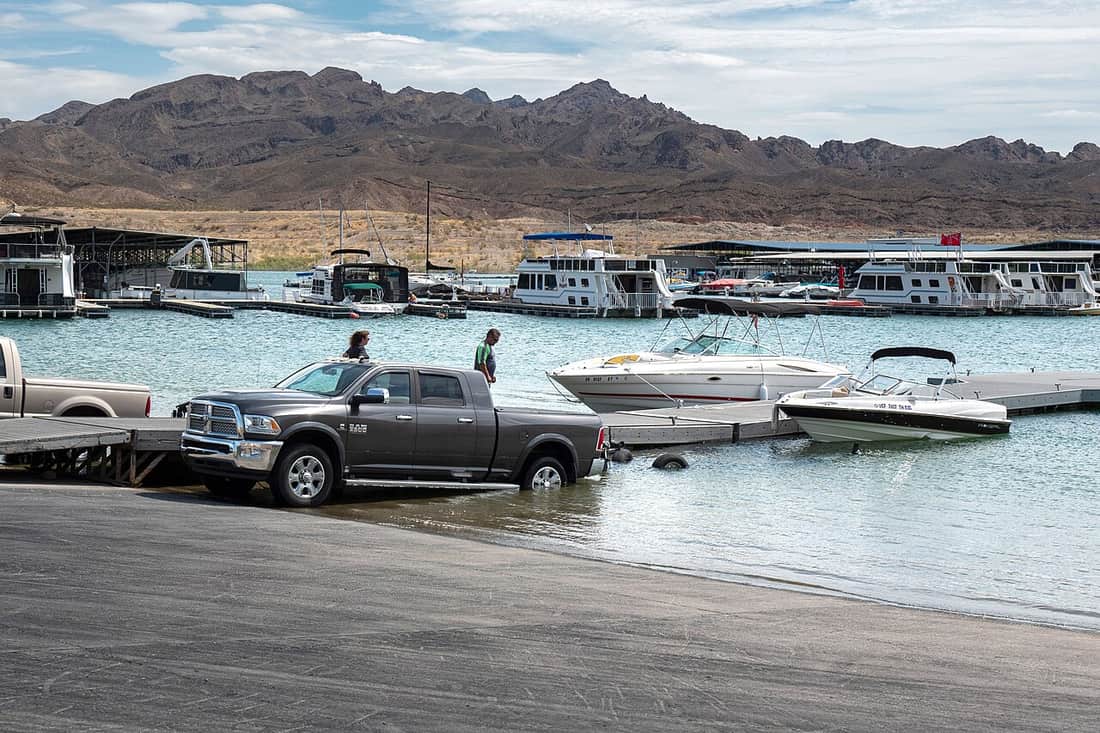
Boat trailers raise the same size question as any other trailer and two questions nobody else has to ask: what repeated immersion does to the ball, and what a surge-brake coupler needs from the tow vehicle. Both are worth more attention than the diameter, because the diameter is simply read off the coupler.
Size, by what the trailer is carrying
| Trailer | Most common ball | Note |
|---|---|---|
| Jet ski and small single-axle | 1-7/8 in | Light enough for the smaller coupler |
| Single-axle fishing boats | 1-7/8 in or 2 in | Depends on the loaded weight, not the hull length |
| Most tandem-axle trailers | 2 in | The weight band where 2 in is rated comfortably |
| Heavy tandem and triple-axle | 2-5/16 in | Higher capacity at the same mount |
What is common, not a lookup for your trailer. Read the stamp on your own coupler, which is the only figure that governs.
Remember that the loaded weight of a boat trailer is not the hull's dry weight. Fuel, water, batteries, gear and an outboard sitting behind the axle all count, and the last of those also changes where the weight sits. The full ball size reference carries the diameters, capacities and shank sizes in one table.
Stainless, chrome or zinc
This is where boat trailers genuinely differ. A ball that gets dunked at a ramp - fresh water weekly, salt water occasionally - corrodes on a timescale a yard trailer's never will. Chrome plating over steel pits where the coupler has worn the plating thin, and once the plating is breached, rust spreads under it. Stainless costs a little more and does not do that.
- Stainless: the right default for a trailer that is launched. Resists the pitting that follows a worn chrome surface.
- Chrome over steel: acceptable for fresh water if you rinse and inspect, and the cheapest option. Expect a shorter life.
- Zinc or painted: fine on a dry trailer, poor at a ramp. The coating is sacrificial and immersion spends it quickly.
Surge brakes change the check
Many boat trailers use surge brakes rather than electric ones: a hydraulic actuator built into the coupler that applies the trailer's brakes when the trailer pushes forward against the tow vehicle. They are used on boat trailers precisely because they tolerate immersion in a way electric magnets do not, and they need no brake controller at all.
Two things follow. The first is that a surge coupler is bulkier than a plain one and the ball has to seat fully into the actuator housing - a ball with a tall or oddly shaped shoulder can foul it. The second is reversing: many surge actuators need a reverse lockout signal, which arrives on a 5-way flat connector rather than the usual 4-way. That is the one wiring part a boat trailer needs that others do not.
If your trailer has electric brakes instead, the controller question applies as normal - whether you need one depends on the trailer's weight and your state.
The ramp-side mistakes worth avoiding
- Never size the ball to the mount you already own. The coupler stamp governs. If the mount's hole does not match the ball you need, replace the mount.
- Torque the ball nut to the published figure. Boat trailer balls take the same hundreds of ft-lb as any other, and a loose nut plus immersion is a corrosion path straight into the threads.
- Check the coupler latch and lock, not just the ball. A worn latch on a submerged coupler is the commonest boat-trailer failure and it is invisible when the latch is closed.
- Grease the ball, keep the surge actuator serviced. What to grease and what to keep dry matters more on a trailer that is washed out weekly.
And if you are setting up a boat trailer rig for the first time, the hitch side of it has its own page - the boat trailer hitch picks cover the mount, the drop and the ramp-angle problem that a long tongue creates.
Key takeaways
- Most boat trailers use 2 in; small ones use 1-7/8 in; heavy ones 2-5/16 in.
- The coupler stamp is the specification, not the boat's size.
- Choose stainless - this ball gets submerged repeatedly.
- Surge-brake couplers need no controller but may need a 5-way reverse lockout.
- Rinse after salt water, then inspect for pitting and flat spots.
How we sourced this
Every figure on this page came from one of the following, each fetched while the page was written. Where a manufacturer or regulator does not publish a number, we say so rather than estimate it.
- CURT 2 in stainless trailer ball - published specifications including 250 ft-lb mounting torque (part 40083)
- CURT 4-way to 5-way flat adapter for surge brakes - published specifications (part 57187)
- CURT loaded ball mount, 2 in ball, 2 in drop - published specifications (part 45036)
- 49 CFR 393.70 - coupling devices and towing methods, including safety chain and cable arrangement
Common questions
- What size ball does a boat trailer use?
- Most use 2 in. Small single-axle and jet ski trailers often use 1-7/8 in, and heavy tandem or triple-axle trailers use 2-5/16 in. The size stamped on your coupler is the only figure that decides it.
- Should a boat trailer ball be stainless steel?
- Yes, if the trailer is launched. Chrome plating over steel pits once the coupler has worn the plating thin, and immersion then drives rust under the plating. Stainless costs a little more and avoids that failure mode.
- Do boat trailers need a brake controller?
- Not if they use surge brakes, which are hydraulic and self-actuating - that is why they are common on trailers that get submerged. A boat trailer with electric brakes needs a controller like any other trailer.
- Why will my surge brake trailer not reverse?
- Many surge actuators need a reverse lockout signal so the actuator does not apply the brakes when you back up. That signal arrives on a 5-way flat connector rather than a 4-way, which is the extra wiring part a surge-brake trailer needs.
More in Hitches, Receivers & Ball Mounts
Class, receiver size, ball diameter, drop. Four numbers decide whether your setup is right, and three of them are stamped on parts you already own.
Read next
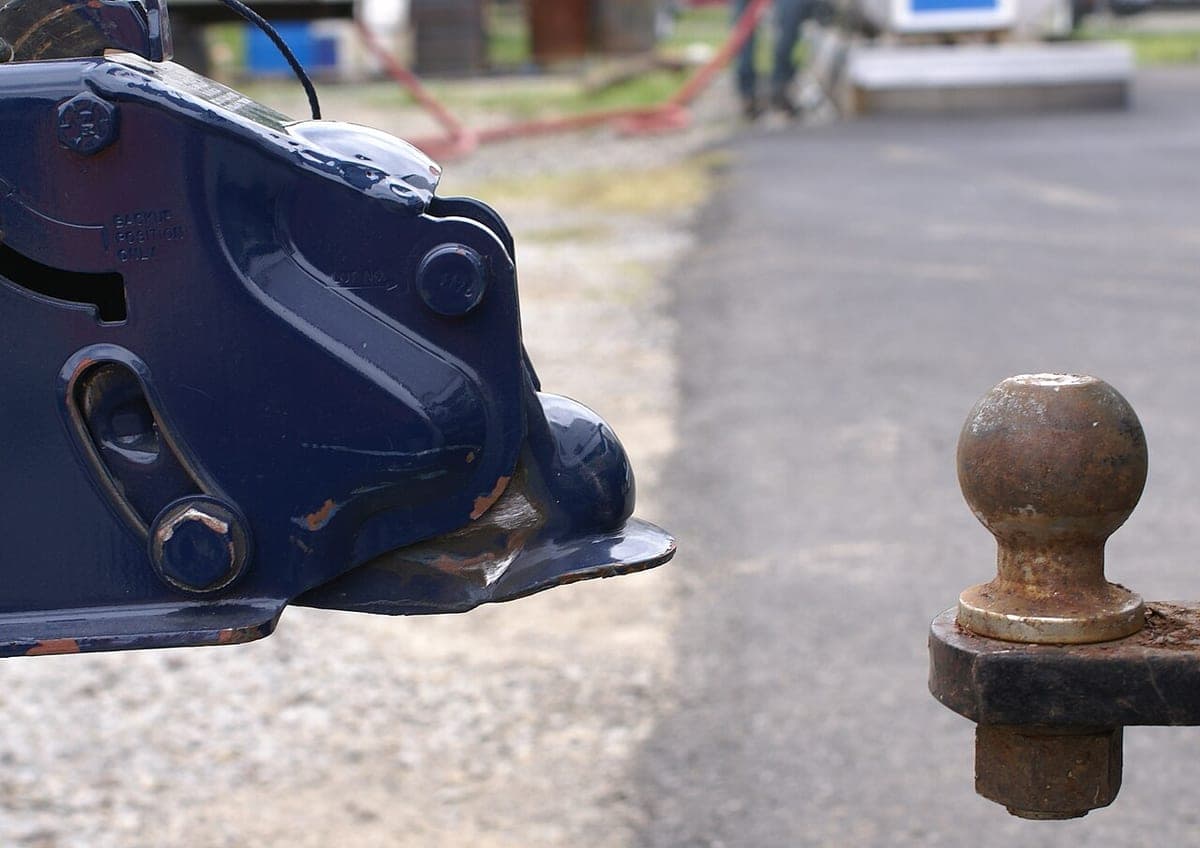
Reference
Trailer Ball Sizes
The three standard ball diameters, how shank dimensions work, and why mounting torque is a specification rather than a suggestion.
Best boat trailer hardware
Best Hitch for a Boat Trailer
What to buy for a boat trailer specifically: corrosion-resistant ball hardware, the surge-brake adapter nobody mentions, and lights rated for immersion.
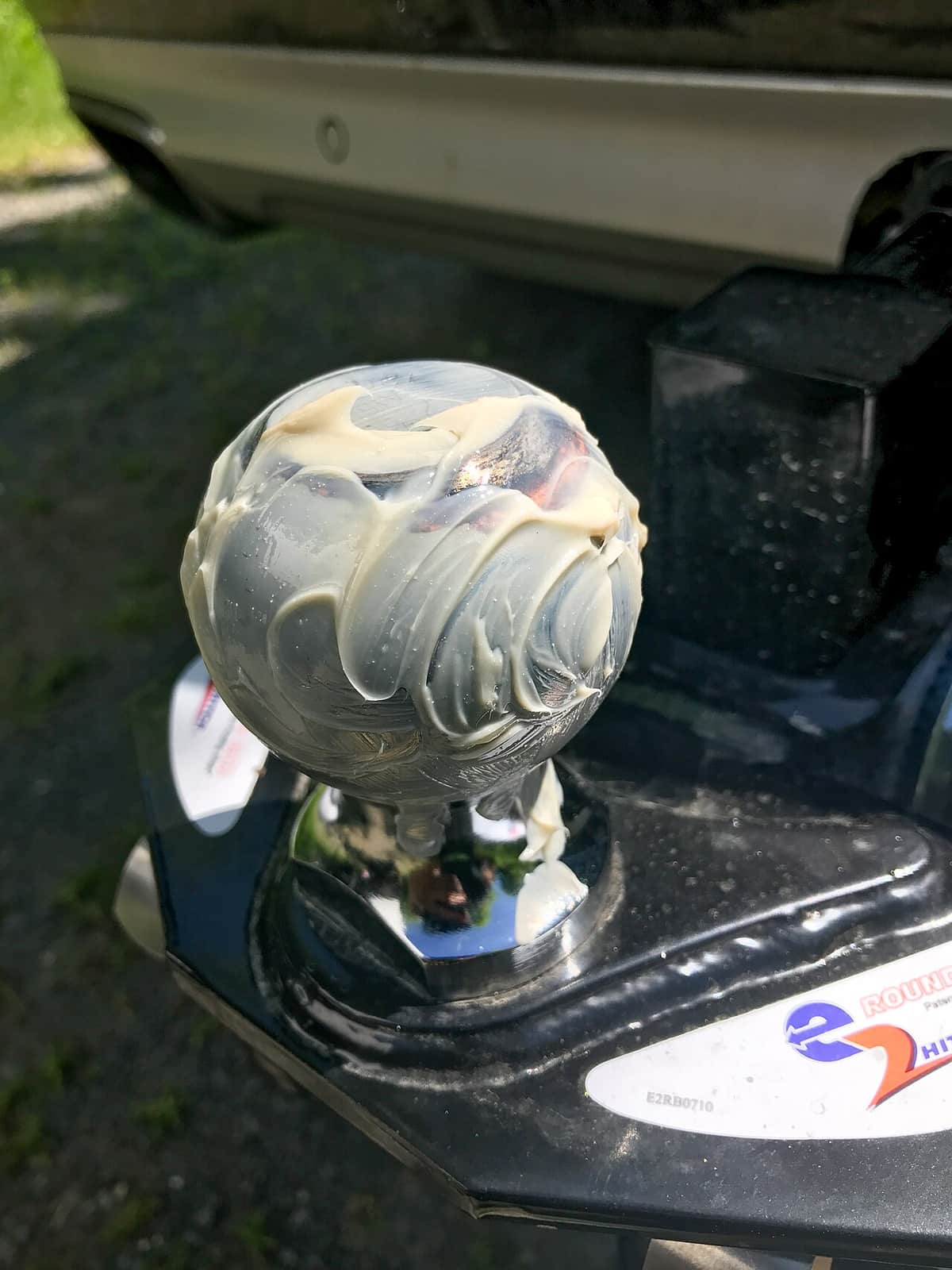
Guide
Hitch Ball Grease
What to grease on a hitch, what to keep bone dry, and why a ball that still squeals after greasing is telling you it is worn out.
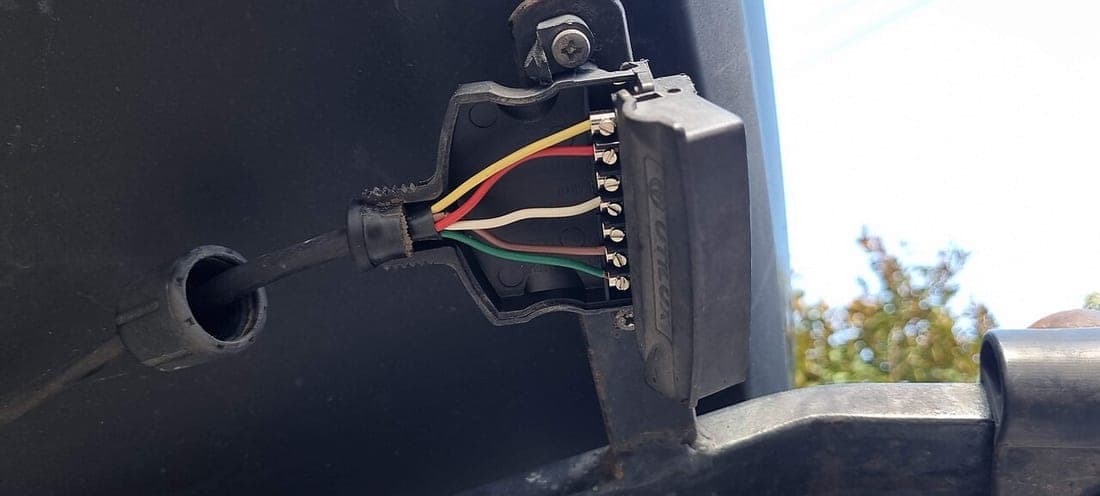
Head to head
4-Pin vs 7-Pin
What each connector carries, why adapters cannot add circuits, and when upgrading a vehicle to a 7-way is the real answer.
Guide
First Time Towing a Boat
A first-timer's sequence for towing a boat: hitching, the ramp, launching and recovery, and the hardware that makes each step less eventful.
Found something out of date, or a figure you can source better than we did? Corrections get read first. How we research explains how these pages are put together, and contact is one click away.