Hitches, Receivers & Ball Mounts
Weigh Safe Alternatives, by the Reason You Are Looking
The Weigh Safe drop hitch exists to show you tongue weight as you hitch up. Decide whether you want that function or the mount, because the answer changes what you should buy.

Disclosure: we earn a commission if you buy through the Amazon links on this page, at no extra cost to you. Commission never decides a verdict or a ranking position - read our editorial policy and affiliate disclosure.
How we assessed these: A comparison of published manufacturer specifications only - per-shank gross trailer and tongue weight ratings, drop ranges, unit weights, materials, ball options and certifications, each linked to the maker's own page. This site has not installed or towed with any of these parts and publishes no measurements, scores or star ratings of its own.
Short answer
The Weigh Safe is an adjustable drop hitch with a hydraulic tongue weight gauge in the shank, published at 12,500 lb on the 2 in shank and up to 21,000 lb on the 3 in, with drops from 4 to 10 in. If you want the measurement rather than the mount, a dedicated tongue weight scale does the same job with any mount you already own. If you want a stowing head, look at the B&W Tow & Stow. If weight in your hand is the problem, the aluminum Andersen Rapid Hitch. If cost is the problem, a CURT adjustable channel mount or, for one trailer at one height, a fixed loaded mount.
Start by naming what you are actually shopping for, because the Weigh Safe is two products in one casting. It is an adjustable drop hitch, and it is a tongue weight scale. Most people arrive here having decided they want the second thing and then flinching at the price of the first.
That is a reasonable place to flinch, and it has a clean answer: the measurement and the mount can be bought separately. What follows is organized by the reason you are looking rather than by brand, because the right alternative is completely different depending on which of the five reasons is yours.
What the Weigh Safe is known for
Credit where it is due: the gauge is a genuinely good idea. Tongue weight is the number that decides whether a trailer tows straight or sways, and it is the number almost nobody measures. A gauge in the shank turns measuring from a separate errand into something that happens every time you lower the trailer onto the ball, which is the only way a habit like that survives contact with a Friday afternoon.
Weigh Safe publishes the hitch at 12,500 lb gross and 1,500 lb tongue weight on the 2 in shank, 18,500 lb on the 2-1/2 in and 21,000 lb on the 3 in, in 4, 6, 8 and 10 in drops adjustable in 1 in increments, with stainless 2 in and 2-5/16 in balls supplied and the body in aircraft-grade aluminum certified to V5 and SAE J684. For the full read on how it behaves and what the gauge does and does not tell you, there is a longer assessment of the Weigh Safe drop hitch on this site, and a head-to-head against the Tow & Stow if those two are your shortlist.
Quick picks
Tap any row to jump to the full write-up. How these are chosen - and what we do and do not claim to know - is published in full on our research methodology page.
| # | Product | Best for | Our read | Price |
|---|---|---|---|---|
| 1 |  Sherline Trailer Tongue Weight Scale Keeps the measurement, loses the mount | Measuring tongue weight at home | A dedicated scale works with any mount you own | Check price on Amazon #ad Affiliate link - we publish no price; Amazon shows the current one |
| 2 |  B&W Tow & Stow Adjustable Ball Mount Best if it has to get out of the way | Daily drivers that tow occasionally | Pivots under the bumper; 21,000 lb on the 3 in shank | Check price on Amazon #ad Affiliate link - we publish no price; Amazon shows the current one |
| 3 |  Andersen Rapid Hitch Aluminum Adjustable Ball Mount Least weight to lift | Anyone tired of lifting steel mounts | Aluminum, 12,500 lb, 4 to 10 in drop racks | Check price on Amazon #ad Affiliate link - we publish no price; Amazon shows the current one |
| 4 |  CURT Adjustable Channel Mount with Dual Ball (2 in shank, 6 in drop) Most adjustment per dollar | Garages with several trailers | 14,000 lb, two balls, 6 in drop and 5-1/4 in rise | Check price on Amazon #ad Affiliate link - we publish no price; Amazon shows the current one |
| 5 |  CURT Loaded Ball Mount with 2 in Ball (2 in drop, 7,500 lb) Simplest, for one trailer | One trailer at a known height | One piece, ball fitted, 7,500 lb | Check price on Amazon #ad Affiliate link - we publish no price; Amazon shows the current one |
Reason 1: you want the measurement, not the mount
This is the most common reason, and the answer is a dedicated scale. A tongue weight scale sits under the coupler, you lower the trailer onto it, and you read the figure directly - no arithmetic, no weighbridge, no gauge built into a part you may not otherwise need. It works with whatever ball mount you already own, including a fixed one.
The trade is honest in both directions. The scale is a single-purpose tool that lives in a cupboard, and it only reads correctly on level ground with the coupler at towing height. The built-in gauge is always there and never gets left at home. But if you load the same trailer the same way every time, you need the number twice a season, not twice a week - and then how to measure tongue weight properly plus a scale is the cheaper, more accurate path.
Reason 2: you want it out of the way when you are not towing
An adjustable drop hitch is a steel or aluminum bar sticking out at shin height. If the tow vehicle is also the daily driver and lives in a garage or a tight parking space, the stowing design solves a problem the Weigh Safe does not address: the B&W Tow & Stow pivots its multi-ball head up under the bumper when it is not in use.
B&W publishes it at 10,000 lb gross and 1,000 lb tongue on the 2 in shank, 18,000 lb on the 2-1/2 in and 21,000 lb on the 3 in, tested to SAE J684, with two-ball and tri-ball head configurations. One published limitation is important and specific: B&W states that sway bar and weight distribution systems do not fit it. If a weight distribution hitch is in your future, that rules it out - and whether you need weight distribution at all is the question to settle before you spend on either mount.
Reason 3: the weight in your hand is the problem
Adjustable mounts are heavy. The Weigh Safe is published between 16 and 20 lb depending on drop, and that is with an aluminum body; steel adjustable mounts run heavier. If the mount comes out of the receiver between trips, you feel every pound of it twice.
The Andersen Rapid Hitch is the lightest honest answer, with an aluminum body, published 12,500 lb gross and 1,500 lb tongue weight, 4 to 10 in drop and rise racks, 2 in and 2-1/2 in shanks, and V5 and SAE J684 certification. The ceiling is lower than the big-shank Weigh Safe or Tow & Stow numbers, so it is the wrong pick for a 15,000 lb car hauler. For a boat or a mid-size travel trailer it is the mount you will actually not mind handling. Aluminum against steel, and what each costs you covers that trade in full.
1. Keeps the measurement, loses the mount
Sherline Trailer Tongue Weight Scale
Sherline · Best for measuring tongue weight at home
A dedicated scale you sit under the coupler to read tongue weight directly, with no arithmetic and no trip to a weighbridge. It is the one tool on this site that turns the single most important towing number from a guess into a measurement.
We have not sourced a full specification table for this model from the manufacturer’s own site at a stable address. Rather than repeat figures we cannot cite, the assessment above is limited to what the design and the maker’s published description genuinely establish.
What works
- Direct reading, with no bathroom-scale-and-lever arithmetic
- Repeatable, so you can see what moving the load actually does
- Mechanical gauge with no batteries to be flat when you need it
What does not
- Must be used on level ground with the coupler at towing height
- Single-purpose tool that spends most of its life in a cupboard
Skip it if
Unnecessary if your hitch already has a built-in gauge, or if you have a public scale nearby and are happy to use it.
#ad Affiliate link - we publish no price; Amazon shows the current one
Raw specifications: Sherline’s own page. We earn nothing on that link.
2. Best if it has to get out of the way
B&W Tow & Stow Adjustable Ball Mount
B&W Trailer Hitches · Best for daily drivers that tow occasionally
Two balls on a pivoting head that tucks up under the bumper when nothing is attached, which is the part owners actually rave about - no more shin-height steel bar in a parking lot. Height adjusts in pin increments rather than continuously.
Published specifications
- Gross trailer weight by shank
- 2 in shank 10,000 lb; 2-1/2 in shank 18,000 lb; 3 in shank 21,000 lb source
- Vertical tongue weight by shank
- 2 in shank 1,000 lb; 2-1/2 in shank 1,800 lb; 3 in shank 2,100 lb source
- Published drop options
- 2-1/2, 3, 5, 7 and 9 in on the 2 in shank; 5, 7 and 8-1/2 in on the 2-1/2 in shank; 4-1/2 and 7-1/2 in on the 3 in shank source
- Ball configurations
- 2 in with 2-5/16 in; 1-7/8 in with 2 in; or all three on the tri-ball head source
- Certification
- Tested to SAE J684 source
- Weight distribution compatibility
- None - the maker states sway bar and weight distribution systems do not fit it source
What works
- Stows up out of the way instead of projecting behind the bumper
- Two ball sizes on one head, flipped rather than swapped
- Solid, heavily built, and quiet when pinned correctly
What does not
- Heavy to handle and to store
- Height steps are fixed by the pin holes, so an exact level may not be available
Skip it if
Not the right buy if you need a precise level height - a continuously adjustable channel mount will get closer than pin increments will.
#ad Affiliate link - we publish no price; Amazon shows the current one
Raw specifications: B&W Trailer Hitches’s own page. We earn nothing on that link.
3. Least weight to lift
Andersen Rapid Hitch Aluminum Adjustable Ball Mount
Andersen Hitches · Best for anyone tired of lifting steel mounts
An aluminum adjustable mount, which is the point: a steel channel mount is genuinely heavy to carry, and this one is not. Balls thread into the stainless pin rather than bolting through a hole, so swapping sizes takes seconds.
Published specifications
- Maximum gross trailer weight
- 12,500 lb source
- Capacity by ball fitted
- 2 in with 2-5/16 in combo ball 10,000 to 12,500 lb; 1-7/8 in with 2 in combo ball 5,000 to 12,500 lb source
- Tongue weight rating
- 1,500 lb source
- Drop/rise racks
- 4, 6, 8 and 10 in source
- Shank sizes
- 2 in and 2-1/2 in source
- Certification
- V5 and SAE J684 source
What works
- Dramatically lighter than a steel adjustable mount of similar capacity
- Ball changes are a thread-on operation, not a torque-and-nut job
- Aluminum does not rust streak down a painted bumper
What does not
- Aluminum marks more easily than powder-coated steel
- Capacity depends on which ball and pin combination you fit, so read the chart
Skip it if
Not the one if you leave the mount permanently in the receiver through salted winters - the convenience you are paying for is weight, and you would never be lifting it.
#ad Affiliate link - we publish no price; Amazon shows the current one
Raw specifications: Andersen Hitches’s own page. We earn nothing on that link.
4. Most adjustment per dollar
CURT Adjustable Channel Mount with Dual Ball (2 in shank, 6 in drop)
CURT · Best for garages with several trailers
One mount that covers two ball sizes and a range of heights, which is the answer when the garage contains a boat trailer, a utility trailer and a camper that all sit at different heights. Capacity drops to the lower-rated ball you are actually using.
Published specifications
What works
- Two ball sizes and a height range in a single mount
- Flipping it gives rise as well as drop
- Rated to 14,000 lb on the larger ball
What does not
- Heavy, and more joints means more places for rattle to start
- The pins and bolts need checking for torque, unlike a one-piece mount
Skip it if
Pointless if you own one trailer and tow it with one truck - a fixed mount at the right height is lighter, quieter and cheaper.
#ad Affiliate link - we publish no price; Amazon shows the current one
Raw specifications: CURT’s own page. We earn nothing on that link.
5. Simplest, for one trailer
CURT Loaded Ball Mount with 2 in Ball (2 in drop, 7,500 lb)
CURT · Best for one trailer at a known height
A one-piece mount with the ball already fitted and torqued, rated to 7,500 lb gross and 750 lb tongue with a 2 in drop. Nothing adjusts, which is exactly why nothing rattles or works loose.
Published specifications
What works
- Arrives with the ball fitted, so there is no torque step to get wrong
- One piece means nothing to loosen or rattle
- Light enough to leave in the receiver or throw in a toolbox
What does not
- The 2 in drop is the only drop - measure before you buy
- 7,500 lb ceiling rules out heavier trailers
Skip it if
Useless on a lifted truck, where a 2 in drop will still leave the trailer nose-high and the weight on the rear axle of the trailer.
#ad Affiliate link - we publish no price; Amazon shows the current one
Raw specifications: CURT’s own page. We earn nothing on that link.
Reason 4: you want adjustability without the gauge price
If the gauge is not what you are buying and stowing is not your problem, a plain adjustable channel mount does the core job. CURT's adjustable channel mount publishes 14,000 lb gross with a 2-5/16 in ball fitted, 10,000 lb with the 2 in ball, 6 in of maximum drop and 5-1/4 in of rise, into a 2 in receiver. It is heavy steel and it has more joints to keep tight, and it is a fraction of the cost of a scale-equipped mount.
The thing to watch with any channel mount is the hardware. More pinned and bolted joints means more places for a rattle to start, and the pinch bolts and the ball nut both want checking before a long trip. Adjustable against fixed, and when each is right is the decision one step back, and how the adjustable designs differ from each other covers the channel, pinned and stowing families.
Reason 5: you tow one trailer at one height
This deserves saying plainly because it saves a lot of people a lot of money: if you own one trailer, tow it with one vehicle, and have measured the drop you need, an adjustable mount buys you nothing at all. A fixed loaded mount with the ball already fitted and torqued is lighter, quieter, cheaper, and has no joints to loosen. CURT publishes one at 7,500 lb gross and 750 lb tongue with a 2 in drop and the 2 in ball already on it.
The condition is that you have actually measured. What size drop you need, and how to measure it takes five minutes with a tape measure, and getting it wrong is how a trailer ends up towing nose-high with reduced tongue weight - which brings sway back in through the front door.
| Your reason | What to buy | What you give up |
|---|---|---|
| I want to know tongue weight | A dedicated tongue weight scale | The automatic reading at every hitch-up |
| It must stow out of the way | A pivoting stowing mount | Weight distribution compatibility |
| It is too heavy to handle | An aluminum adjustable mount | The highest capacity figures |
| I want adjustment for less | A steel adjustable channel mount | Light weight and the built-in gauge |
| One trailer, one height | A fixed loaded ball mount | All adjustability |
Only the first row keeps the measurement. If tongue weight is the whole reason you were looking at a Weigh Safe, buying a cheaper mount without also buying a scale leaves you back where you started.
Three things none of these alternatives fix
- A sagging tow vehicle. No ball mount lifts a squatting rear end. That is a weight distribution job - why the truck sags and what actually levels it covers the real fix.
- Sway at highway speed. A mount does not damp sway. Tongue weight percentage, load position and a sway control system do - start at how to stop trailer sway.
- Receiver rattle. The clunk is the mount moving inside the receiver tube, and it is a manufacturing tolerance rather than a defect on any brand. An anti-rattle pin and shim ends it - see anti-rattle hardware and hitch locks.
The bottom line
If you want the Weigh Safe because of the gauge, the cheapest honest substitute is a dedicated tongue weight scale plus whatever mount suits your trailers - you keep the measurement, which is the part that makes towing safer, and you stop paying for it twice. If you want it because it is adjustable, a steel channel mount gives you more capacity per dollar and an aluminum one gives you a part you can lift one-handed.
If the mount has to disappear under the bumper between trips, the stowing design is the only one of these that does that, with the published caveat that weight distribution systems do not fit it. And if you own one trailer at one height, buy the fixed mount, measure once, and put the difference toward the scale.
Key takeaways
- The Weigh Safe is two products in one: an adjustable drop hitch and a tongue weight gauge - decide which you are buying.
- Weigh Safe publishes 12,500 lb on the 2 in shank and up to 21,000 lb on the 3 in, in 4 to 10 in drops.
- A dedicated tongue weight scale keeps the measurement and works with any mount you already own.
- B&W states that weight distribution and sway bar systems do not fit the Tow & Stow.
- The aluminum Andersen Rapid Hitch publishes 12,500 lb and is the lightest to handle.
- A steel adjustable channel mount publishes 14,000 lb with the larger ball fitted, for far less than a gauge-equipped mount.
- One trailer at one height needs a fixed loaded mount, not an adjustable one.
- No ball mount fixes sag, sway or receiver rattle - those have their own fixes.
How we sourced this
Every figure on this page came from one of the following, each fetched while the page was written. Where a manufacturer or regulator does not publish a number, we say so rather than estimate it.
- Weigh Safe - Weigh Safe Drop Hitch (aluminum), published specifications including per-shank GTW and tongue weight ratings
- B&W Trailer Hitches - Tow & Stow Adjustable Ball Mount, published model options with GTW and VTW per shank size
- Andersen Hitches - Rapid Hitch, published specifications including drop/rise racks, shank sizes, ball capacities and certifications
- CURT adjustable channel mount with dual ball - published specifications (part 45900)
- CURT loaded ball mount, 2 in ball, 2 in drop - published specifications (part 45036)
- Sherline Products - manufacturer site
Common questions
- Is there a cheaper hitch with a built-in tongue weight scale?
- The scale-in-the-shank design is what you are paying for, and the cheaper route is to separate the two functions: buy a dedicated tongue weight scale and a plain adjustable or fixed mount. You lose the automatic reading at every hitch-up and keep the number itself, which is the part that matters for safety.
- Does a Weigh Safe hitch work with weight distribution?
- That depends on the specific part and shank, and you should read the maker's own current fitment statement before buying for that purpose. It is worth knowing that B&W publishes a clear statement that sway bar and weight distribution systems do not fit the Tow & Stow, so if weight distribution is in your plans, check the compatibility of whichever adjustable mount you choose rather than assuming.
- Is the Tow & Stow or the Weigh Safe better?
- They answer different problems. The Tow & Stow pivots out of the way and publishes higher gross ratings on its bigger shanks; the Weigh Safe shows tongue weight as you hitch. Neither is a general upgrade on the other, and this site has a dedicated head-to-head comparison of the two.
- How accurate does a tongue weight measurement need to be?
- Close enough to tell you which side of the 10 to 15 percent window you are on, and repeatable enough to show what moving the load does. Both a shank gauge and a dedicated scale clear that bar when used on level ground with the coupler at towing height, which is the condition people most often break.
More in Hitches, Receivers & Ball Mounts
Class, receiver size, ball diameter, drop. Four numbers decide whether your setup is right, and three of them are stamped on parts you already own.
Read next

Review
Weigh Safe Review
Per-shank ratings, the drop sizes that exist, and the honest limits of a gauge that reads at the ball rather than at a certified scale.

Head to head
Tow & Stow vs Weigh Safe
A tri-ball mount that stows out of the way against a drop hitch with a built-in tongue weight scale - which feature earns its keep.
Best ball mount
Best Ball Mounts
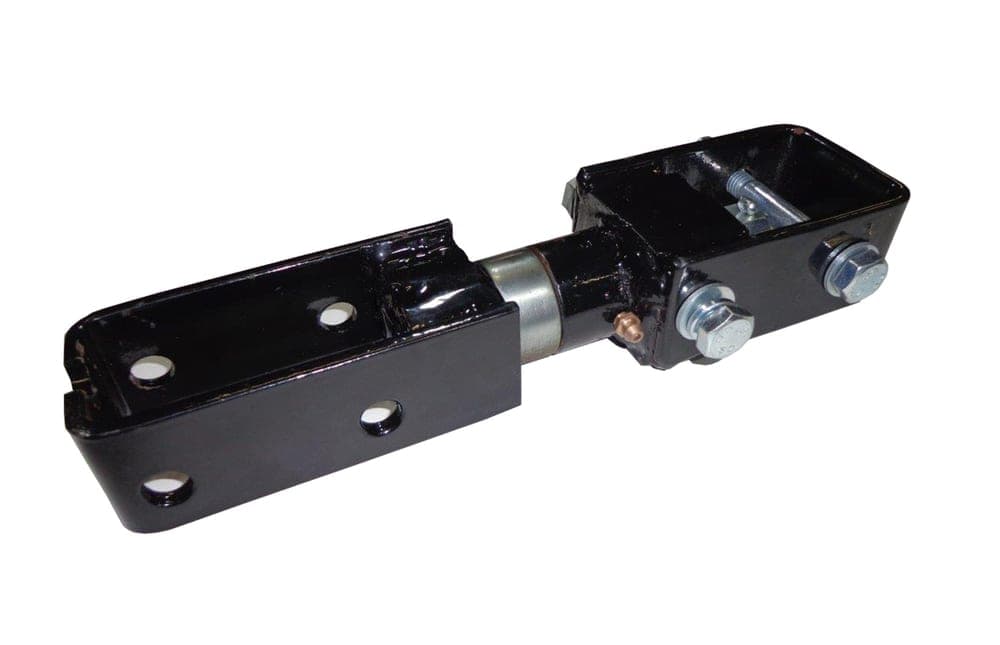
Fixed, adjustable, stowing and scale-equipped mounts compared on drop range, capacity and how much they rattle.

Head to head
Adjustable vs Fixed Mount
The honest head-to-head: what an adjustable mount buys you, what it costs you, and why a fixed mount still wins for most owners.
How to
Measuring Tongue Weight
Three methods for measuring tongue weight, what each one requires, and how to interpret the result against the 10-15 percent band.
Found something out of date, or a figure you can source better than we did? Corrections get read first. How we research explains how these pages are put together, and contact is one click away.