Trailer Sway & Sway Control
Blue Ox SwayPro vs Equal-i-zer 4-point
Both distribute weight and resist sway. They differ most in how you hitch up and how finely you can match bars to your tongue weight.
Disclosure: we earn a commission if you buy through the Amazon links on this page, at no extra cost to you. Commission never decides a verdict or a ranking position - read our editorial policy and affiliate disclosure.
Short answer
SwayPro is the better choice if you hitch and unhitch frequently or your trailer has a low A-frame: the bars sit underslung and the latches clamp rather than needing chains tensioned. Equal-i-zer suits an owner who sets up once a season and wants the fewest variables.
Bar sizing: bands versus ranges
Blue Ox publishes SwayPro in discrete tongue weight bands - 350, 550, 750, 1,000, 1,500 and 2,000 lb - with a 20,000 lb maximum gross towing weight and shanks for 2 in receivers, or 2-1/2 in on the BXW2000. That granularity is a real advantage: it forces the sizing conversation to happen before purchase. It is also a constraint, because a trailer whose loaded tongue weight sits near a band boundary can end up on the wrong side of it after a change in how you pack.
Hitching: the difference you feel every trip
Snap-up brackets tension a chain under load and take a lever and some technique. SwayPro's latches clamp onto the bar instead, which removes that step. If you hitch twice a year the difference is trivia; if you move sites every few days it is the reason people switch.
Quick picks
Tap any row to jump to the full write-up. How these are chosen - and what we do and do not claim to know - is published in full on our research methodology page.
| # | Product | Best for | Our read | Price |
|---|---|---|---|---|
| 1 |  Blue Ox SwayPro Weight Distribution Hitch Faster to hitch | Owners who hitch and unhitch often | Clamp-on latches, defined weight bands | Check price on Amazon #ad Affiliate link - we publish no price; Amazon shows the current one |
| 2 |  Equal-i-zer 4-point Sway Control Hitch Simpler to size | Travel trailers that already sway | Four-point friction, broader bar coverage | Check price on Amazon #ad Affiliate link - we publish no price; Amazon shows the current one |
Clearance and A-frame fit
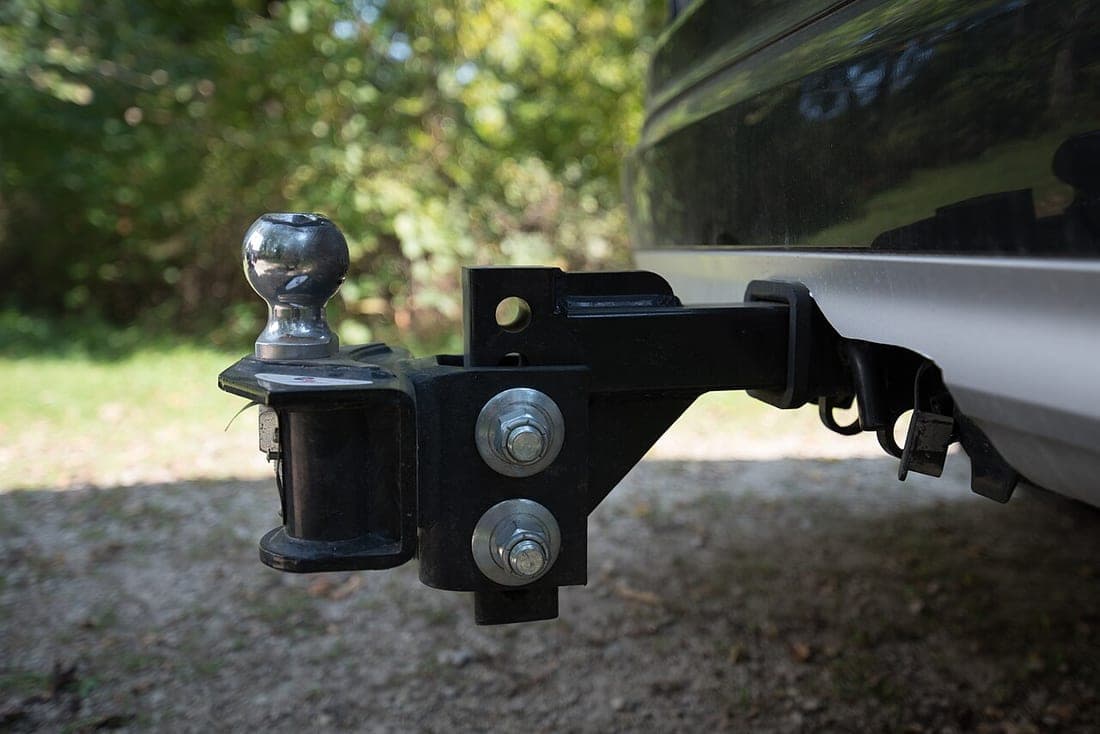
SwayPro's bars run underslung, which keeps them clear of a low A-frame and of front storage boxes and propane racks. Equal-i-zer's bars run through the head in a more conventional arrangement. On a trailer with a crowded tongue, that is the detail that decides it - measure before you buy either.
1. Faster to hitch
Blue Ox SwayPro Weight Distribution Hitch
Blue Ox · Best for owners who hitch and unhitch often
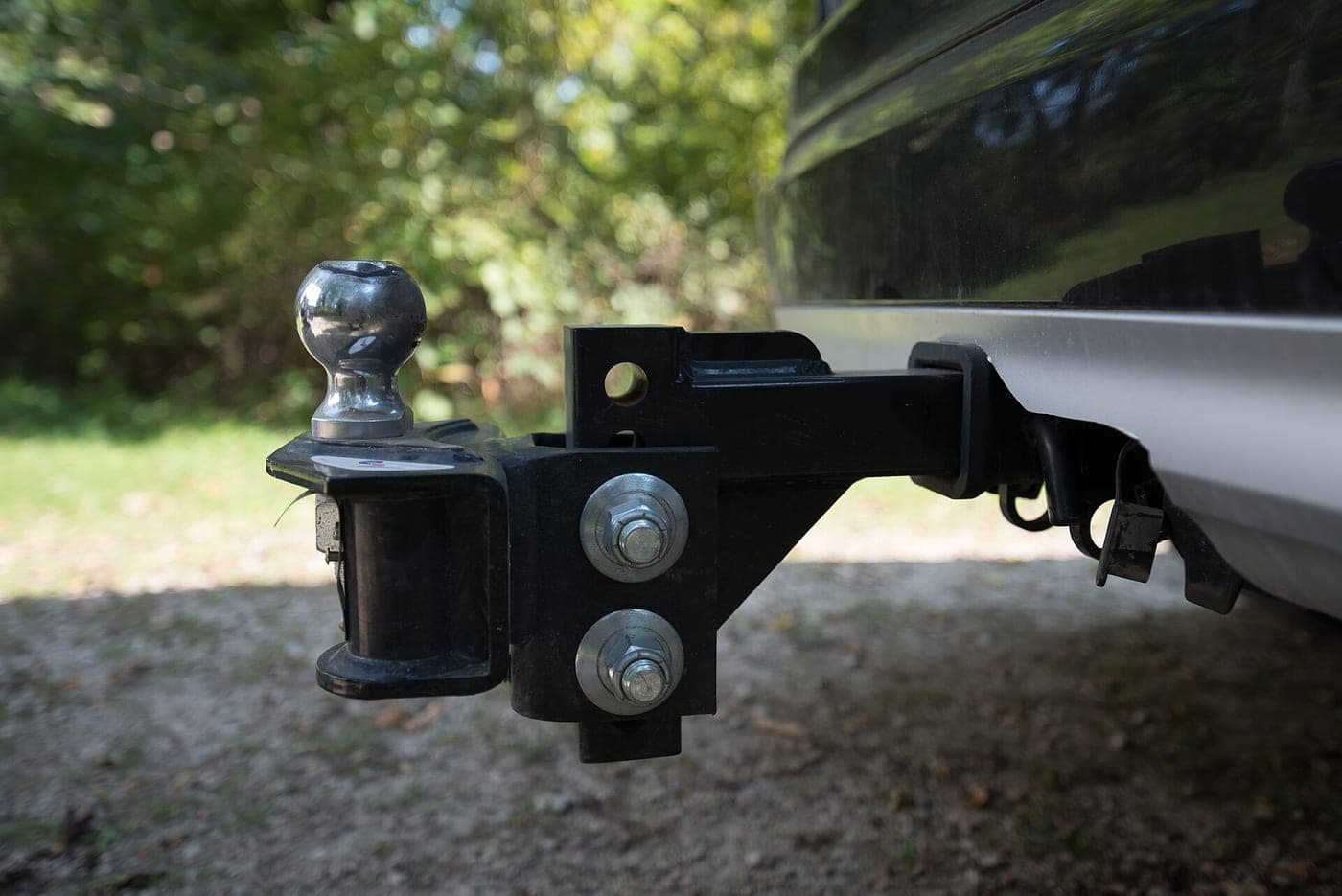
Underslung spring bars on clamp-on latches, which makes hitching faster than chain-and-snap-up systems and keeps the bars out of the way of a low A-frame. Blue Ox publishes the range in tongue-weight bands rather than one do-everything model, so the sizing decision is made before you buy.
Published specifications
What works
- Latches clamp on rather than needing chains snapped up under tension
- Sold in defined tongue-weight bands, which makes correct sizing the default
- Underslung bars clear low A-frames and front storage boxes
What does not
- Bar bands are narrow, so a big change in how you load the trailer can put you in the wrong band
- Clamp-on brackets are another part to keep clean and lubricated
Skip it if
Not the one if your loaded tongue weight sits near the top of a band - buy up a band, because a bar run at its limit transfers less than a bar running in the middle of its range.
#ad Affiliate link - we publish no price; Amazon shows the current one
Raw specifications: Blue Ox’s own page. We earn nothing on that link.
2. Simpler to size
Equal-i-zer 4-point Sway Control Hitch
Equal-i-zer · Best for travel trailers that already sway
The reference point for integrated sway control. Friction happens at four places at once - both L-brackets and both sockets - so resistance is always on rather than something you remember to engage. Setup is bracket-height and bar-angle work, and it rattles; both are the price of a system with no separate parts to forget.
We have not sourced a full specification table for this model from the manufacturer’s own site at a stable address. Rather than repeat figures we cannot cite, the assessment above is limited to what the design and the maker’s published description genuinely establish.
What works
- Sway resistance is built into the geometry, so there is nothing to connect or disconnect at the ramp
- Works in reverse and in the wet, unlike a friction bar you have to release
- One assembly rather than a hitch plus a bolt-on sway bar
What does not
- Audible rattle and creak at low speed is normal and surprises first-time owners
- Bracket height and bar angle have to be set properly or the sway control does little
Skip it if
Skip it if your loaded tongue weight sits well inside your receiver's weight-carrying rating and the truck stays level - you would be buying hardware to solve a problem you do not have.
#ad Affiliate link - we publish no price; Amazon shows the current one
Raw specifications: Equal-i-zer’s own page. We earn nothing on that link.
Key takeaways
- SwayPro: clamp-on latches, underslung bars, tongue weight bands from 350 to 2,000 lb, 20,000 lb maximum gross towing weight.
- Equal-i-zer: four-point friction, conventional bar arrangement, fewer setup variables.
- Measure your loaded tongue weight before choosing either - the band or rating decision depends entirely on it.
How we sourced this
Every figure on this page came from one of the following, each fetched while the page was written. Where a manufacturer or regulator does not publish a number, we say so rather than estimate it.
Common questions
- Does SwayPro need a separate sway bar?
- No. Sway resistance comes from the latch and bar geometry, so there is no separate friction bar to connect or disconnect.
- What if my tongue weight is between two SwayPro bands?
- Choose the higher band. A bar run near its ceiling transfers less load than one running mid-range, and the load you actually carry will only grow as you add gear.
- Can either be set up by one person?
- Both can, but SwayPro's clamp-on latches are the easier of the two to manage alone, which is the main practical reason to pick it.
More in Trailer Sway & Sway Control
Sway is almost never a mystery. It comes down to tongue weight, load position or speed - and only one of those three costs money to fix.
Read next
Head to head
Equal-i-zer vs Reese Dual Cam
Always-on four-point friction versus cams that actively return the trailer to center - with the setup and noise trade-offs stated plainly.
Best for stopping sway
Best Sway Control Hitches
Integrated four-point, cam-based and friction systems compared by how they behave in reverse, in rain, and when you forget a step.
Best WD hitch overall
Best WD Hitch with Sway Control
Integrated sway control plus load transfer, compared on bar sizing granularity, ground clearance and how hard they are to set up alone.

Head to head
Round Bar vs Trunnion Bar
Ground clearance, A-frame fit and capacity ceilings compared - the three things that actually separate the two bar styles.
Found something out of date, or a figure you can source better than we did? Corrections get read first. How we research explains how these pages are put together, and contact is one click away.