Weight Distribution Hitches
Equal-i-zer 4-Point Hitch: An Honest Assessment
Sway resistance built into the geometry rather than bolted alongside it. That is the whole argument, and it has a price in noise.
Disclosure: we earn a commission if you buy through the Amazon links on this page, at no extra cost to you. Commission never decides a verdict or a ranking position - read our editorial policy and affiliate disclosure.
How we assessed these: Assessed from the manufacturer's own published model table, ratings and mechanism description, and from the design's known setup requirements. This site has not towed this hitch, runs no instrumented tests, and publishes no sway or load-transfer measurements of its own.
Short answer
Buy the Equal-i-zer 4-point if your trailer already sways and you want resistance that is always engaged, with nothing to connect or release at the ramp. Skip it if your loaded tongue weight sits comfortably inside your receiver's weight-carrying rating and the truck stays level - and expect it to rattle.
This is the hitch other hitches are described against, which is both a compliment and a problem. Being the reference point means the complaints attach to it too, and most of the published complaints about it are either setup errors or an entirely normal noise that nobody is warned about at the point of sale. Separating those two from the real limitations is what this page is for.
What problem it solves
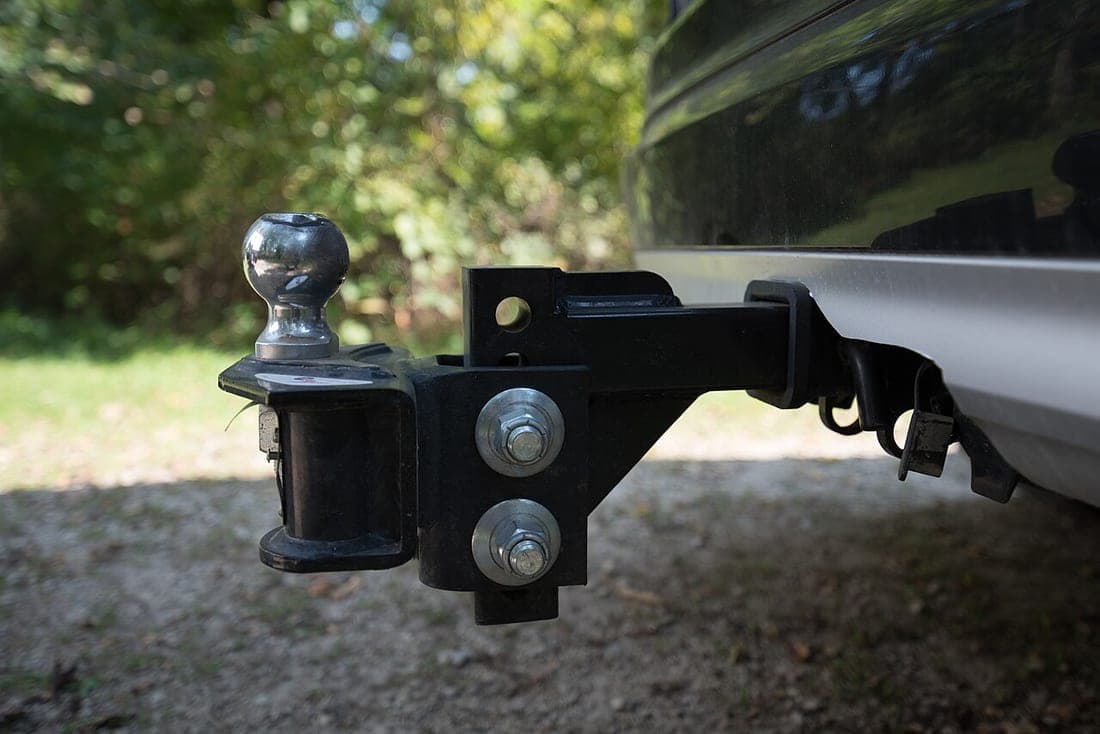
Two problems at once, which is the design's reason to exist. It transfers tongue load forward onto the tow vehicle's front axle and back onto the trailer axles, so the rig sits level instead of nose-down and tail-down. And it resists yaw - the side-to-side rotation that becomes sway - using friction generated at four places rather than through a separate bar bolted alongside the hitch.
The manufacturer's own description of the four points is worth reading literally: two control points come from rotational friction where the spring arm sockets meet the patented hitch head, and two more from rigid trailer brackets that resist side-to-side movement. Downward pressure from the tongue and upward pressure on the spring arms increase that friction. In other words the resistance scales with how hard the hitch is working, and nothing about it depends on you remembering to engage it.
The published numbers
The range is sold in six capacities rather than as one do-everything model, and that granularity is the part that decides whether the hitch works for you. Spring bars transfer load by bending: a bar run at the top of its rating bends too little, and a bar run far below its rating barely flexes at all. The right model is the one that puts your measured tongue weight somewhere near the middle of its band.
| Model | Part number | Gross trailer weight | Tongue weight |
|---|---|---|---|
| 4K | 90-00-0400 | 4,000 lb | 400 lb |
| 6K | 90-00-0600 | 6,000 lb | 600 lb |
| 10K | 90-00-1000 | 10,000 lb | 1,000 lb |
| 12K | 90-00-1200 | 12,000 lb | 1,200 lb |
| 14K | 90-00-1400 | 14,000 lb | 1,400 lb |
| 16K | 90-00-1600 | 16,000 lb | 1,600 lb |
Manufacturer's published model table. Note that every model pairs a gross trailer weight with a tongue weight at a flat 10 percent - which is the bottom of the recommended tongue weight band, so a trailer loaded at 13 percent of a 10,000 lb gross needs the 12K, not the 10K.
That last point in the note is the single most useful thing on this page. People buy by the trailer's gross weight, see a matching model number, and order it - then load the trailer to a perfectly correct 13 percent tongue weight and find themselves over the bar's rating. Measure the loaded tongue weight first and buy the model by that figure, not by the number on the trailer's sticker.
What it does not solve
- A badly loaded trailer. Weight behind the trailer axle produces sway that no hitch removes. If less than 10 percent of the loaded weight is on the tongue, fix that before buying anything.
- Payload. Load transfer moves weight between axles; it does not delete it. A 1,000 lb tongue weight is still 1,000 lb out of your truck's payload. Payload and tow rating are separate limits and on a half-ton payload binds first.
- Your tow rating. It can unlock the higher weight-distributing figure printed on your receiver, but the vehicle's own ratings are set by the manufacturer and no hitch changes them.
- A nose-high trailer. If the ball sits above the coupler - common on a lifted truck - bar tension cannot bring it down. That is a shank drop problem.
- Brakes. It slows nothing. A trailer heavy enough to want this hitch almost certainly needs working brakes and a controller.
Installation and setup realities
This is where the hitch earns its reputation for being fussy, and the reputation is fair. Two settings do most of the work and both are easy to get wrong: the angle of the head on the shank, set by a stack of washers behind it, and the height of the rigid brackets on the trailer's A-frame. Get the bracket height wrong and the spring arms sit at the wrong angle, which reduces both load transfer and - because the friction depends on arm pressure - the sway resistance at the same time.
The order that makes setup go smoothly
Measure unhitched ride heights first
On level ground, with the trailer off the ball, record the tow vehicle's front and rear wheel-arch heights. Everything afterward is judged against these two numbers.
Set the ball height for a level trailer
With the trailer sitting level on its jack, the ball needs to come up to the coupler. The head's own rise is part of that arithmetic, not separate from it.
Fit the brackets at the published height
Bracket height sets spring arm angle, which sets both load transfer and friction. This is the measurement to take twice.
Load the bars and re-measure
Hitch up, tension the bars, and measure the same two wheel arches. You are aiming to restore most of the front-end drop without lifting the rear beyond level.
Adjust the washer stack, not the bars
If the trailer sits nose-up or nose-down, change the head angle. Adding bar tension to fix a tilt is the wrong lever.
Budget an unhurried afternoon for the first setup on a level surface, not the morning of a trip. The generic setup sequence applies to this hitch unchanged, and it is worth reading before the box is open.
The noise
It rattles and it creaks, particularly at low speed and in tight turns, and this surprises almost every first-time owner. The sound is steel sliding on steel at the friction interfaces, which is the mechanism doing its job - so a silent one would be a worse hitch, not a better one. It is loudest in parking lots and campgrounds and largely disappears at road speed.
Two things are worth knowing. The first is that the friction faces must stay clean and un-greased, which is the opposite of most hitch maintenance instincts; greasing them to quiet the noise removes the sway control. The second is that a dry weight distribution head is a separate and legitimate source of groaning on many designs, so knowing what to grease and what to keep dry matters more here than on a simpler hitch.
Who should buy something else
If you hitch and unhitch several times a day, the snap-up bracket routine becomes the dominant annoyance, and a clamp-on latch system is the better fit for how you actually live. If your trailer is modest and the complaint is only that it wanders a little while the truck sits level, you have a yaw problem rather than a load problem, and sway control and weight distribution are not the same purchase. And if lifting a hundred pounds of steel on and off a shank is the part you dread, a chain-tensioned system weighs far less.

1. The subject
Equal-i-zer 4-point Sway Control Hitch
Equal-i-zer · Best for travel trailers that already sway
The reference point for integrated sway control. Friction happens at four places at once - both L-brackets and both sockets - so resistance is always on rather than something you remember to engage. Setup is bracket-height and bar-angle work, and it rattles; both are the price of a system with no separate parts to forget.
Published specifications
- Models offered (gross trailer weight)
- 4,000, 6,000, 10,000, 12,000, 14,000 and 16,000 lb source
- Tongue weight rating
- Matched to each model: 400, 600, 1,000, 1,200, 1,400 and 1,600 lb source
- Sway control points
- Four - two in the hitch head sockets, two at the rigid trailer brackets source
- Warranty
- Limited lifetime warranty source
What works
- Sway resistance is built into the geometry, so there is nothing to connect or disconnect at the ramp
- Works in reverse and in the wet, unlike a friction bar you have to release
- One assembly rather than a hitch plus a bolt-on sway bar
What does not
- Audible rattle and creak at low speed is normal and surprises first-time owners
- Bracket height and bar angle have to be set properly or the sway control does little
Skip it if
Skip it if your loaded tongue weight sits well inside your receiver's weight-carrying rating and the truck stays level - you would be buying hardware to solve a problem you do not have.
#ad Affiliate link - we publish no price; Amazon shows the current one
Raw specifications: Equal-i-zer’s own page. We earn nothing on that link.
2. The easier-hitching alternative
Blue Ox SwayPro Weight Distribution Hitch
Blue Ox · Best for owners who hitch and unhitch often
Underslung spring bars on clamp-on latches, which makes hitching faster than chain-and-snap-up systems and keeps the bars out of the way of a low A-frame. Blue Ox publishes the range in tongue-weight bands rather than one do-everything model, so the sizing decision is made before you buy.
Published specifications
What works
- Latches clamp on rather than needing chains snapped up under tension
- Sold in defined tongue-weight bands, which makes correct sizing the default
- Underslung bars clear low A-frames and front storage boxes
What does not
- Bar bands are narrow, so a big change in how you load the trailer can put you in the wrong band
- Clamp-on brackets are another part to keep clean and lubricated
Skip it if
Not the one if your loaded tongue weight sits near the top of a band - buy up a band, because a bar run at its limit transfers less than a bar running in the middle of its range.
#ad Affiliate link - we publish no price; Amazon shows the current one
Raw specifications: Blue Ox’s own page. We earn nothing on that link.

3. The simpler alternative
Fastway e2 Weight Distribution Hitch with Built-in Sway Control
Fastway · Best for a first weight distribution hitch
Sway control by steel-on-steel friction between the bars and their brackets, with no separate friction bar and nothing to remove before backing up. Available in round and trunnion bar versions, which is the detail to get right: trunnion for ground clearance, round for a lower-profile head.
Published specifications
- Trunnion bar models
- 4,500 / 6,000 / 8,000 / 10,000 / 12,000 lb gross trailer weight source
- Round bar models
- 6,000 / 8,000 / 10,000 lb gross trailer weight source
- Maximum tongue weight
- 450 / 600 / 800 / 1,000 / 1,200 lb, matched to the model's trailer rating source
- Hitch ball
- 2-5/16 in ball pre-installed on the 6,000, 8,000, 10,000 and 12,000 lb models; added separately on the 4,500 lb trunnion source
- Sway control
- Built in via rigid brackets - no chains or add-on bars to remove for backing, turning or wet weather source
What works
- Nothing to engage or disengage - friction is always working
- Sold in both round-bar and trunnion-bar versions for different A-frame heights
- Simple enough that a first-timer can set it up from the manual
What does not
- Friction surfaces must stay clean and un-greased, which is the opposite of most hitch maintenance habits
- Noisy in tight, slow turns
Skip it if
Avoid it if you tow mostly on dirt or gravel - grit on the friction faces is exactly what the design does not want.
#ad Affiliate link - we publish no price; Amazon shows the current one
Raw specifications: Fastway’s own page. We earn nothing on that link.
For a direct head-to-head rather than a verdict, the site carries three: against the Blue Ox SwayPro, against the Husky Centerline TS and against the Reese dual cam system. Those pages take the comparison further than a single-product assessment usefully can.
The verdict
It deserves its position. The four-point design does something structurally honest - it makes sway resistance a property of the assembly rather than an accessory you remember - and the six-model range means correct sizing is achievable rather than approximate. The limitations are real but they are knowable in advance: it is noisy, it is heavy, the setup rewards care, and the model table is written at a flat 10 percent tongue weight that will mislead anyone who buys by trailer gross weight.
What would stop us recommending it to a particular reader is not a flaw in the hitch. It is the three checks that decide whether anyone needs load transfer at all. Run those first - they take about twenty minutes and they are free - and buy this hitch only if the answer comes back yes.
If this reads as more hitch than your trailer needs, the simpler alternative named above is assessed on its own terms in the Fastway e2 review - fewer friction points, a lower ceiling, and a design that suits a first travel trailer rather than one that already sways.
Key takeaways
- Four friction points mean sway resistance is always engaged, including in reverse.
- Six models from 4,000 to 16,000 lb gross, each with a matched tongue weight rating.
- The published tongue weights sit at a flat 10 percent - buy by your measured figure.
- Bracket height and head angle decide how well it works; neither is guesswork.
- It rattles, and greasing the friction faces to stop it disables the sway control.
How we sourced this
Every figure on this page came from one of the following, each fetched while the page was written. Where a manufacturer or regulator does not publish a number, we say so rather than estimate it.
- Equal-i-zer 4-point sway control hitch - published model table (4K through 16K gross trailer weight with matching tongue weight ratings) and four-point friction description
- Equal-i-zer hitch - manufacturer site
- Blue Ox SwayPro weight distribution hitch - published tongue weight bands and towing capacity
- Fastway Trailer Products - manufacturer site
- 49 CFR 567.4 - certification label content, including Gross Vehicle Weight Rating and Gross Axle Weight Rating
Common questions
- Is the Equal-i-zer hitch worth the money?
- If your trailer sways and your measured loaded tongue weight exceeds the receiver's weight-carrying rating, yes - the four-point design means the sway resistance cannot be left disconnected. If the truck sits level and the trailer only wanders, a friction sway control bar solves that problem for far less.
- Which Equal-i-zer model should I buy?
- The one whose tongue weight rating comfortably covers your measured loaded tongue weight. Note that the published models pair each gross trailer weight with a tongue weight at a flat 10 percent, so a trailer correctly loaded at 13 percent needs the next model up from the one that matches its gross weight.
- Why is my Equal-i-zer hitch so noisy?
- Because the sway control is steel-on-steel friction at the head sockets and the trailer brackets, and that is the sound of it working. It is loudest at low speed and in tight turns. Do not grease the friction faces to quiet it - that removes the sway control.
- Can you back up with an Equal-i-zer hitch?
- Yes, and that is one of the design's main practical advantages. There is no friction bar to disconnect before reversing, so nothing has to be remembered or re-fitted at a campsite or a boat ramp.
- Does the Equal-i-zer hitch have a warranty?
- The manufacturer publishes a limited lifetime warranty with each hitch. Read the warranty statement for the exact part number you buy, because terms and the parts they cover can differ.
- Do I still need sway control if I buy this hitch?
- No - the sway control is integrated, which is the point of the four-point design. Adding a separate friction bar alongside it is unnecessary and gives you one more thing to release before backing up.
More in Weight Distribution Hitches
A weight distribution hitch moves load off the back of your truck. Whether you need one is a number, not an opinion - and the number is on your door jamb.
Read next
Head to head
SwayPro vs Equal-i-zer
Underslung clamp-on bars versus four-point friction, compared on hitching time, bar sizing granularity and ground clearance.

Head to head
Equal-i-zer vs Husky Centerline
Setup effort, bar style and noise compared between two popular integrated weight distribution and sway control hitches.
Best WD hitch overall
Best WD Hitch with Sway Control
Integrated sway control plus load transfer, compared on bar sizing granularity, ground clearance and how hard they are to set up alone.

How to
WD Hitch Setup Guide
The full setup sequence with the measurements that make it verifiable, plus how to read the symptoms of each wrong setting.
Guide
Do I Need a WD Hitch?
The three-check test that answers the question definitively, plus the cases where the answer is a clear no.
Found something out of date, or a figure you can source better than we did? Corrections get read first. How we research explains how these pages are put together, and contact is one click away.