Trailer Sway & Sway Control
Why a Utility Trailer Sways, and How to Fix It
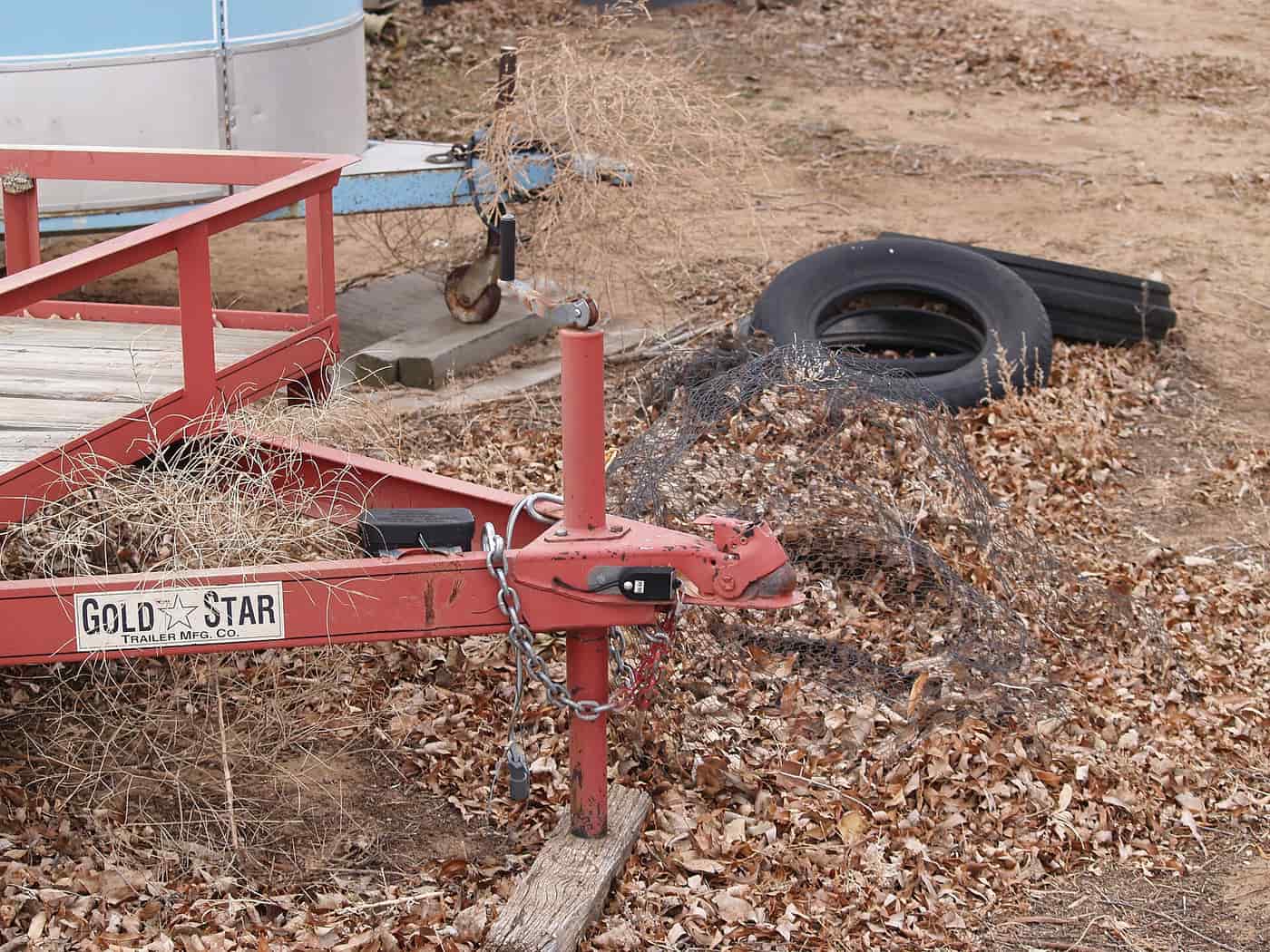
On an open deck the load position is a decision you make every single trip. That is the whole story most of the time.
Disclosure: we earn a commission if you buy through the Amazon links on this page, at no extra cost to you. Commission never decides a verdict or a ranking position - read our editorial policy and affiliate disclosure.
Short answer
A utility trailer sways because of where the load sits, nine times out of ten. An open deck lets you put a mower, a pallet or a load of gravel anywhere along its length, and anything behind the axle acts as a pendulum. Move weight forward until 10 to 15 percent of the loaded weight is on the tongue before changing anything else.
This is a different problem from a travel trailer swaying. A travel trailer has a fixed interior layout, so its balance is largely decided at the factory and your options are a hitch and some discipline about the rear storage. A utility trailer has no layout at all. You decide its balance every time you load it, which means the trailer that towed beautifully last weekend can be frightening this weekend with no hardware change whatsoever.
Diagnose it in this order
| What it does | Most likely cause | First thing to check |
|---|---|---|
| Sways worse as you speed up | Too little weight on the tongue | Load position relative to the axle |
| Wanders constantly at any speed | Tire pressure or a worn tire | Pressure on all four, cold, against the sidewall figure |
| Sways only when loaded | Load behind the axle | Where the heaviest item sits |
| Sways only when empty | Fixed rear weight, ramp or gate | Whether the gate can travel forward |
| Pulls to one side and then wanders | Bent tongue or axle, or a dragging brake | Tire wear pattern and hub temperature |
A diagnostic order, not a parts list. Every row above is cheaper to check than any hardware is to buy.
The load position rules for an open deck
- Heaviest item ahead of the axle, close to it. Not at the very front - that over-loads the tongue and unloads the tow vehicle's front axle. Just forward of the axle line.
- Think about the axle, not the deck. People center a load on the deck because it looks tidy. The axle is not usually at the deck's middle; it sits aft of it so that a centered load produces tongue weight. Centering on the deck can therefore put weight behind the axle.
- Spread, do not stack. A tall stack raises the center of gravity and gives wind something to push. Lower and wider tows better at the same weight.
- Strap so nothing can move. A load that shifts rearward at the first hard brake has changed your tongue weight mid-trip, which is the worst possible moment.
- Re-check the tongue weight after loading, not before. Three methods work at home, and the lever method needs nothing but a bathroom scale and a plank.
Tires, which cause more of this than people think
Trailer tires are the most neglected component on a utility trailer and one of the most common causes of a trailer that will not track straight. They sit for months, lose pressure, crack from ultraviolet exposure rather than from mileage, and get run at car pressures because nobody reads the sidewall. An under-inflated trailer tire squirms, and a squirming tire reads exactly like sway.
- Check pressure cold, against the sidewall figure. Trailer tires generally run at a higher pressure than car tires and should be set to the sidewall maximum unless the trailer's own placard says otherwise.
- Look at the date code and the sidewalls. Trailer tires age out before they wear out. Cracking in the sidewall is a replacement signal regardless of tread depth.
- Check both sides for uneven wear. Feathering on one tire and not the other points at a bent axle or a dragging brake rather than at a loading problem.
The tongue and the hitch
A short tongue gives the trailer a short lever against the tow vehicle, which makes a small yaw into a large steering input. There is nothing to be done about tongue length on a trailer you already own, but it explains why a small, short utility trailer can feel worse than a much larger one. What you can fix is the height: a trailer towing nose-high has less weight on the ball than the same trailer sitting level, so an incorrect drop quietly undoes careful loading. Set the ball height from the coupler, measured level.
Receiver slop is worth eliminating too. It does not cause sway, but it turns every direction change into an audible clunk that makes a nervous trailer feel worse than it is - and an anti-rattle pin is the cheapest part in this whole category.
When hardware is the right answer

1. Start here
Sherline Trailer Tongue Weight Scale
Sherline · Best for measuring tongue weight at home
A dedicated scale you sit under the coupler to read tongue weight directly, with no arithmetic and no trip to a weighbridge. It is the one tool on this site that turns the single most important towing number from a guess into a measurement.
We have not sourced a full specification table for this model from the manufacturer’s own site at a stable address. Rather than repeat figures we cannot cite, the assessment above is limited to what the design and the maker’s published description genuinely establish.
What works
- Direct reading, with no bathroom-scale-and-lever arithmetic
- Repeatable, so you can see what moving the load actually does
- Mechanical gauge with no batteries to be flat when you need it
What does not
- Must be used on level ground with the coupler at towing height
- Single-purpose tool that spends most of its life in a cupboard
Skip it if
Unnecessary if your hitch already has a built-in gauge, or if you have a public scale nearby and are happy to use it.
#ad Affiliate link - we publish no price; Amazon shows the current one
Raw specifications: Sherline’s own page. We earn nothing on that link.

2. If the load is right and it still wanders
CURT Sway Control Kit
CURT · Best for light trailers that wander
A single friction bar between the trailer tongue and the ball mount, with adjustable tension. It damps yaw; it does not transfer load. On a light trailer that wanders a little it is the cheapest honest fix, and on a heavy one it is not enough on its own.
What works
- Simple, serviceable and easy to fit to an existing ball mount
- Tension is adjustable, so you can match it to the trailer
- Takes minutes to add to a setup you already own
What does not
- Must be disconnected before backing up tightly or in icy conditions
- Damps sway but does nothing about a tow vehicle that is squatting
Skip it if
The wrong answer if your truck sags at the back when the trailer is on - that is a load-distribution problem and a friction bar will not touch it.
#ad Affiliate link - we publish no price; Amazon shows the current one
Raw specifications: CURT’s own page. We earn nothing on that link.

3. For the loading itself
Camco Trailer Wheel Chocks
Camco · Best for every trailer, without exception
Chocks go in before you unhitch, every time. They are not an upgrade and they are not interesting; they are the thing standing between a parked trailer and a slow roll down a campground slope.
We have not sourced a full specification table for this model from the manufacturer’s own site at a stable address. Rather than repeat figures we cannot cite, the assessment above is limited to what the design and the maker’s published description genuinely establish.
What works
- Cheap insurance against the most preventable trailer accident there is
- Works on any trailer regardless of brakes or jack type
- Takes seconds and needs no setup
What does not
- Plastic chocks degrade in sun over several seasons
- Easy to leave behind at a site
Skip it if
There is no situation where you should skip chocks - if these do not suit your tire size, buy different ones rather than none.
#ad Affiliate link - we publish no price; Amazon shows the current one
A friction sway control bar is the correct hardware for this problem: it damps yaw without transferring any load, it is cheap, and it suits a trailer whose tongue weight is already inside the receiver's carrying rating. A weight distribution hitch is usually the wrong tool here - the distinction between the two is the most useful thing to understand in this category, and a utility trailer rarely has enough tongue weight to need load transfer at all.
If the trailer is empty rather than loaded when it misbehaves, the cause is slightly different and the fixes are narrower - an empty trailer has almost no absolute tongue weight to hold its nose down, whatever the percentage says.
Put sides and a roof on the same trailer and the problem changes twice over: the flat front becomes a sail, and the load goes out of sight so you can no longer check it with a glance. The enclosed trailer version of this page works through both.
Key takeaways
- On an open deck, load position is the cause nine times out of ten.
- Center the load relative to the axle, not to the middle of the deck.
- Keep 10 to 15 percent of the loaded weight on the tongue, and verify it.
- Trailer tires age out before they wear out and squirm when under-inflated.
- A friction sway bar is the right hardware here; load transfer usually is not.
How we sourced this
Every figure on this page came from one of the following, each fetched while the page was written. Where a manufacturer or regulator does not publish a number, we say so rather than estimate it.
- CURT sway control kit - published specifications (part 17200)
- Sherline Products - manufacturer site
- 49 CFR 393.70 - coupling devices and towing methods, including safety chain and cable arrangement
- 49 CFR 567.4 - certification label content, including Gross Vehicle Weight Rating and Gross Axle Weight Rating
Common questions
- Why does my utility trailer sway at highway speed?
- Almost always because there is too little weight on the tongue, usually from a load placed at or behind the axle. Sway energy rises with speed, so a balance problem that is invisible at 45 mph becomes obvious at 65. Move the heaviest item forward of the axle and re-check.
- Do I need sway control for a utility trailer?
- Not as a rule. Correct the loading and the tire pressures first, because those are free. If the trailer is correctly loaded and still wanders in crosswinds or when trucks pass, a friction sway control bar is the right and cheap addition.
- Should I put the load over the axle of a utility trailer?
- Slightly ahead of it. A load directly over the axle produces almost no tongue weight, which is the condition that makes a trailer sway. Just forward of the axle line gives you tongue weight without over-loading the ball.
- Can tire pressure cause trailer sway?
- Yes. An under-inflated trailer tire deforms under cornering load and the trailer tracks poorly as a result, which feels very much like sway. Set trailer tires cold to the sidewall figure unless the trailer's own placard specifies otherwise.
More in Trailer Sway & Sway Control
Sway is almost never a mystery. It comes down to tongue weight, load position or speed - and only one of those three costs money to fix.
Read next
Guide
Empty Trailer Sway
Why cargo and utility trailers so often behave worst on the empty run home, and the cheap ways to settle them down.
Guide
Preventing Trailer Sway
The pre-trip loading and setup routine that stops sway starting, plus the habits that quietly cause it.
Guide
How to Balance a Trailer
Loading a trailer so it tows straight: the 60/40 rule, where heavy items belong, and how to confirm the result with a measurement.

Head to head
Weight Distribution vs Sway Control
The clearest distinction in towing, explained by symptom: squatting truck versus wandering trailer, and what to do when it is both.

How to
Measuring Tongue Weight
Three methods for measuring tongue weight, what each one requires, and how to interpret the result against the 10-15 percent band.
Found something out of date, or a figure you can source better than we did? Corrections get read first. How we research explains how these pages are put together, and contact is one click away.