Hitches, Receivers & Ball Mounts
The Best Trailer Hitch Balls
The ball is the cheapest part in the towing chain and often the lowest-rated one. Match it to the coupler stamping first, then to the hole in your mount.
Disclosure: we earn a commission if you buy through the Amazon links on this page, at no extra cost to you. Commission never decides a verdict or a ranking position - read our editorial policy and affiliate disclosure.
How we assessed these: Chosen from the figures CURT and Draw-Tite publish on their own part pages - ball capacity, gross tongue weight, ball diameter, shank diameter and length, mounting torque where it is published, test standard and finish - each linked to the page it was read from. This site installs nothing, tows nothing under instrumentation and publishes no ratings or scores of its own.
Short answer
Buy the ball diameter stamped on your trailer's coupler - 1-7/8 in, 2 in or 2-5/16 in - then check two numbers: the ball's published capacity against your loaded trailer weight, and the ball's shank diameter against the hole in your ball mount. A 2 in ball on a 1 in shank rated 7,500 lb covers most trailers. Never fit a ball that is close to the coupler size, and never enlarge a mount's hole to make a bigger shank fit.
A hitch ball costs less than a tank of fuel and it is the single point the whole trailer hangs from. It is also the part people replace by eye: the old one looked worn, the new one looked the same size, and the coupler closed over it. That is how a trailer ends up on a ball it can lift off, which is the failure that makes the evening news rather than the failure that makes you late.
The good news is that the decision is almost mechanical. Three measurements decide it, all of them stamped or published, none of them a judgment call. This page walks the three in order and then names the specific parts that satisfy each one.
Step one: read the stamping on your coupler
Every trailer coupler has its ball size cast or stamped into it, usually on the top face or the side of the casting, next to a capacity figure. That stamping is not a suggestion. The coupler's latch geometry is machined for one diameter, and a ball that is even a sixteenth of an inch undersized changes the latch from a captured joint into a cup sitting on a sphere.
| Coupler stamping | What it is usually on | Typical capacity range you will see published |
|---|---|---|
| 1-7/8 in | Small utility trailers, older boat trailers, popup campers | 2,000 to 3,500 lb |
| 2 in | The default: mid-size utility, boat and travel trailers | 3,500 to 10,000 lb depending on shank |
| 2-5/16 in | Car haulers, equipment trailers, large travel trailers | 6,000 to 30,000 lb depending on shank |
Capacity is a property of the specific part, not of the diameter. CURT publishes a 2 in ball at 6,000 lb, another at 7,500 lb and a third at 10,000 lb - same ball size, three different ratings, because the shanks differ.
If your coupler stamping has rusted away or you are buying for a trailer you have not collected yet, the full size reference, including how to measure a coupler you cannot read covers the measurement properly. Boat trailers are the most common case of an unreadable stamping, and which size boat trailers actually use is worth a look before you guess from the trailer's age.
Quick picks
Tap any row to jump to the full write-up. How these are chosen - and what we do and do not claim to know - is published in full on our research methodology page.
| # | Product | Best for | Our read | Price |
|---|---|---|---|---|
| 1 |  CURT 2 in Trailer Ball (1 in shank, 7,500 lb) Best overall | A 2 in coupler on a standard ball mount | 2 in ball, 7,500 lb, fits the standard 1 in hole | Check price on Amazon #ad Affiliate link - we publish no price; Amazon shows the current one |
| 2 |  Draw-Tite 2-5/16 in Hitch Ball (1-1/4 in shank, 14,000 lb) Best for a heavy trailer | A 2-5/16 in coupler on a heavy car hauler or large travel trailer | 2-5/16 in, 14,000 lb, 1,400 lb published tongue weight | Check price on Amazon #ad Affiliate link - we publish no price; Amazon shows the current one |
| 3 |  CURT 2 in Trailer Ball (1-1/4 in shank, 10,000 lb) Best 2 in for a big mount | A heavy trailer that still uses a 2 in coupler | 10,000 lb, but only in a 1-1/4 in ball hole | Check price on Amazon #ad Affiliate link - we publish no price; Amazon shows the current one |
| 4 |  CURT 2 in Stainless Trailer Ball (1 in shank, 6,000 lb) Best at the boat ramp | Replacing a worn or wrong-size ball | Stainless, 6,000 lb, survives salt water | Check price on Amazon #ad Affiliate link - we publish no price; Amazon shows the current one |
| 5 |  CURT 1-7/8 in Trailer Ball (1 in shank, 3,500 lb) Budget pick, small trailers | A utility or small boat trailer stamped 1-7/8 in | 1-7/8 in, 3,500 lb, the cheapest correct answer | Check price on Amazon #ad Affiliate link - we publish no price; Amazon shows the current one |
How we picked: the criteria that separate one ball from another
- Published capacity, read off the maker's own part page. Every figure on this page comes from CURT's or Draw-Tite's published specification table. A ball sold with no published rating is not a bargain; it is an unknown in the one place you cannot afford one.
- Shank diameter against your mount's hole. The 1 in shank is the common one and fits nearly every ball mount. The 1-1/4 in shank carries more load and needs a mount drilled for it. This is a hard fit question, not a preference.
- Published mounting torque. CURT publishes 250 ft-lb for its 1 in shank balls and 450 ft-lb for the 1-1/4 in shank one. Those numbers are the difference between a ball that stays put and a ball that works loose, and most sellers never print them.
- Shank length against the thickness of your mount. A thick adjustable channel plate needs a longer shank than a thin fixed drawbar. Draw-Tite publishes a drawbar thickness range on its part pages; CURT publishes a minimum platform thickness of 3/8 in and a maximum hole clearance of 1/16 in over the shank.
- Finish, judged by where you tow. Chrome is the default and marks at the wear ring. Stainless costs more and is the honest answer for salt water. Raw steel is for heavy-duty parts where nobody cares what it looks like.
- Test standard published. CURT lists its light and medium balls as tested to U.S. VESC V-5 and its heaviest gooseneck-grade balls to VESC V-19. Those are published standards, not measurements this site made.
- Nut and washer included. All the picks here publish that a zinc-plated hex nut and a lock washer come in the box. A ball without them is a part you cannot fit tonight.
Step two: the shank is half the decision
The shank is the threaded stud under the ball, and it decides two things at once: whether the ball physically fits your mount, and how much the ball is rated to carry. A 1 in shank through a 1 in hole is the standard combination and covers everything from a utility trailer to a mid-size travel trailer. A 1-1/4 in shank is how a maker gets a higher rating out of the same ball diameter, and it requires a mount with the bigger hole.
This catches people in a particular way. A 2 in ball rated 10,000 lb looks like a straight upgrade over a 2 in ball rated 7,500 lb, and it is - but only if your mount was drilled for 1-1/4 in. Drilling out a 1 in hole to fit the bigger shank removes metal from the one part of the mount carrying the bending load, which is why no manufacturer permits it. If the hole is 1 in, the 7,500 lb ball is your ceiling on that mount, and the way to go higher is a different mount.
Hole clearance matters in the other direction too. CURT publishes a maximum of 1/16 in of clearance between the hole and the shank. A worn-out, oversized hole lets the ball rock under load and eventually fatigues the stud. If your old ball came out of a hole that is visibly egg-shaped, the mount is the part that needs replacing, not the ball. How mounts and balls divide the job is the page that untangles which part you are actually shopping for.
1. Best overall
CURT 2 in Trailer Ball (1 in shank, 7,500 lb)
CURT · Best for a 2 in coupler on a standard ball mount
The ball most people actually need: 2 in diameter on the standard 1 in shank, rated 7,500 lb, with a published 250 ft-lb mounting torque. It drops straight into the 1 in hole in almost every ball mount sold, and it carries 1,500 lb more than the stainless version of the same size.
Published specifications
- Ball capacity
- 7,500 lb source
- Ball diameter
- 2 in source
- Shank
- 1 in diameter, 2-1/8 in long source
- Mounting torque
- 250 ft-lb source
- Material and finish
- Hot-forged steel, chrome plated source
- Test standard
- U.S. VESC V-5 source
- Mounting platform
- At least 3/8 in thick; hole no more than 1/16 in larger than the shank source
What works
- Fits the 1 in ball hole used by the great majority of ball mounts
- 7,500 lb rating covers most 2 in couplers without thinking about it
- Mounting torque and the minimum platform thickness are both published, which is rarer than it should be
What does not
- Chrome plating marks and eventually rusts at the wear ring, where the coupler rides
- 250 ft-lb needs a torque wrench and a long bar, not a crescent wrench
Skip it if
Wrong ball if your coupler is stamped 1-7/8 in or 2-5/16 in - a ball that is close to right is the classic way a trailer comes off, so match the stamping exactly.
#ad Affiliate link - we publish no price; Amazon shows the current one
Raw specifications: CURT’s own page. We earn nothing on that link.
2. Best for a heavy trailer
Draw-Tite 2-5/16 in Hitch Ball (1-1/4 in shank, 14,000 lb)
Draw-Tite · Best for a 2-5/16 in coupler on a heavy car hauler or large travel trailer
The heavy end of bumper-pull towing: a 2-5/16 in ball rated 14,000 lb with a published 1,400 lb gross tongue weight, on a 1-1/4 in shank. Draw-Tite publishes the whole table - capacity, tongue weight, shank, nut size, even the drawbar thickness range it is designed to clamp - which is what you want on the part carrying a loaded car hauler.
Published specifications
What works
- Full published spec table, including the drawbar thickness range the ball is designed to clamp
- The 1,400 lb published tongue weight is the figure that actually matters on a heavy trailer
- Nut and lock washer included, with the socket size published so you can have the right tool ready
What does not
- No mounting torque figure is published on the part page, so you are working from the mount maker's number instead
- Needs a 1-1/4 in ball hole, which rules out light-duty mounts
- Chrome on a part this size is cosmetic; the wear ring will show within a season
Skip it if
Overkill and the wrong diameter for anything with a 2 in coupler, and the 14,000 lb rating means nothing if your receiver, mount or vehicle is rated lower - the chain is only as strong as its lowest published figure.
#ad Affiliate link - we publish no price; Amazon shows the current one
Raw specifications: Draw-Tite’s own page. We earn nothing on that link.
3. Best 2 in for a big mount
CURT 2 in Trailer Ball (1-1/4 in shank, 10,000 lb)
CURT · Best for a heavy trailer that still uses a 2 in coupler
A 2 in ball rated to 10,000 lb, which it reaches by using a 1-1/4 in shank instead of the usual 1 in. That is the catch and the point in one line: more capacity in the same ball size, but only if your mount has the bigger hole.
Published specifications
What works
- 10,000 lb from a 2 in ball, which the 1 in shank versions cannot reach
- The published 450 ft-lb torque figure tells you plainly that this is not a hand-tight part
- Same coupler size as the common ball, so nothing on the trailer changes
What does not
- Needs a 1-1/4 in ball hole - it will not fit a mount drilled for a 1 in shank, and a mount's hole must never be enlarged
- 450 ft-lb is more torque than most home toolkits can honestly apply
- Heavier than the 1 in shank ball, for capacity most half-ton setups will never use
Skip it if
Pointless on a light trailer, and physically wrong on a standard ball mount with a 1 in hole - check the hole in your mount before buying this one.
#ad Affiliate link - we publish no price; Amazon shows the current one
Raw specifications: CURT’s own page. We earn nothing on that link.
4. Best at the boat ramp
CURT 2 in Stainless Trailer Ball (1 in shank, 6,000 lb)
CURT · Best for replacing a worn or wrong-size ball
A replacement 2 in ball on a 1 in shank, rated to 6,000 lb, with a published torque figure of 250 ft-lb. That torque number is the reason to buy a ball from a manufacturer that publishes specs: an under-torqued ball nut is a genuine failure mode.
Published specifications
What works
- Published torque specification, which many balls do not come with
- Stainless finish survives a boat ramp better than plain zinc
- Correct shank sizing is spelled out rather than assumed
What does not
- 6,000 lb ceiling is below what many 2 in couplers are rated to carry
- Needs a torque wrench to fit properly, which many people do not own
Skip it if
Not enough ball if your coupler is rated above 6,000 lb - match the ball to the coupler's rating, not to the hole in your mount.
#ad Affiliate link - we publish no price; Amazon shows the current one
Raw specifications: CURT’s own page. We earn nothing on that link.
5. Budget pick, small trailers
CURT 1-7/8 in Trailer Ball (1 in shank, 3,500 lb)
CURT · Best for a utility or small boat trailer stamped 1-7/8 in
The small ball, for the small trailer: 1-7/8 in diameter, 3,500 lb, on a standard 1 in shank with a 3 in reach so it suits thicker mounts too. It is the least expensive honest buy on this page and the right one for a 4x8 utility trailer or an older boat trailer.
Published specifications
What works
- Correct size for the many older utility and boat trailers that never used a 2 in coupler
- 3 in shank length suits thicker ball mounts and adjustable channel plates
- Least expensive way to make a small trailer safe to tow
What does not
- 3,500 lb is a hard ceiling, and small trailers get loaded past their own rating easily
- Chrome on a small ball wears through quickly on a ramp-launched boat trailer
Skip it if
Not a substitute for a 2 in ball. A 2 in coupler on a 1-7/8 in ball can lift off over a bump even though it appears to latch - this is the single most dangerous mismatch in towing.
#ad Affiliate link - we publish no price; Amazon shows the current one
Raw specifications: CURT’s own page. We earn nothing on that link.
Torque is the step almost everybody skips
The published figures are higher than people expect: 250 ft-lb for a 1 in shank, 450 ft-lb for a 1-1/4 in one. For context, a typical lug nut is 100 to 140 ft-lb. You are not reaching 450 ft-lb with a hand wrench and a grunt, and you are definitely not reaching it with an adjustable spanner on the flats of the nut.
- Use a torque wrench with the range to reach the number. A 1/2 in drive wrench that tops out at 250 ft-lb cannot set a 450 ft-lb nut.
- Hold the ball, not the mount. The ball has to be seated square in the hole as the nut comes up, or you torque a tilted stud.
- Check the socket size before you start. Draw-Tite publishes a 1.5 in nut taking a 1-7/8 in socket on its 14,000 lb ball, which is bigger than a normal socket set carries.
- Re-check after the first trip. Paint and plating compress slightly, and a nut that was right in the driveway can be a few degrees loose after a hundred miles.
- Lock washer every time. All of these balls publish one in the box. It belongs between the nut and the mount, not in the bag in the garage.
A mount that arrives with the ball already fitted and torqued skips this entire section, which is a real argument for a one-piece loaded mount if you only ever tow one trailer. That trade-off is covered in the ball mount roundup, which looks at fixed, adjustable, stowing and scale-equipped mounts side by side.
Finish: chrome, stainless or raw steel
Chrome plating is the default because it is cheap and it looks right in the box. It also wears through at the ring where the coupler rides, and once the plating opens up, the exposed steel rusts and the rust gets into the coupler. On a trailer that lives outdoors this is cosmetic for a season and then annoying.
Stainless costs more and buys one specific thing: it survives repeated dunking. If your trailer goes down a salt-water ramp, the stainless ball is the honest choice even though its published rating is lower than the chrome equivalent in the same diameter - CURT publishes 6,000 lb for the 2 in stainless ball against 7,500 lb for the chrome one. That is the trade: corrosion resistance costs you capacity in that size.
Raw, heat-treated steel appears on the heaviest parts, where the rating matters and the finish does not. Grease is what keeps any of them alive, and it matters more than the finish does - where hitch ball grease belongs and what happens without it is a two-minute read that saves a coupler.
Where the ball sits in the chain of ratings
Your real towing capacity is the lowest published rating among five parts: the vehicle, the receiver, the ball mount, the ball, and the trailer coupler. The ball is frequently the lowest, which is why a 14,000 lb mount with a 6,000 lb ball on it is a 6,000 lb assembly and nothing more.
| Part | Where its rating is | What it limits |
|---|---|---|
| Tow vehicle | Door jamb placard and the owner's manual | Everything - it is the real ceiling |
| Receiver hitch | Label riveted to the receiver | Gross trailer weight and tongue weight |
| Ball mount | Stamped or published by part number | Gross trailer weight at a given drop |
| Hitch ball | Stamped on the ball top, published by part number | Gross trailer weight, often the lowest figure |
| Trailer coupler | Cast into the coupler body | Both the ball size and the weight |
Five ratings, one answer: the smallest number wins, and no combination of larger parts raises it.
If this is the first time you have looked at the chain as a whole, how hitch classes and receiver ratings fit together is the orientation page, and what your truck is actually rated to pull is where the ceiling comes from.
Who should not buy a ball at all
- Anyone whose mount already has a ball of the right size in good condition. A ball with a smooth, round wear ring and legible stamping does not need replacing on a schedule.
- Anyone towing a gooseneck trailer. That is a bed-mounted 2-5/16 in ball on a completely different mount - the gooseneck hitch options are the right page.
- Anyone with a lunette ring rather than a coupler. A ring needs a hook, not a ball; pintle hooks and pintle mounts covers that hardware.
- Anyone whose trailer sways. A new ball fixes nothing about sway. Tongue weight, load position and a weight distribution setup do - start at why trailers sway.
- Anyone shopping to cure a clunk. The clunk is the mount moving in the receiver, not the ball. Anti-rattle hardware and locks is the fix, and it costs very little.
A note on what is not here
Interchangeable multi-ball systems - one shank, several screw-on balls - are a genuinely useful idea for a driveway with three trailers, and none is listed here. The reason is sourcing: the makers we could reach for this page do not publish a per-part specification table for those systems at a stable URL, and this site does not print a capacity it cannot cite to the manufacturer. The same applies to the very cheap unbranded balls sold in multi-packs: no published rating, no published torque, no listed standard, nothing to stand behind.
If you want one mount that handles two ball sizes without swapping anything, the practical answer today is a dual-ball adjustable mount rather than a screw-on system, and that part is covered in the ball mount roundup linked above.
The bottom line
For a 2 in coupler on a normal mount, the CURT 2 in ball on a 1 in shank at 7,500 lb is the default buy and it is hard to argue with: it fits the hole almost every mount has, it carries more than the stainless version of the same size, and its torque figure is published. For a 2-5/16 in coupler on a heavy trailer, the Draw-Tite 14,000 lb ball publishes the full table including the 1,400 lb tongue weight, which is the number a loaded car hauler actually tests.
Go stainless only if your trailer gets launched in salt water, accepting the lower published rating in that size. Buy the 10,000 lb 2 in ball only if you have measured a 1-1/4 in hole in your mount. And if your trailer is a small utility hauler stamped 1-7/8 in, the cheapest ball on this page is also the correct one - spend the difference on a torque wrench you will use for the next twenty years.
Key takeaways
- The coupler stamping decides the ball diameter, and nothing else gets to vote.
- Capacity belongs to the part, not the size: CURT publishes 2 in balls at 6,000, 7,500 and 10,000 lb.
- Shank diameter is a fit question - 1 in fits nearly every mount, 1-1/4 in needs a mount drilled for it.
- Never enlarge a mount's ball hole, and replace a mount whose hole has gone oval.
- Published mounting torque is 250 ft-lb on a 1 in shank and 450 ft-lb on a 1-1/4 in shank.
- Stainless trades published capacity for corrosion resistance in the same ball size.
- Your real limit is the lowest rating among vehicle, receiver, mount, ball and coupler.
- A ball with no published rating or torque figure is not worth the few dollars it saves.
How we sourced this
Every figure on this page came from one of the following, each fetched while the page was written. Where a manufacturer or regulator does not publish a number, we say so rather than estimate it.
- CURT 2 in trailer ball, 7,500 lb, 1 in x 2-1/8 in shank, 250 ft-lb mounting torque - published specifications (part 40037)
- CURT 2 in trailer ball, 10,000 lb, 1-1/4 in x 2-5/8 in shank, 450 ft-lb mounting torque - published specifications (part 40090)
- CURT 1-7/8 in trailer ball, 3,500 lb, 1 in x 3 in shank - published specifications (part 40072)
- CURT 2 in stainless trailer ball - published specifications including 250 ft-lb mounting torque (part 40083)
- Draw-Tite 2-5/16 in trailer hitch ball, 14,000 lb capacity, 1,400 lb gross tongue weight, 1-1/4 in shank - published specification table (part 63836)
- REESE / Draw-Tite - manufacturer catalog
Common questions
- What size hitch ball do I need?
- Whatever diameter is stamped on your trailer's coupler - 1-7/8 in, 2 in or 2-5/16 in are the three common sizes in North America. They are not interchangeable, and a coupler will appear to latch onto a ball one size smaller before lifting off it under a bump.
- How much weight can a hitch ball carry?
- It depends on the specific part, not the diameter. CURT publishes 2 in balls at 6,000 lb, 7,500 lb and 10,000 lb depending on the shank, and Draw-Tite publishes a 2-5/16 in ball at 14,000 lb with a 1,400 lb gross tongue weight. Read the figure for the part number you are buying, and remember that your real limit is the lowest rating in the whole chain.
- Do I need to torque a hitch ball nut?
- Yes, and the figure is higher than most people assume. CURT publishes 250 ft-lb for its 1 in shank balls and 450 ft-lb for the 1-1/4 in shank version. A nut tightened by feel is a genuine failure mode, which is one reason a mount sold with the ball already fitted is attractive.
- Is a stainless hitch ball better?
- Only if corrosion is your problem. Stainless survives salt-water ramps far better than chrome, but in the same diameter it is often rated lower - CURT publishes 6,000 lb for its 2 in stainless ball against 7,500 lb for the chrome one. Boat trailer, stainless; everything else, chrome plus grease.
- Can I drill out my ball mount for a bigger shank?
- No. The hole sits in the part of the mount carrying the bending load, and no manufacturer permits enlarging it. If you need a 1-1/4 in shank ball, buy a mount drilled for one.
More in Hitches, Receivers & Ball Mounts
Class, receiver size, ball diameter, drop. Four numbers decide whether your setup is right, and three of them are stamped on parts you already own.
Read next
Reference
Trailer Ball Sizes
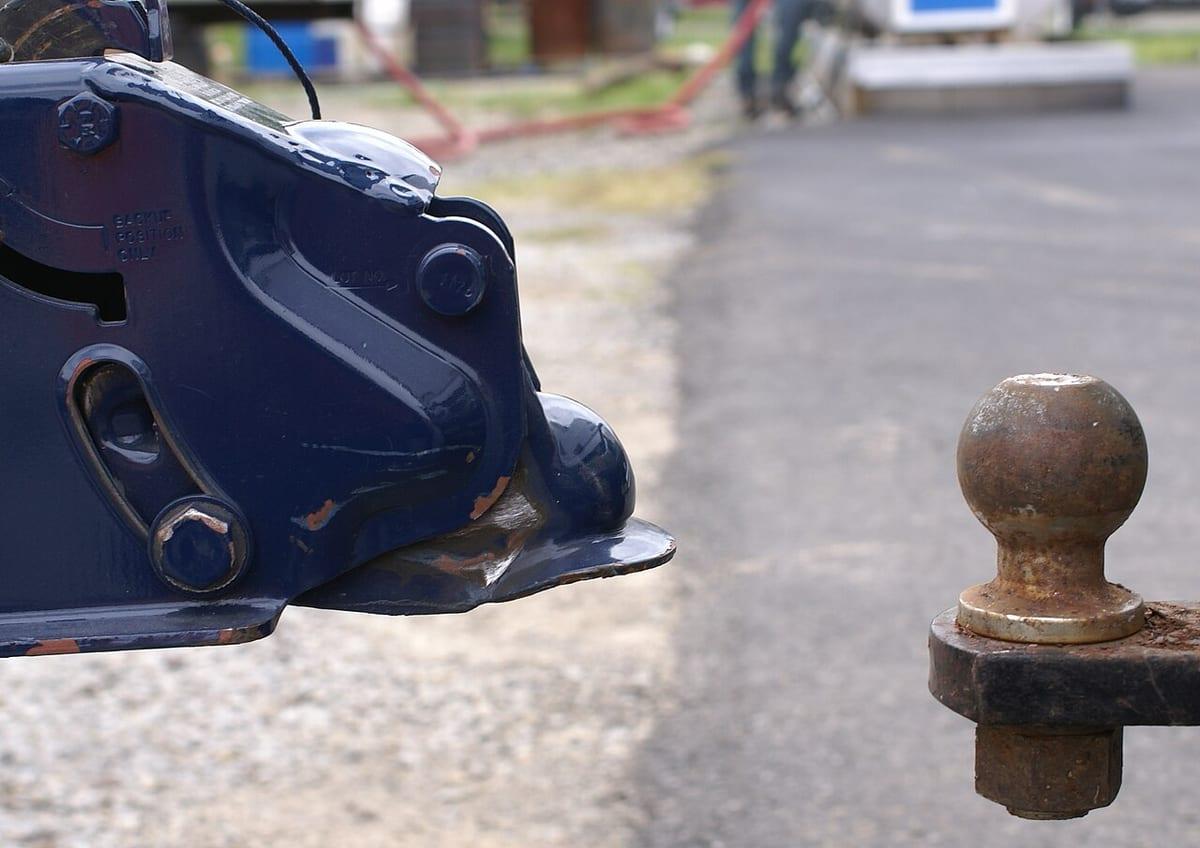
The three standard ball diameters, how shank dimensions work, and why mounting torque is a specification rather than a suggestion.
Best ball mount
Best Ball Mounts
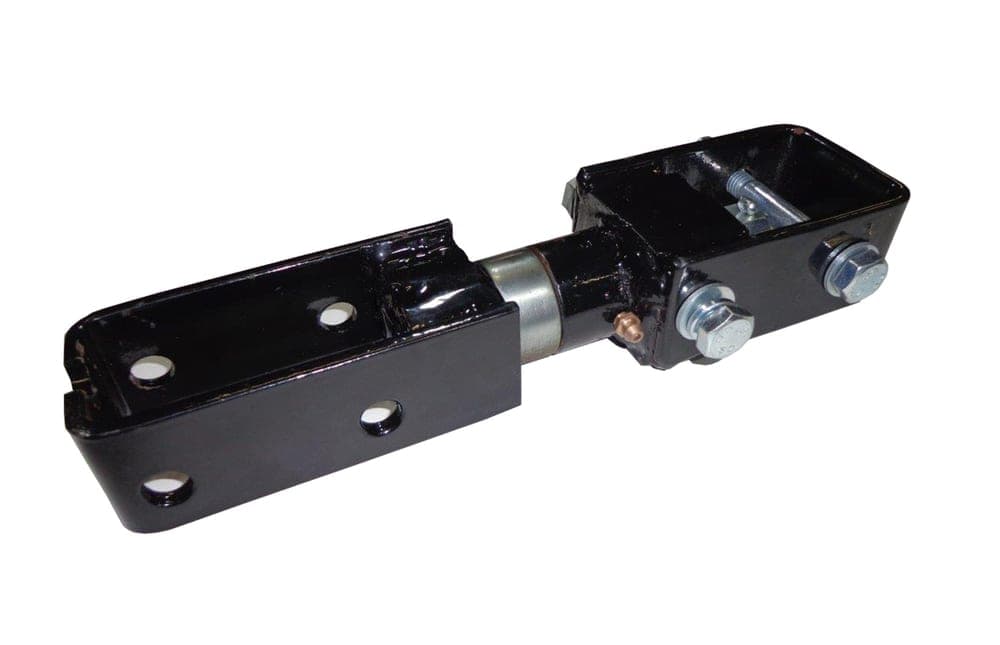
Fixed, adjustable, stowing and scale-equipped mounts compared on drop range, capacity and how much they rattle.
Guide
Ball Mount vs Hitch Ball
What each part does, how their ratings interact, and the torque step that gets skipped when you buy them separately.
Guide
Hitch Ball Grease
What to grease on a hitch, what to keep bone dry, and why a ball that still squeals after greasing is telling you it is worn out.
Guide
Standard Trailer Ball Size
The most common trailer ball size, which trailer types use which, and why standard is a shopping convenience rather than a specification.

Best pintle hitch
Best Pintle Hitches
Receiver-mounted and bolt-on pintle hooks, adjustable pintle mounts and hook-and-ball combinations, compared on published capacity, gross tongue weight and what each one needs to mount to.
Found something out of date, or a figure you can source better than we did? Corrections get read first. How we research explains how these pages are put together, and contact is one click away.